Best For
- First-time visitors to Seoul
- History and culture lovers
- Families traveling with children
- Travelers looking for meaningful free attractions
- Anyone who wants to understand Korea beyond K-pop and K-dramas

What If One of Asia’s Greatest Museums Were Completely Free?
Most first-time visitors to Seoul begin with familiar destinations.
They walk through the gates of Gyeongbokgung Palace, shop in Myeongdong, visit a fashionable café in Seongsu, or watch the city lights from N Seoul Tower.
These places deserve attention.
But there is another destination that many travelers overlook.
The National Museum of Korea.
Missing it may be one of the greatest lost opportunities of a trip to Seoul.
This is not simply a building filled with old objects.
It is one of the best places to understand how Korea became the country it is today.
Inside its galleries, prehistoric tools, Buddhist sculptures, royal ceramics, paintings, documents, and everyday objects form a story that stretches across thousands of years.
And remarkably, the permanent collections can generally be explored for free.
A Museum That Explains an Entire Country
A good museum displays beautiful or historically important objects.
A great museum helps visitors understand people.
The National Museum of Korea does both.
You begin with early communities that lived on the Korean Peninsula long before the idea of modern Korea existed.
You then move through the ancient kingdoms, the spread of Buddhism, the cultural achievements of Goryeo, the traditions of the Joseon dynasty, and the artistic exchange between Korea and the wider world.
History begins to feel less like a list of rulers and dates.
It becomes a story of how people lived, what they believed, what they considered beautiful, and what they chose to preserve.
That is why the museum is especially valuable for international visitors.
Korean culture becomes easier to understand when you can see its foundations.
The First Surprise: The Space Itself
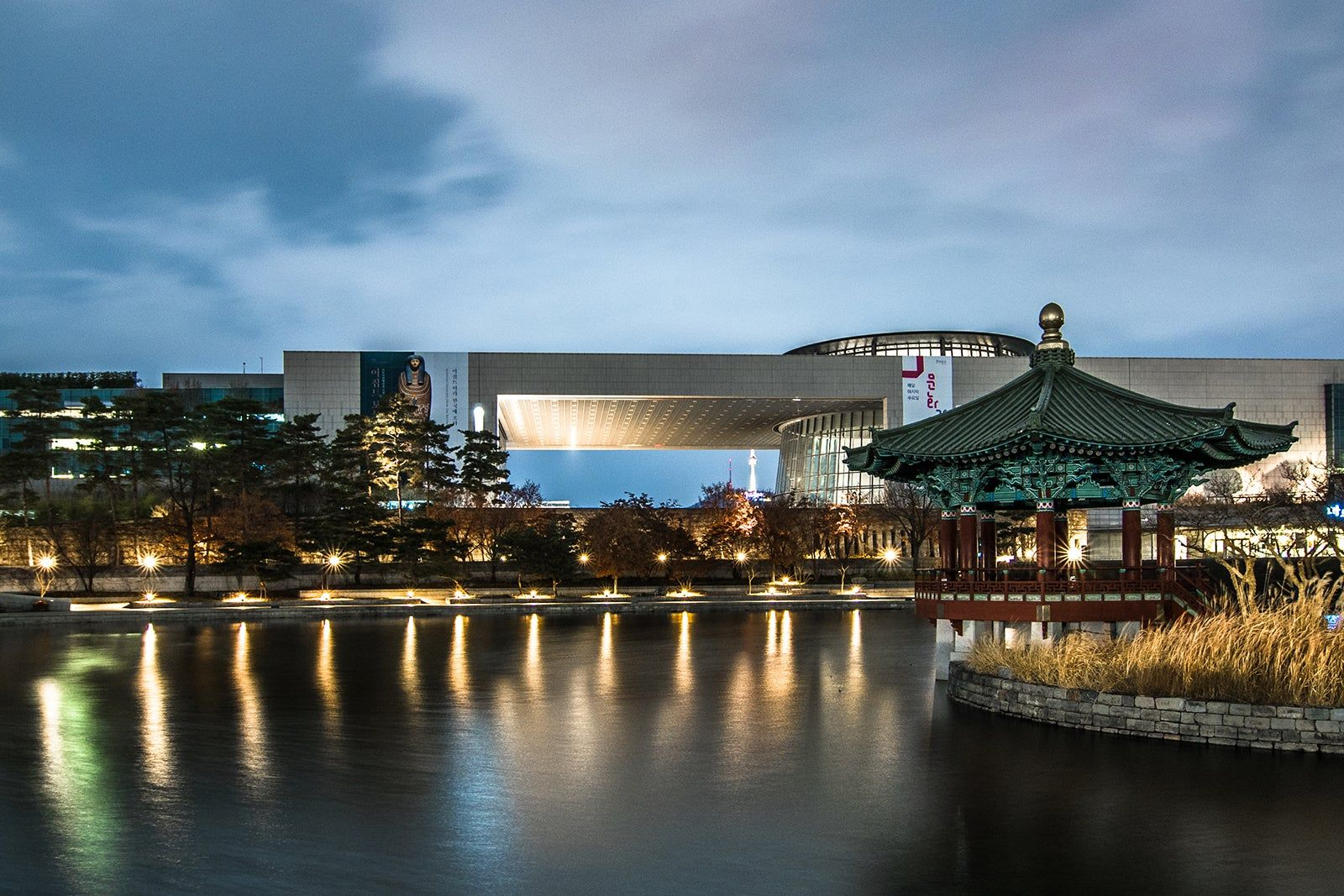
The National Museum of Korea is located in Yongsan, away from the densest tourist streets.
The setting feels spacious and calm.
Instead of entering directly from a crowded shopping district, visitors approach through open grounds, water, trees, and broad architectural lines.
The building’s scale immediately suggests that this is not a small local collection.
Yet the atmosphere does not feel intimidating.
The museum is designed as a public cultural space rather than a place reserved only for experts.
Families visit.
Students study.
Older couples walk slowly through the galleries.
International travelers join guided tours.
Some visitors spend hours examining the collection, while others simply enjoy the building and surrounding landscape.
This mix of serious scholarship and everyday accessibility is one of the museum’s greatest strengths.
The Quietest Room May Be the Most Powerful
Among the museum’s best-known spaces is the Room of Quiet Contemplation.
Inside, two gilt-bronze pensive bodhisattvas sit in silence.
Their bodies are relaxed but thoughtful. One leg rests across the other. A hand touches the cheek. Their faces carry expressions that seem to exist somewhere between uncertainty and peace.
The pose represents a moment of deep reflection before enlightenment, and the two sculptures are regarded as masterpieces of ancient Korean Buddhist art.
Visitors often enter expecting to look at a historical object.
Instead, they encounter an emotion.
That may be the most remarkable thing about the statues.
Although they were created centuries ago, their expressions still feel familiar.
They remind us that human beings have always worried, questioned, reflected, and searched for meaning.
The room does not need a dramatic performance or complex technology.
Silence is enough.
What Korean Ceramics Reveal About Korean Beauty
Another important part of the collection is Korean ceramics.
Many international visitors are first attracted to the color of Goryeo celadon or the clean surfaces of Joseon white porcelain.
But these objects reveal more than technical skill.
They help explain a recurring idea in Korean aesthetics: beauty does not always need to be loud.
A vessel may appear modest.
Its decoration may be restrained.
Its shape may not be perfectly symmetrical.
Yet those qualities can create warmth and balance.
This is an important contrast to the idea that luxury must always be highly decorated or visually dramatic.
In Korean art, simplicity can express discipline, philosophy, and confidence.
When you understand this, many other aspects of Korean design begin to make more sense—from traditional architecture to modern cafés and product packaging.
History Is Not Only About Kings
Museums often focus on royal crowns, famous generals, and ceremonial objects.
The National Museum of Korea certainly includes major treasures.
But ordinary objects can be just as revealing.
A bowl tells us what people ate.
A farming tool explains how they worked.
A handwritten document shows how knowledge was recorded.
A piece of jewelry reveals trade, technology, and social identity.
These smaller objects remind visitors that history was not lived only by rulers.
It was also created by farmers, artisans, merchants, monks, scholars, parents, and children.
This broader view is essential if you want to understand Korea as a society rather than simply as a sequence of dynasties.
Why Free Admission Matters
In many major cities, visiting a national museum can be expensive.
That cost may be understandable. Museums require conservation, research, security, staff, and complex facilities.
But admission fees can also create a psychological barrier.
People begin asking whether they have enough time to justify the ticket.
Families calculate the cost of bringing several children.
Travelers may skip a museum because they have already spent money on other attractions.
Free access changes the relationship between a museum and its visitors.
You can enter for one hour.
You can return another day.
Students can visit repeatedly.
Parents can introduce children to cultural heritage without turning the experience into a major expense.
International visitors can explore Korean history even when traveling on a limited budget.
The museum becomes part of public life rather than a once-in-a-lifetime purchase.
That may be one reason the experience feels so welcoming.
More Than a Rainy-Day Attraction
Some travelers treat museums as backup plans for rainy weather.
The National Museum of Korea deserves better than that.
It can anchor an entire day.
Begin with the permanent collections.
Take time in the Room of Quiet Contemplation.
Have a break rather than rushing through every gallery.
Then step outside and continue into Yongsan Family Park, where lawns, ponds, and walking paths offer a different rhythm.
Later, eat in Yongsan or continue toward the Han River.
The result is a journey through several versions of Korea:
- Ancient Korea through the museum
- Everyday Korea through the neighborhood
- Natural Korea through the park
- Modern Korea through the city and river
That is much richer than simply checking another attraction off a list.
Naru’s Note
I have visited museums in many cities.
Some were larger.
Some were more internationally famous.
Some held works that almost everyone immediately recognized.
But few museums helped me understand an entire country as naturally as the National Museum of Korea.
The experience does not depend on one famous masterpiece.
Its power comes from the way thousands of objects slowly build a story.
You begin with stone and metal.
Then religion, writing, ceramics, painting, and daily life appear.
By the time you leave, Korea feels less like a collection of modern trends and more like a civilization shaped by centuries of thought, hardship, creativity, and exchange.
If you have time for only one museum in Korea, this is the one I would recommend.
Not because it tells you everything.
But because it gives you the questions needed to understand everything else.
Final Thoughts
The National Museum of Korea is free in price, but not small in value.
It offers history without making it feel distant.
It presents national treasures without placing culture behind an economic barrier.
It gives visitors a quiet place to reflect in one of Asia’s most energetic cities.
Most importantly, it helps travelers see Korea as more than a destination.
Korea becomes a story.
A story of ancient kingdoms and ordinary lives.
A story of faith, survival, art, and change.
A story that continues outside the museum—in the streets, food, language, technology, and people of modern Korea.
Visit the museum not simply to see the past.
Visit it to understand the Korea you are experiencing today.
“The best museums do not only preserve history. They help us recognize the history still living around us.”
— Naru
Discover Korea. Learn Korea. Experience Korea. Inspire a Journey.

Learn, Experience & Inspire
📚 Learn 5 Korean Words Today
Learning a few Korean words can make a museum visit feel more meaningful and help you recognize important signs and descriptions.
| English | 한국어 | Pronunciation | 中文 | Español |
|---|---|---|---|---|
| Museum | 박물관 | bak-mul-gwan | 博物馆 | Museo |
| History | 역사 | yeok-sa | 历史 | Historia |
| Artifact | 유물 | yu-mul | 文物 | Artefacto |
| Exhibition | 전시 | jeon-si | 展览 | Exposición |
| Cultural Heritage | 문화유산 | mun-hwa-yu-san | 文化遗产 | Patrimonio cultural |
🗣 Korean Phrase of the Day
한국어
국립중앙박물관은 어떻게 가나요?
Pronunciation
Gungnip Jungang Bangmulgwaneun eotteoke ganayo?
English
How do I get to the National Museum of Korea?
中文
去韩国国立中央博物馆怎么走?
Español
¿Cómo puedo llegar al Museo Nacional de Corea?
Travel Tip
When asking for directions in Korea, ending a sentence with “어떻게 가나요?” means “How do I get there?” You can use the same expression with almost any destination.
😲 Did You Know?
General admission to the National Museum of Korea is free, although some special exhibitions require separate tickets. The museum currently opens from 9:30 a.m. to 5:30 p.m. on Monday, Tuesday, Thursday, Friday, and Sunday, and remains open until 9:00 p.m. on Wednesday and Saturday.
This means you can explore thousands of years of Korean history without paying an entrance fee—and you can even visit in the evening twice a week.
🏛 What You Should Not Miss
1. The Room of Quiet Contemplation
This specially designed gallery brings together two of Korea’s most iconic gilt-bronze pensive bodhisattvas. The figures sit with one leg resting across the other and their fingers gently touching their cheeks, representing deep thought before enlightenment. Both are recognized as Korean national treasures.
Do not rush through this room.
Stand quietly, look at their expressions, and notice how a statue created more than a thousand years ago can still feel deeply human.
2. Korean Ceramics
Look for celadon from the Goryeo dynasty and white porcelain from the Joseon period.
The shapes and colors may appear simple at first, but they reveal Korea’s long tradition of valuing balance, restraint, and natural beauty.
3. Buddhist Sculpture
The Buddhist Sculpture Gallery shows how Korean Buddhist art evolved from the Three Kingdoms period through the Joseon dynasty.
4. Calligraphy and Painting
These galleries help visitors understand that written language in Korea was not only a practical tool. It was also an art form connected to education, philosophy, and personal character.
🇰🇷 Behind the Culture
Why Is Such an Important Museum Free?
The simple answer is government support.
But the deeper answer is cultural philosophy.
Korea’s national museums treat major cultural artifacts not merely as valuable objects, but as public heritage that people should be able to study, appreciate, and share.
This changes the experience of visiting.
You are not entering a private collection designed only for specialists or wealthy patrons.
You are entering a public space where schoolchildren, families, researchers, local residents, and international travelers can stand in front of the same national treasures.
The free admission policy quietly communicates an important idea:
Cultural heritage becomes more valuable when more people can experience it.
That principle makes the National Museum of Korea feel not only impressive, but generous.
✈️ Before You Go
- Allow at least three hours for a first visit.
- Visit on Wednesday or Saturday evening for a slower, more atmospheric experience.
- Wear comfortable shoes—the museum is extensive.
- Check the official schedule before visiting because special exhibitions, gallery closures, and operating information can change.
- International visitors can check the museum’s official guided tours, which are offered in English, Chinese, and Japanese at scheduled times.
- Families should review the Children’s Museum reservation information in advance. Admission is free, but timed entry or reservations may apply.
⭐ Naru Recommends
A museum visit does not need to end when you leave the building.
🌳 Walk Through Yongsan Family Park
Yongsan Family Park is next to the museum and offers lawns, ponds, and walking paths. The park includes an approximately two-kilometer walking course and is a peaceful place to rest after several hours indoors.
🚶 Continue Toward the Han River
The museum area can be combined with a later walk near the Han River, giving you a day that moves naturally from ancient history to modern Seoul.
🍜 Eat in Yongsan
After the museum, try a Korean meal in Yongsan rather than immediately returning to a major tourist district. It helps the day feel less like a checklist and more like an experience of contemporary Korean life.
📝 A Suggested Half-Day Journey
National Museum of Korea → Yongsan Family Park → Korean dinner in Yongsan → evening walk
This route connects history, nature, food, and modern city life in one day.
❓ Today’s Question
English
If you could preserve one object from today for people to discover 500 years from now, what would you choose—and what story would it tell about our time?
한국어
오늘날의 물건 하나를 500년 뒤 사람들을 위해 남길 수 있다면, 무엇을 선택하시겠어요? 그 물건은 우리 시대에 대해 어떤 이야기를 전할까요?
中文
如果你可以为五百年后的人们保存一件当代物品,你会选择什么?它会讲述一个怎样的时代故事?
Español
Si pudieras conservar un objeto de nuestra época para que alguien lo descubriera dentro de 500 años, ¿cuál elegirías y qué historia contaría sobre nuestro tiempo?
Share your answer in the comments. There is no single correct choice—only different ways of understanding history.

KGS-0003
为什么韩国国立中央博物馆是世界上最值得参观的免费博物馆之一?
如果亚洲最优秀的博物馆之一完全免费呢?
第一次来到首尔的游客,通常会先前往那些耳熟能详的地方。
他们穿过景福宫的大门,在明洞购物,去圣水洞的热门咖啡馆,或登上南山欣赏城市夜景。
这些地方当然都值得一去。
但还有一个经常被游客忽略的重要目的地:
韩国国立中央博物馆。
错过这里,可能会成为首尔之旅中最遗憾的选择之一。
这并不是一座单纯收藏古老物品的建筑。
它是理解韩国如何发展成为今天这个国家的最佳地点之一。
从史前时代的工具、佛教雕塑和皇家陶瓷,到绘画、文献和日常生活用品,数千年的韩国故事在这里逐渐连成完整的脉络。
更令人惊讶的是,大部分常设展览都可以免费参观。
一座能够讲述整个国家的博物馆
好的博物馆会展示美丽或具有历史意义的物品。
伟大的博物馆则会帮助人们理解曾经生活在那个时代的人。
韩国国立中央博物馆两者都做到了。
参观从现代“韩国”这一概念出现之前开始。你会看到早期生活在朝鲜半岛上的人类群体留下的痕迹。
之后,故事逐渐进入古代王国的形成、佛教的传播、高丽王朝的文化成就、朝鲜王朝的传统,以及韩国与周边世界之间的交流。
历史不再只是国王姓名和年代组成的清单。
它变成了一段关于人们如何生活、相信什么、认为什么是美,以及选择保存什么的故事。
这也是为什么这座博物馆对国际游客尤其有价值。
只有看到韩国文化的根基,才能更好地理解它今天的样子。
第一个惊喜,是建筑与空间本身
韩国国立中央博物馆位于龙山,距离最拥挤的旅游和购物街区有一定距离。
周围的空间开阔而平静。
游客不是从喧闹的商业街直接进入展厅,而是先经过水景、树木、开放的广场和简洁宽阔的建筑线条。
仅从规模就能感受到,这绝不是一座普通的地方博物馆。
但它并不会让人感到压迫。
这座建筑更像是为所有人开放的公共文化空间,而不是只属于专家的机构。
家庭来到这里参观。
学生在这里学习。
年长的夫妇缓慢地走过展厅。
国际游客参加不同语言的导览。
有些人长时间观察一件文物,也有人只是享受建筑和周围的景色。
专业性与日常生活在这里自然共存,这正是博物馆最大的魅力之一。
最安静的房间,也许最有力量
馆内最著名的空间之一,是“思惟之室”。
两尊鎏金铜制半跏思惟像安静地坐在展厅中。
它们的身体看似放松,却又沉浸在深深的思考中。
一条腿搭在另一条腿上,一只手轻轻触碰脸颊。
它们的表情仿佛停留在疑问与平静之间。
这种姿态象征着在获得觉悟之前,进入深刻思考的时刻。两尊佛像也被认为是韩国古代佛教艺术的代表性杰作。
许多游客原本只是来看一件历史文物,却在这里遇见了一种情绪。
这也许正是这些雕像最令人惊讶的地方。
虽然它们诞生于很久以前,但那些表情仍然让现代人感到熟悉。
它们提醒我们,无论生活在哪个时代,人类都会烦恼、提问、思考,并寻找生命的意义。
这个空间不需要夸张的表演或复杂的科技。
安静本身就已经足够。
韩国陶瓷展现了怎样的韩国美学?
韩国陶瓷是博物馆中另一个不可错过的部分。
许多国际游客首先会被高丽青瓷的颜色,或朝鲜白瓷干净纯粹的表面所吸引。
但这些器物所展现的,远不只是精湛的技术。
它们帮助人们理解韩国美学中反复出现的一种观念:
美不一定必须宏大或华丽。
一只器皿可以十分朴素。
它的装饰可以非常克制。
形状也未必完全对称。
但这些特点反而能够创造出温暖、自然与平衡。
这与“奢华必须依靠繁复装饰来表现”的观念不同。
在韩国艺术中,简洁可以代表节制、哲学和自信。
理解了这一点之后,韩国传统建筑、现代咖啡馆,甚至商品包装中的设计语言也会变得更容易理解。
历史并不只属于国王
许多博物馆会将重点放在王冠、著名将军和国家仪式所使用的物品上。
韩国国立中央博物馆当然也收藏着重要的国宝和珍贵文物。
但那些普通的日常用品,有时同样能够讲述丰富的历史。
一个碗可以告诉我们人们吃什么。
一件农具可以解释他们如何劳动。
一份手写文献可以展示知识是如何被记录下来的。
一件首饰则可能揭示贸易、技术和社会身份。
这些看似普通的物品提醒我们,历史并不只由统治者创造。
农民、工匠、商人、僧侣、学者、父母和孩子也共同创造了历史。
如果希望理解作为一个社会的韩国,而不只是记住王朝的先后顺序,就需要这样的视角。
为什么免费参观如此重要?
在世界许多大城市,参观国家级博物馆往往需要支付不低的门票。
这并不难理解。
博物馆需要承担文物保护、学术研究、安保、人员和设施运营等大量成本。
但门票有时也会成为一种心理门槛。
游客会考虑自己是否有足够的时间,值得支付这笔费用。
家庭需要计算多个孩子的门票价格。
旅行者也可能因为已经在其他景点花了不少钱,而放弃参观博物馆。
免费开放改变了博物馆与参观者之间的关系。
你可以只参观一个小时。
也可以过几天再回来。
学生可以重复参观。
父母可以在没有太大经济负担的情况下,让孩子接触文化遗产。
预算有限的国际游客也能够了解韩国历史。
博物馆因此不再是一生只去一次的昂贵景点,而成为公共生活的一部分。
这也许正是这座博物馆让人感到如此开放和温暖的原因。
不要只把它当作雨天备用行程
有些旅行者只有在下雨时,才会考虑去博物馆。
但韩国国立中央博物馆的价值远远超过一个备用方案。
它完全可以成为一整天行程的核心。
先参观常设展览。
在思惟之室安静地停留一会儿。
不要急着走完所有展厅,可以在中间休息,让自己慢慢理解眼前的内容。
离开博物馆后,可以前往旁边的龙山家族公园,在草地、池塘和步道之间散步。
之后可以在龙山用餐,或继续前往汉江。
这样的一天,会让你看到韩国的不同面貌:
- 在博物馆里看到古老的韩国
- 在街区里感受日常的韩国
- 在公园里遇见自然的韩国
- 在城市与汉江边看到现代的韩国
这比简单地在旅行清单上勾掉一个景点,要丰富得多。
Naru’s Note
我曾经参观过许多城市的博物馆。
有些规模更大。
有些在国际上更有名。
有些收藏着几乎所有人都认识的艺术作品。
但很少有博物馆能像韩国国立中央博物馆这样,让人如此自然地理解一个完整的国家。
它的力量并不只依靠某一件著名的代表作。
而是来自数以千计的文物慢慢组成的一段故事。
故事从石器和金属开始。
接着出现宗教、文字、陶瓷、绘画和日常生活。
当你离开博物馆时,韩国不再只是现代流行文化的集合。
它开始像一个由数百年思想、苦难、创造力和文化交流所形成的文明。
如果在韩国只能参观一座博物馆,我会推荐这里。
不是因为它能告诉你所有答案。
而是因为它会给你理解其他一切所需要的问题。
结语
韩国国立中央博物馆的门票是免费的,但它所提供的价值绝不轻。
它让历史不再显得遥远。
它没有把文化遗产放在经济门槛之后。
它也在亚洲最有活力的城市之一,为人们提供了一个安静思考的地方。
更重要的是,它让旅行者开始把韩国看成不只是一个旅游目的地。
韩国变成了一段故事。
一段关于古代王国和平凡生活的故事。
一段关于信仰、生存、艺术与变化的故事。
而这段故事并不会在博物馆出口结束。
它还继续存在于街道、食物、语言、科技,以及今天生活在韩国的人们之中。
不要只是为了看过去而来到这里。
请为了理解你正在经历的韩国而来。
“真正优秀的博物馆不仅保存历史,也让我们看见仍然生活在身边的历史。”
— Naru
Discover Korea. Learn Korea. Experience Korea. Inspire a Journey.

KGS-0003
Por Qué el Museo Nacional de Corea Es Uno de los Mejores Museos Gratuitos del Mundo
¿Y Si Uno de los Mejores Museos de Asia Fuera Completamente Gratuito?
Quienes visitan Seúl por primera vez suelen comenzar por los destinos más conocidos.
Cruzan las puertas del Palacio Gyeongbokgung, compran en Myeongdong, visitan una cafetería de moda en Seongsu o contemplan las luces de la ciudad desde la Torre N de Seúl.
Todos estos lugares merecen ser visitados.
Sin embargo, existe otro destino que muchos viajeros pasan por alto:
el Museo Nacional de Corea.
No visitarlo puede convertirse en una de las mayores oportunidades perdidas de un viaje a Seúl.
No se trata simplemente de un edificio lleno de objetos antiguos.
Es uno de los mejores lugares para comprender cómo Corea llegó a convertirse en el país que es hoy.
Herramientas prehistóricas, esculturas budistas, cerámica real, pinturas, documentos y objetos cotidianos forman una historia que abarca miles de años.
Y, sorprendentemente, la mayor parte de la colección permanente puede visitarse de manera gratuita.
Un Museo que Explica Todo un País
Un buen museo muestra objetos hermosos o históricamente importantes.
Un gran museo ayuda a comprender a las personas.
El Museo Nacional de Corea hace ambas cosas.
La historia comienza con las primeras comunidades que vivían en la península coreana, mucho antes de que existiera la idea de la Corea moderna.
Después, el recorrido pasa por la formación de los antiguos reinos, la expansión del budismo, los logros culturales de la dinastía Goryeo, las tradiciones de Joseon y los intercambios entre Corea y el resto del mundo.
La historia deja de sentirse como una lista de gobernantes y fechas.
Se convierte en una narración sobre cómo vivían las personas, qué creían, qué consideraban bello y qué decidieron conservar.
Por esta razón, el museo resulta especialmente valioso para los visitantes internacionales.
La cultura coreana es mucho más fácil de comprender cuando se pueden observar sus raíces.
La Primera Sorpresa Es el Propio Espacio
El Museo Nacional de Corea se encuentra en Yongsan, algo alejado de las zonas turísticas más densas de la ciudad.
El entorno es amplio y tranquilo.
En lugar de entrar directamente desde una calle comercial llena de gente, el visitante se aproxima al museo atravesando espacios abiertos, agua, árboles y grandes líneas arquitectónicas.
La escala del edificio deja claro inmediatamente que no se trata de una pequeña colección local.
Aun así, el lugar no se siente intimidante.
Está diseñado como un espacio cultural público y no como una institución reservada únicamente para especialistas.
Las familias lo visitan.
Los estudiantes estudian allí.
Las parejas mayores recorren lentamente las galerías.
Los visitantes internacionales participan en recorridos guiados.
Algunas personas pasan horas observando las colecciones, mientras otras disfrutan del edificio y del paisaje que lo rodea.
Esta combinación de conocimiento especializado y accesibilidad cotidiana es una de las mayores fortalezas del museo.
La Sala Más Silenciosa Puede Ser la Más Poderosa
Uno de los espacios más conocidos del museo es la Sala de la Contemplación Silenciosa.
En ella se exhiben dos bodhisattvas pensativos de bronce dorado.
Sus cuerpos parecen relajados, pero sus expresiones transmiten una profunda reflexión.
Una pierna descansa sobre la otra y una mano toca suavemente la mejilla.
Sus rostros parecen situarse en algún punto entre la incertidumbre y la serenidad.
La postura representa un momento de profunda contemplación antes de alcanzar la iluminación. Ambas esculturas son consideradas obras maestras del antiguo arte budista coreano.
Muchos visitantes entran esperando contemplar un objeto histórico.
En cambio, se encuentran con una emoción.
Quizás eso sea lo más extraordinario de estas figuras.
Aunque fueron creadas hace siglos, sus expresiones todavía parecen cercanas.
Nos recuerdan que los seres humanos siempre han sentido preocupación, han planteado preguntas, han reflexionado y han buscado significado.
La sala no necesita una presentación espectacular ni una tecnología complicada.
El silencio es suficiente.
Lo que la Cerámica Coreana Revela Sobre la Belleza
Otra parte esencial de la colección es la cerámica coreana.
Muchos visitantes internacionales se sienten atraídos inicialmente por el color del celadón de Goryeo o por las superficies limpias de la porcelana blanca de Joseon.
Sin embargo, estos objetos revelan mucho más que una gran habilidad técnica.
Ayudan a comprender una idea que aparece repetidamente en la estética coreana:
la belleza no siempre necesita ser llamativa.
Una vasija puede ser modesta.
Su decoración puede ser contenida.
Su forma puede no ser perfectamente simétrica.
Y, aun así, estas cualidades pueden generar calidez, equilibrio y naturalidad.
Es una visión diferente de la idea de que el lujo siempre debe expresarse mediante una decoración abundante.
En el arte coreano, la sencillez puede expresar disciplina, filosofía y seguridad.
Al comprender esta idea, otros elementos del diseño coreano comienzan a tener más sentido, desde la arquitectura tradicional hasta las cafeterías modernas y los envases de productos.
La Historia No Pertenece Únicamente a los Reyes
Los museos suelen concentrarse en coronas reales, generales famosos y objetos ceremoniales.
El Museo Nacional de Corea también alberga importantes tesoros nacionales.
Pero los objetos cotidianos pueden resultar igualmente reveladores.
Un cuenco nos muestra qué comían las personas.
Una herramienta agrícola explica cómo trabajaban.
Un documento escrito a mano muestra cómo se registraba el conocimiento.
Una joya puede revelar información sobre el comercio, la tecnología y la identidad social.
Estos objetos más pequeños nos recuerdan que la historia no fue creada únicamente por los gobernantes.
También fue creada por agricultores, artesanos, comerciantes, monjes, académicos, madres, padres y niños.
Esta perspectiva es esencial para comprender Corea como una sociedad, y no solamente como una sucesión de dinastías.
Por Qué la Entrada Gratuita Es Importante
En muchas grandes ciudades, visitar un museo nacional puede resultar costoso.
Es comprensible.
Los museos necesitan financiar la conservación, la investigación, la seguridad, el personal y el mantenimiento de instalaciones complejas.
Pero el precio de una entrada también puede crear una barrera psicológica.
Los visitantes comienzan a preguntarse si disponen de suficiente tiempo para justificar el costo.
Las familias calculan cuánto costará entrar con varios niños.
Algunos viajeros deciden no visitar un museo porque ya han gastado dinero en otras atracciones.
El acceso gratuito cambia la relación entre el museo y sus visitantes.
Se puede entrar solamente durante una hora.
Se puede regresar otro día.
Los estudiantes pueden visitarlo repetidamente.
Los padres pueden acercar a sus hijos al patrimonio cultural sin convertir la experiencia en un gasto importante.
Los visitantes internacionales con presupuestos limitados también pueden explorar la historia de Corea.
El museo pasa a formar parte de la vida pública, en lugar de ser una compra excepcional que se realiza una sola vez.
Tal vez por eso la experiencia se siente tan abierta y acogedora.
Mucho Más que un Plan para un Día de Lluvia
Algunos viajeros consideran los museos como planes de reserva para los días lluviosos.
El Museo Nacional de Corea merece mucho más que eso.
Puede convertirse en el centro de una jornada completa.
Comienza con las colecciones permanentes.
Tómate tiempo en la Sala de la Contemplación Silenciosa.
Haz una pausa en lugar de recorrer rápidamente todas las galerías.
Después, sal al Parque Familiar de Yongsan, donde los jardines, los estanques y los senderos ofrecen un ritmo completamente diferente.
Más tarde, puedes comer en Yongsan o continuar hacia el río Han.
El resultado es un viaje a través de varias versiones de Corea:
- La Corea antigua dentro del museo
- La Corea cotidiana en el barrio
- La Corea natural en el parque
- La Corea moderna en la ciudad y junto al río
Es una experiencia mucho más rica que simplemente marcar otra atracción en una lista.
Naru’s Note
He visitado museos en muchas ciudades.
Algunos eran más grandes.
Otros eran mucho más famosos a nivel internacional.
Algunos albergaban obras que casi todo el mundo reconocería de inmediato.
Pero pocos museos me han ayudado a comprender un país entero de una manera tan natural como el Museo Nacional de Corea.
Su fuerza no depende de una única obra maestra famosa.
Proviene de la forma en que miles de objetos construyen lentamente una historia.
La narración comienza con la piedra y el metal.
Después aparecen la religión, la escritura, la cerámica, la pintura y la vida cotidiana.
Cuando sales del museo, Corea deja de parecer una simple colección de tendencias modernas.
Empieza a revelarse como una civilización formada por siglos de pensamiento, dificultades, creatividad e intercambio cultural.
Si solamente pudieras visitar un museo en Corea, este sería el que recomendaría.
No porque explique absolutamente todo.
Sino porque te ofrece las preguntas necesarias para comprender todo lo demás.
Reflexión Final
La entrada al Museo Nacional de Corea es gratuita, pero su valor no es pequeño.
Presenta la historia sin hacerla parecer distante.
Muestra tesoros nacionales sin colocar la cultura detrás de una barrera económica.
Ofrece un espacio tranquilo para reflexionar en una de las ciudades más dinámicas de Asia.
Y, sobre todo, ayuda a los viajeros a ver Corea como algo más que un destino.
Corea se convierte en una historia.
Una historia de antiguos reinos y vidas cotidianas.
Una historia de fe, supervivencia, arte y transformación.
Y esa historia continúa fuera del museo, en las calles, la comida, el idioma, la tecnología y las personas que viven en la Corea actual.
No visites el museo únicamente para contemplar el pasado.
Visítalo para comprender la Corea que estás experimentando hoy.
“Los mejores museos no se limitan a conservar la historia. Nos ayudan a reconocer la historia que todavía vive a nuestro alrededor.”
— Naru