Why Does Seoul Feel So Different in Autumn?
There is a moment every year when Seoul seems to change personality.
The humidity of summer fades.
People begin walking outside again.
Cafés open their terraces.
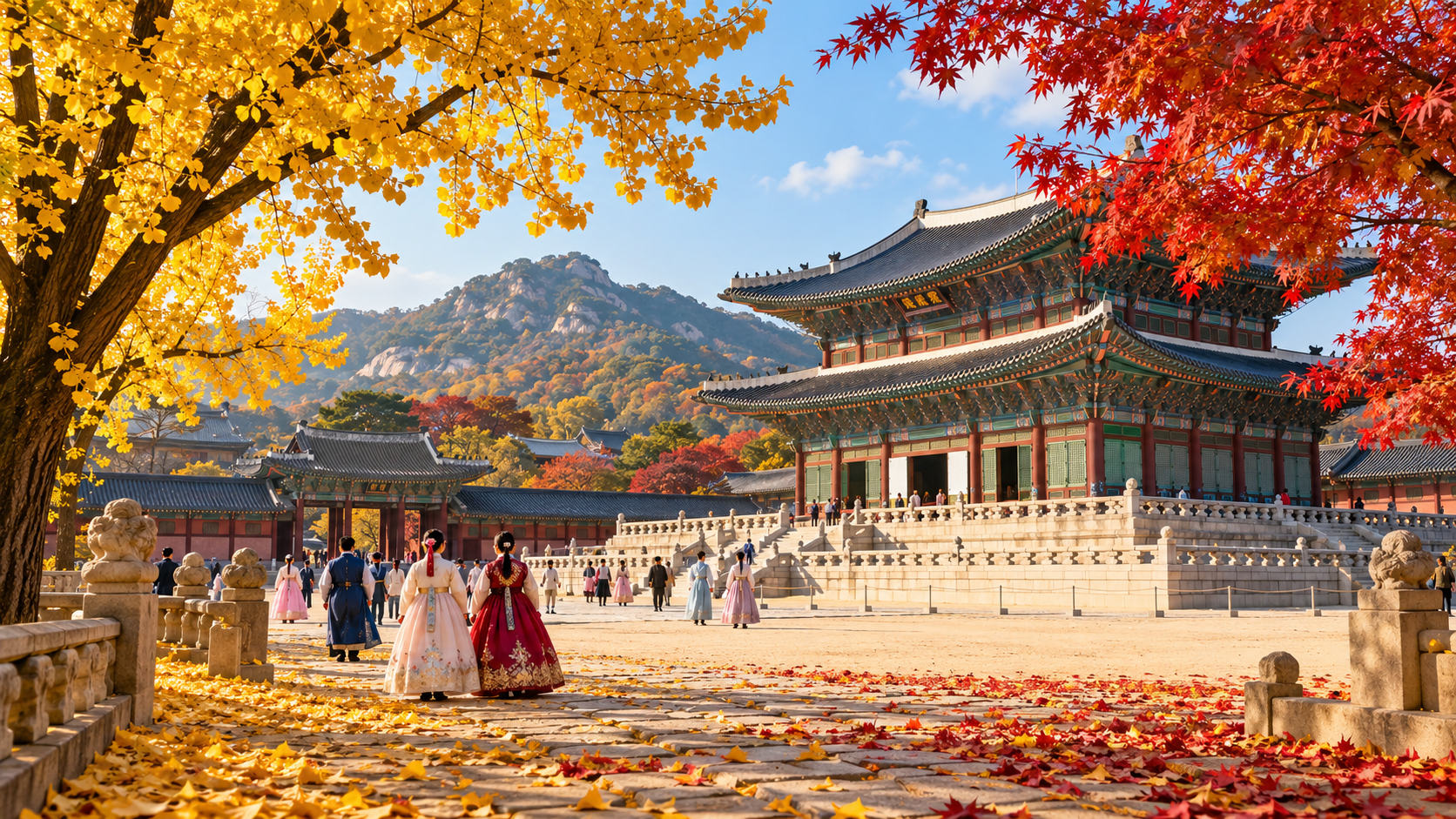
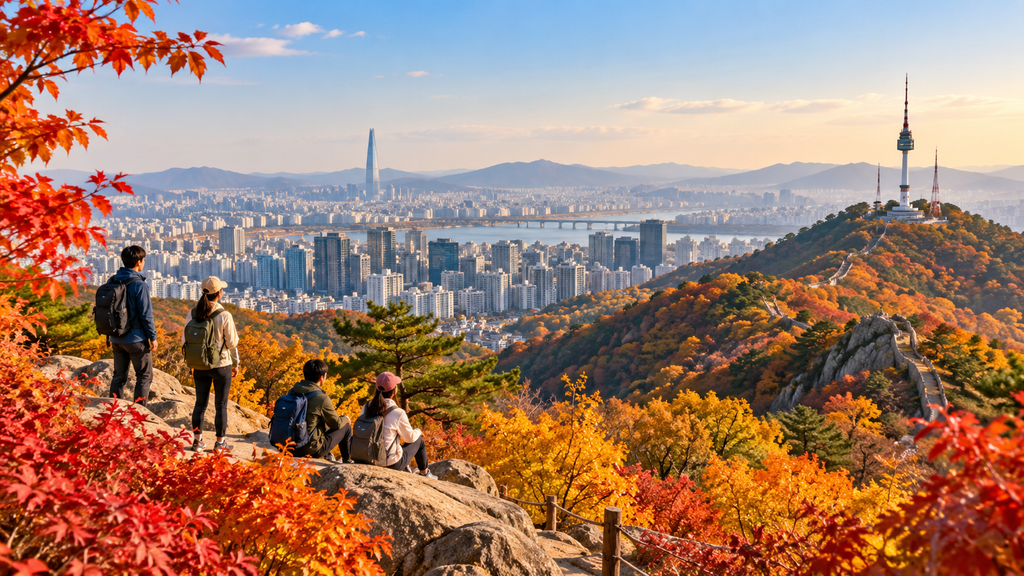
The mountains surrounding the city slowly turn red and gold.
Palace courtyards fill with fallen leaves.
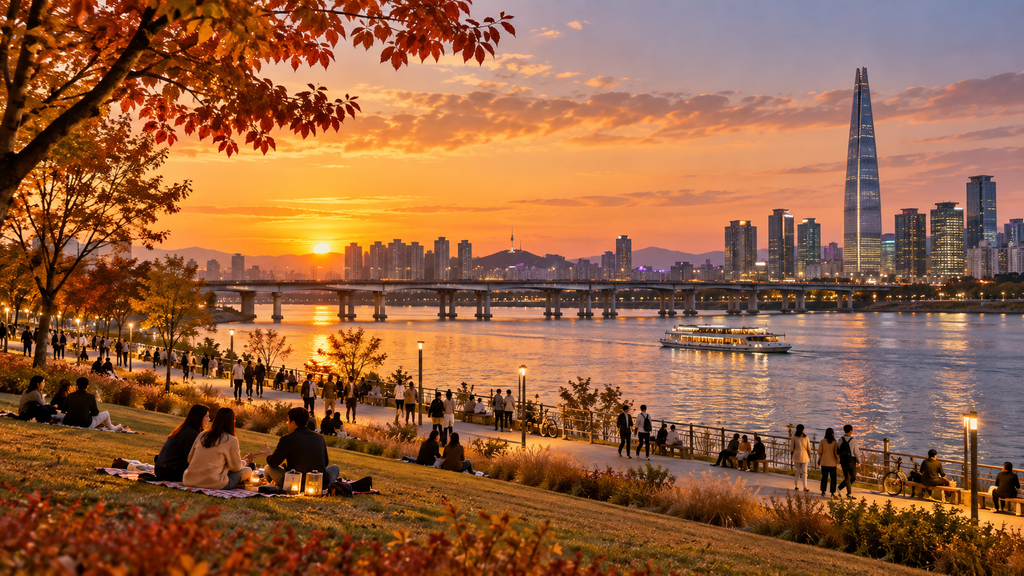
And evenings along the Han River suddenly feel cool enough that staying outside for hours becomes enjoyable again.
This is autumn in Seoul.
For many travelers, spring gets most of the attention because of cherry blossoms.
But if you want to experience Seoul as a city—not just photograph one seasonal flower—autumn may actually be the better season.
Why?
Because Seoul in autumn offers something unusual:
nature, history, food, city life, hiking and festivals all become better at the same time.
1. Autumn Is Not Just One Week in Seoul
One of the biggest mistakes travelers make is thinking of Korean autumn as a single “foliage week.”
It is actually a gradual season.
Late September begins with cooler evenings and clearer outdoor weather.
October brings hiking, festivals, outdoor markets and changing leaves.
Late October and early November are when Seoul’s autumn colors become especially dramatic.
According to Korea Tourism Organization’s 2026 foliage forecast, Bukhansan Mountain is expected to begin showing its first autumn colors around October 23, with peak foliage around November 4. Actual timing can shift depending on the weather.
So if you arrive in Seoul in late September and everything is still green, don’t worry.
Autumn has started.
The colors simply haven’t reached their finale yet.
2. Seoul’s Palaces Were Almost Designed for Autumn
Visit a Korean palace in summer and you notice the architecture.
Visit the same palace in autumn and you notice the relationship between architecture and nature.
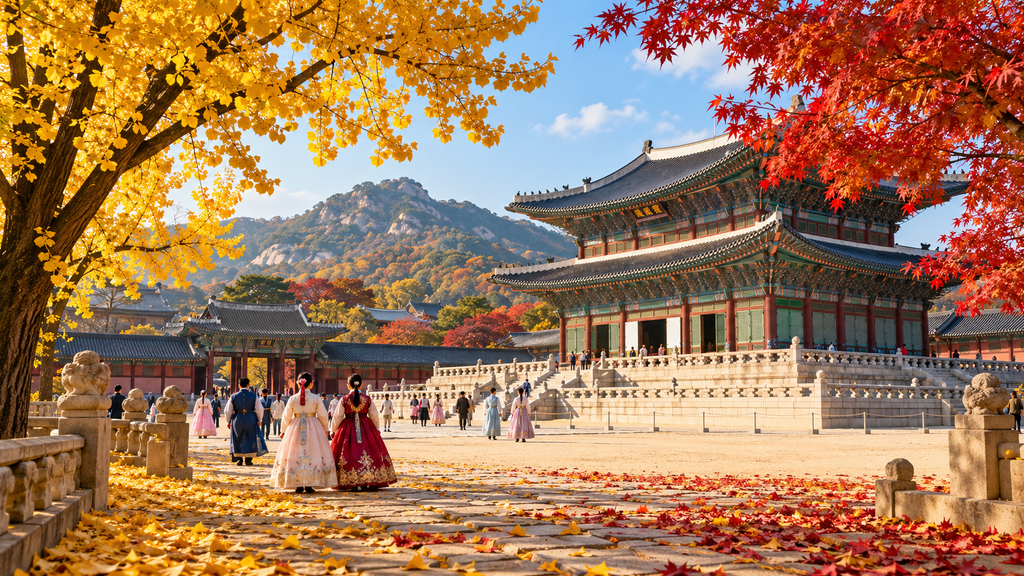
Red and yellow leaves frame dark tiled roofs.
Wooden halls painted with colorful dancheong sit against orange trees.
Mountain ridges appear behind palace walls.
And fallen leaves soften the enormous stone courtyards.
Places like:
Gyeongbokgung Palace
Changdeokgung Palace
Changgyeonggung Palace
Deoksugung Palace
feel completely different once autumn arrives.
Changdeokgung is particularly famous because its architecture was built to work with the surrounding landscape rather than dominate it.
But even central Seoul’s Gyeongbokgung gains another layer in autumn because Bugaksan Mountain rises directly behind the palace.
This is one reason Korean architecture can feel especially beautiful in fall.
The buildings were never meant to exist separately from the landscape.
3. Seoul Is a Megacity With Mountains Inside It
Imagine visiting a city of nearly ten million people.
You take the subway.
You walk through an apartment neighborhood.
And not long afterward, you’re climbing a mountain.
That is completely normal in Seoul.
Mountains are not something Seoul residents need to drive several hours to reach.
They are part of the city.
Bukhansan, Inwangsan, Namsan, Achasan and Gwanaksan are all closely connected to Seoul’s urban fabric.
VISITKOREA highlights Bukhansan’s strong public-transport accessibility as one of the unusual advantages of hiking there.
And autumn is when this relationship becomes especially visible.
Looking down from a mountain trail, you can see:
orange forest,
gray apartment towers,
palace roofs,
roads,
and skyscrapers
all inside the same landscape.
Few cities combine mountains and megacity life quite like Seoul.
4. Autumn Is When Seoul Starts Walking Again
Summer in Seoul can be hot and humid.
Winter can become extremely cold.
Autumn sits comfortably between them.
That changes how people use the city.
Walking becomes an activity rather than simply transportation.
People stroll through Seoul Forest.
Couples walk along Cheonggyecheon.
Families cycle beside the Han River.
Hikers fill mountain trails.
And parks become places to sit rather than places to pass through.
This helps explain a Korean word you may hear in autumn:
나들이 — nadeuri
It means something like a casual outing or excursion.
You are not necessarily traveling somewhere famous.
You are simply going outside because the day itself is worth enjoying.
Autumn is perfect nadeuri season.
5. The Han River Is Better When the Air Gets Cooler
The Han River is one of the best places to understand modern Seoul.
It is not simply a river running through the city.
It functions as a giant shared outdoor space.
People cycle.
Run.
Order delivery food.
Have picnics.
Read books.
Listen to music.
Watch sunsets.
And increasingly, Seoul uses the river for major cultural programs.
The city’s Car-Free Jamsugyo Bridge Festival continues every Sunday through October 25 in 2026. October programming includes a global food road with more than 100 food trucks, media art, yoga and other autumn-night activities.
Seoul is also running the Hangang River Festival – Fall from October 17 to 25.
This means autumn visitors don’t simply see the Han River.
They get to see how Seoul uses it.
6. Seoul’s Autumn Calendar Is Almost Too Full
Autumn has become one of Seoul’s biggest cultural seasons.
In 2026 alone, the city is running major programs throughout October.
Seoul Hanok Week
The 2026 Seoul Hanok Week runs October 2–11 across Bukchon and Seochon, with a record 82 programs planned. Seoul says more than 74,000 visitors attended the previous year’s edition.
Seoul International Garden Show — Fall Edition
The fall edition runs at Maeheon Citizen’s Forest from October 1–27, creating around 50 gardens with citizen participation.
Car-Free Jamsugyo Bridge Festival
Every Sunday until October 25, one of Seoul’s bridges becomes a pedestrian festival space.
Seoul Outdoor Library
Seoul Plaza, Gwanghwamun Square and Cheonggyecheon continue hosting outdoor reading and cultural experiences into the autumn period. During this Chuseok weekend alone, the outdoor libraries are running from 4 PM to 10 PM.
This is one reason autumn Seoul feels alive.
The weather improves at almost exactly the same time that the city moves more cultural activity outdoors.
7. Autumn Food Has Its Own Personality
Seoul also begins to taste different in autumn.
Suddenly you see more:
고구마 — sweet potato
밤 — chestnut
감 — persimmon
대추 — jujube
Cafés introduce seasonal drinks and desserts.
Bakeries launch chestnut or sweet-potato pastries.
Markets fill with seasonal produce.
Roasted sweet potatoes and chestnuts begin appearing again as cooler-weather snacks.
Korea has a strong concept of:
제철 — jecheol
It means food that is in season.
So autumn travel in Korea is not only about looking at the season.
It is also about eating it.
8. Even Coffee Feels Different in Autumn
Seoul’s café culture works particularly well in fall.
In summer, air-conditioning matters.
In winter, warmth matters.
But in autumn, you can actually sit outside.
A rooftop café in Seochon.
A small hanok café in Bukchon.
A terrace in Seongsu.
Coffee near Seoul Forest.
A seat overlooking the Han River.
Suddenly the space around the coffee becomes as important as the coffee itself.
And because Seoul has such an enormous café industry, seasonal weather directly changes how people use these businesses.
From a business perspective, autumn creates something valuable:
longer dwell time.
When people want to remain outside, they walk longer, stay longer, eat more and visit more places.
Good weather becomes an economic asset.
9. Seoul’s Famous Neighborhoods Become Easier to Explore
Seoul is a walking city—but not always an easy walking city.
Some neighborhoods have steep hills.
Others have endless alleys.
Distances between small shops can be surprisingly long.
Autumn makes neighborhoods such as:
Seochon
Bukchon
Ikseon-dong
Seongsu
Euljiro
far more enjoyable to explore slowly.
Instead of asking:
“What famous attraction should I visit?”
autumn encourages a different style of travel:
“What happens if I just keep walking?”
And in Seoul, that question often leads somewhere interesting.
10. Autumn Seoul Is About Contrast
Perhaps the real reason autumn works so well in Seoul is contrast.
A golden ginkgo tree beside a glass office tower.
A five-hundred-year-old palace behind a busy boulevard.
Hikers in bright outdoor clothing boarding the subway beside office workers.
Traditional hanok roofs under red maple leaves.
A food-truck festival beneath a concrete bridge.
Books scattered across Gwanghwamun Square.
Seoul does not separate nature, history and modern urban life neatly.
They overlap.
And autumn makes those overlaps easier to see.
When Is the Best Time to See Autumn Leaves in Seoul?
If foliage is your priority, late October through early November is the safer target for 2026.
The Korea Tourism Organization’s forecast puts:
Bukhansan first foliage: around October 23
Bukhansan peak foliage: around November 4
while also recommending places such as Gyeongbokgung Palace, Seoul Forest, Olympic Park and N Seoul Tower for Seoul foliage viewing.
But remember:
Peak foliage is not necessarily the only good time to visit.
Earlier October gives you comfortable outdoor weather and many events.
Late October gives you stronger colors.
Early November can give you the most dramatic autumn scenery.
There is no single perfect week.
Naru’s Ideal Autumn Day in Seoul
If I had only one autumn day in Seoul, I would do this:
Morning — Gyeongbokgung + Seochon
Walk through Gyeongbokgung before the crowds get too heavy, then explore Seochon’s smaller streets and cafés.
Lunch — Korean Seasonal Food
Choose something warm and seasonal rather than chasing another famous international chain.
Afternoon — Inwangsan or Seoul Forest
For a more urban hike, try Inwangsan.
For a relaxed walk, choose Seoul Forest.
Sunset — Han River
Watch the city change color beside the river.
Evening — Outdoor Seoul
Finish with Gwanghwamun, Cheonggyecheon, Jamsugyo or one of Seoul’s autumn cultural programs.
In one day, you experience:
history → neighborhood → nature → river → modern city.
That is Seoul.
🍁 Did You Know?
Korean has a word specifically associated with going out to enjoy autumn leaves:
단풍놀이 — danpungnori
단풍 means autumn foliage.
놀이 means play or an enjoyable activity.
So instead of simply saying:
“I’m going to look at leaves,”
the language turns the experience into an activity of its own.
That tells you something about Korean seasonal culture.
People do not simply notice seasons.
They often go somewhere specifically to experience them.
🏙 Hidden Story: Why Autumn Matters to Seoul’s Economy
Beautiful weather is also good business.
Consider what happens when Seoul’s weather becomes pleasant:
People stay outdoors longer.
They visit more neighborhoods.
They stop for coffee.
They eat dinner outside their normal area.
They attend festivals.
They shop.
They use public transportation.
They stay into the evening.
Seoul’s current autumn programming reflects this logic.
For example, the Jamsugyo Festival now runs until 10 PM, and Seoul explicitly connects the extended schedule with its efforts to strengthen the city’s nighttime economy.
In other words:
Autumn weather → longer visits → more activity → more local spending.
A beautiful season becomes part of city strategy.
💡 Naru’s Tips for Visiting Seoul in Autumn
Don’t come only for peak foliage.
Early and mid-October have plenty of advantages even before the leaves fully change.
Bring layers.
Warm afternoons and cooler evenings can feel very different.
Combine city and nature.
Don’t choose between a palace and a mountain. In Seoul, you can easily do both.
Walk more than usual.
Autumn is when Seoul’s alleys, streams and parks become part of the trip.
Leave one afternoon unplanned.
Seoul is particularly rewarding when you wander without chasing the next attraction.
🗣 Korean Phrase of the Day
단풍 보러 갈까요?
Danpung boreo galkkayo?
English: Shall we go see the autumn leaves?
中文: 我们去看红叶好吗?
Español: ¿Vamos a ver las hojas de otoño?
📚 5 Korean Words to Learn Today
| English | Korean | Pronunciation | 中文 | Español |
|---|---|---|---|---|
| Autumn | 가을 | ga-eul | 秋天 | Otoño |
| Fall foliage | 단풍 | dan-pung | 红叶 | Follaje otoñal |
| Outing | 나들이 | na-deu-ri | 出游 | Excursión |
| Walk | 산책 | san-chaek | 散步 | Paseo |
| In season | 제철 | je-cheol | 当季 | De temporada |
❓ Today’s Question
If you could visit Seoul in only one season—spring, summer, autumn or winter—which would you choose?
Would you come for cherry blossoms?
Summer nights?
Autumn leaves?
Or snowy palaces?
Tell me in the comments.
💬 Naru’s Quote
“Autumn doesn’t transform Seoul into a different city. It simply makes everything that was already there easier to notice.” — Naru
🇰🇷 한국어 버전
왜 가을이 서울 여행에 가장 좋은 계절일까?
서울의 가을은 단순히 단풍이 아름다운 계절만은 아닙니다.
여름의 무더위가 지나가고, 야외에서 걷기 좋은 날씨가 시작됩니다.
궁궐의 기와지붕은 붉고 노란 나뭇잎과 어우러지고, 북한산과 남산 등 서울의 산들도 천천히 가을빛으로 변합니다.
2026년 공식 단풍 전망에 따르면 북한산은 10월 23일경 첫 단풍이 시작되고, 11월 4일경 절정에 이를 것으로 예상됩니다.
하지만 서울의 가을을 단풍 절정 시기에만 경험할 필요는 없습니다.
10월 초부터 서울은 이미 야외 도시로 변하기 시작합니다.
사람들은 한강을 걷고, 서울숲에서 시간을 보내고, 야외 도서관과 축제를 찾습니다.
2026년에는 서울한옥위크가 10월 2–11일 진행되고, 차 없는 잠수교 축제는 10월 25일까지 매주 일요일 이어집니다. 한강 가을 축제도 10월 17–25일 열립니다.
서울의 가을이 특별한 가장 큰 이유 중 하나는 도시와 자연이 매우 가까이 있기 때문입니다.
지하철을 타고 도심에서 이동한 뒤 비교적 짧은 시간 안에 산길에 들어설 수 있습니다.
오전에는 경복궁을 보고, 오후에는 인왕산을 걷고, 저녁에는 한강에서 노을을 보는 하루도 가능합니다.
먹거리도 달라집니다.
고구마, 밤, 감, 대추 등 가을 제철음식이 등장하고, 카페와 베이커리에서는 가을 시즌 메뉴가 나오기 시작합니다.
한국어에는 제철이라는 말이 있습니다.
그 계절에 가장 맛있는 음식을 의미합니다.
그래서 한국의 가을 여행은 단풍을 보는 여행이면서 동시에 계절을 먹는 여행이기도 합니다.
결국 서울의 가을이 좋은 이유는 하나가 아닙니다.
궁궐도 좋아지고,
산도 좋아지고,
한강도 좋아지고,
걷기도 좋아지고,
카페도 좋아지고,
야외 행사는 더 많아집니다.
가을이 서울을 새로운 도시로 만드는 것은 아닙니다.
원래 서울이 가지고 있던 좋은 것들을 더 잘 보이게 만들어 줍니다.
🇨🇳 简体中文版
为什么秋天可能是游览首尔最好的季节?
秋天的首尔不仅仅因为红叶而美丽。
炎热潮湿的夏季结束后,人们重新开始享受户外空间。
宫殿周围的树叶变成红色和金色。
汉江边更适合散步。
首尔周边的山也逐渐进入赏枫季节。
根据2026年韩国官方红叶预测,北汉山预计在 10月23日左右开始出现第一批红叶,并在11月4日左右达到最佳观赏期。
但即使没有赶上红叶最盛的时候,十月的首尔依然非常值得旅行。
这时会有许多户外活动、文化节、韩屋活动以及汉江沿岸的节庆。
而首尔最特别的地方,是城市和自然之间的距离非常近。
你可以早上参观宫殿,下午爬山,晚上去汉江看日落。
秋天的食物也值得体验。
红薯、栗子、柿子等季节食材开始大量出现,咖啡馆和面包店也会推出秋季限定菜单。
韩国人常说 제철 (jecheol),意思是“当季”。
所以韩国的秋天不仅是看季节。
也是“吃季节”。
如果你第一次来首尔,不妨把十月到十一月初列入旅行计划。
秋天并没有把首尔变成另一座城市。
它只是让这座城市原本的魅力变得更容易被发现。
🇪🇸 Versión en Español
Por qué el otoño puede ser la mejor época para visitar Seúl
El otoño en Seúl no se trata solamente de hojas de colores.
Después del calor y la humedad del verano, la ciudad vuelve a disfrutar de los espacios al aire libre.
Los palacios se rodean de árboles rojos y dorados.
Los senderos de montaña se llenan de excursionistas.
Y las noches junto al río Han se vuelven mucho más agradables.
Según la previsión oficial de follaje de 2026, los primeros colores de otoño en Bukhansan deberían aparecer alrededor del 23 de octubre, con el punto máximo previsto aproximadamente para el 4 de noviembre.
Sin embargo, no es necesario esperar hasta el momento máximo del follaje.
Durante octubre Seúl organiza numerosos festivales, programas culturales y actividades al aire libre.
Una de las características más especiales de la ciudad es la cercanía entre la vida urbana y la naturaleza.
Puedes visitar un palacio por la mañana, caminar por una montaña por la tarde y terminar el día viendo el atardecer junto al río Han.
La comida también cambia con la estación.
Batatas, castañas, caquis y otros productos de temporada aparecen en mercados, panaderías y cafés.
En coreano existe la palabra 제철 (jecheol), que se refiere a los alimentos que están en su mejor momento durante una determinada estación.
Por eso viajar por Corea en otoño significa no solo ver la estación, sino también comerla.
El otoño no convierte Seúl en una ciudad diferente.
Simplemente hace que todo lo especial que ya existía sea mucho más fácil de descubrir.