Every October, Busan Changes
For most of the year, Busan is known for the sea.
Beaches.
Seafood.
Mountains.
Markets.
And a skyline stretching along Korea’s southeastern coast.
But every October, something changes.
Movie posters appear everywhere.
Actors and directors arrive from across Asia.
Film students fill cafés.
Industry executives hold meetings inside BEXCO.
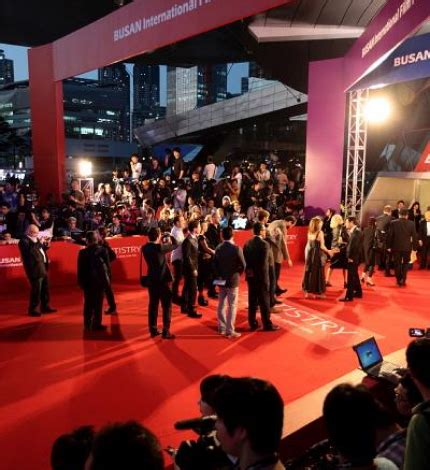
Fans wait outside theaters hoping to see filmmakers they admire.
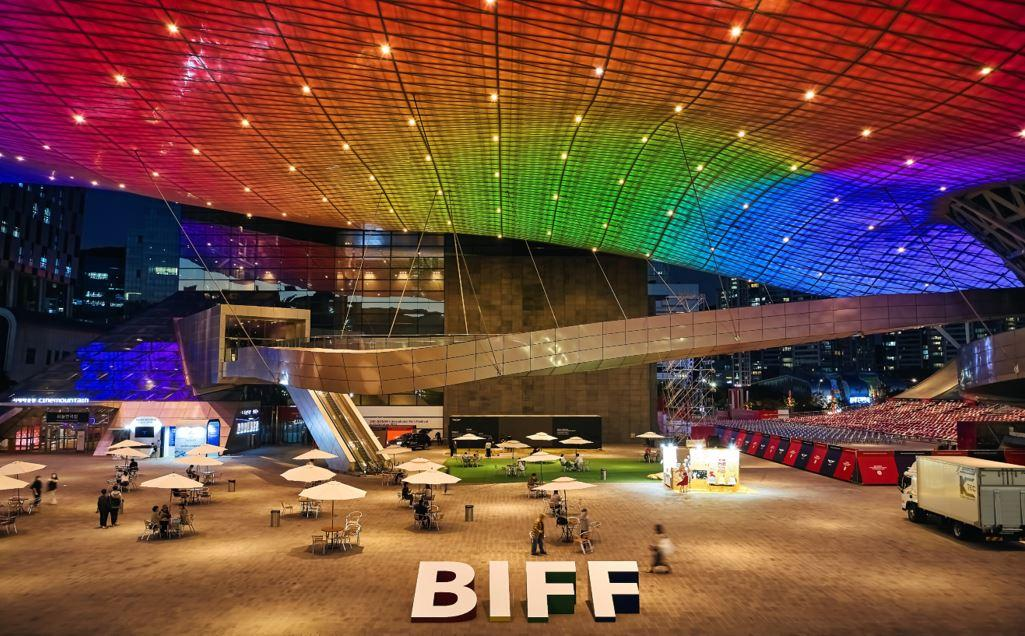
And at night, the enormous roof of the Busan Cinema Center glows above crowds gathering for another screening.
For ten days, Busan starts to feel less like Korea’s second-largest city and more like one enormous movie theater.
This is the Busan International Film Festival—or BIFF.
In 2026, the 31st BIFF runs from October 6 to 15, using 31 screens across eight theaters. The program includes 316 films in total, with 247 official selections representing 59 countries.
But BIFF is more than a film festival.
It is the story of how a port city deliberately built a new cultural identity around cinema.
It Started With a Risky Question
Today, holding a major international film festival in Busan sounds obvious.
In 1996, it did not.
South Korea’s first international film festival opened in Busan on September 13, 1996.
Even the organizers later recalled that there had been serious doubts about whether an international festival could succeed outside Seoul.
The first edition invited 169 films from 31 countries and attracted more than 173,000 attendees.
That mattered because South Korea’s cultural institutions, media industry and entertainment business were heavily concentrated in Seoul.
Busan was making a different argument:
A city does not need to be the political capital to become a cultural capital.
And cinema became the vehicle.
Why Busan?
Busan already had several advantages.
It was an international port city.
It had a strong tradition of cultural exchange.
It had dramatic urban scenery: ocean, mountains, dense neighborhoods, bridges and industrial landscapes.
And perhaps most importantly, it had the ambition to build something Seoul did not already own.
UNESCO describes Busan as having developed into an important hub for Asia’s film and visual industries, supported by production infrastructure, the Busan Film Commission, BIFF and the Busan Cinema Center. Busan joined the UNESCO Creative Cities Network as a City of Film in 2014.
That designation tells us something important.
BIFF did not remain an annual event.
It helped create an ecosystem.
From Film Festival to Film City
A successful festival lasts ten days.
A successful film city works all year.
Busan gradually built institutions around BIFF.
The Busan Film Commission was established in 1999.
Production infrastructure expanded.
Film-related businesses developed.
The Asian film market grew.
Then in 2011, the Busan Cinema Center opened in Centum City as a permanent home for BIFF.
Today the complex contains multiple theaters, outdoor performance space, BIFF Hill and one of the most distinctive architectural roofs in Korea. The venue hosts BIFF’s opening, closing and red-carpet events.
So BIFF stopped being something temporarily placed in Busan.
It became physically built into the city.
The Festival Has Two Hearts
One of the most interesting things about experiencing BIFF is that the festival has two different geographic identities.
The first is Nampo-dong.
This is where the early festival grew.
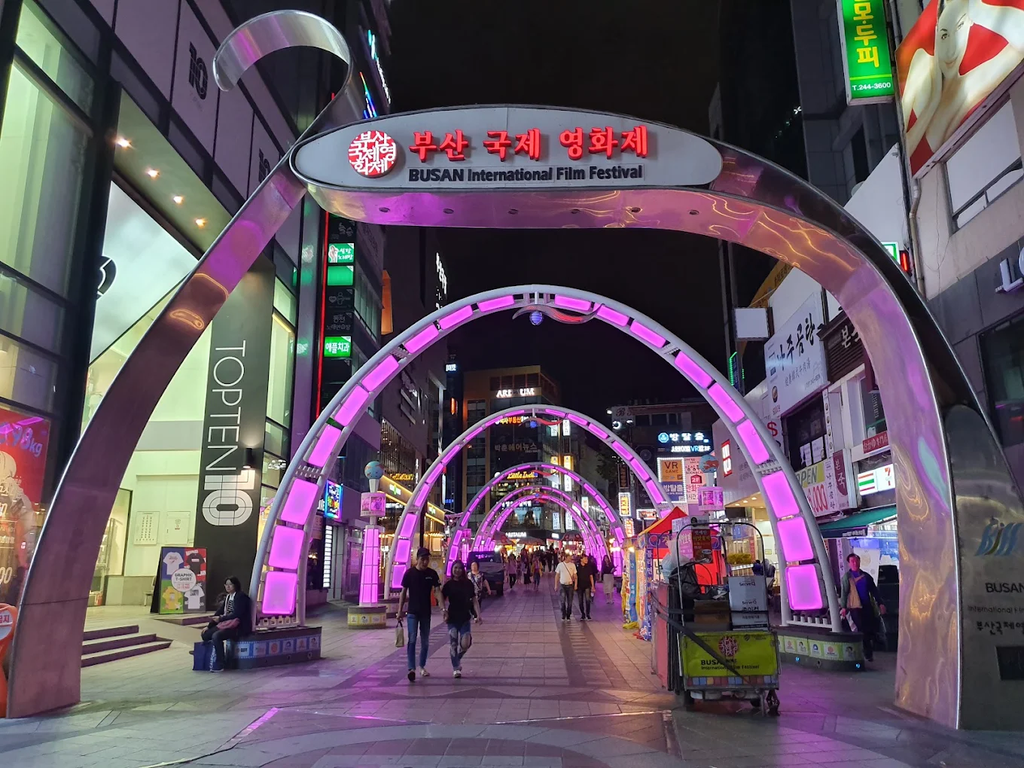
Today, BIFF Square still preserves that history.
Visitors can walk along streets marked with handprints of filmmakers and actors while moving between street-food stalls, markets and cinemas. Busan’s tourism authority describes BIFF Street as one of the city’s film-related landmarks.
The second heart is Centum City.
This is where the modern BIFF feels international, architectural and industrial.
The Busan Cinema Center dominates the area.
Nearby BEXCO hosts the film market.
Directors move between screenings and meetings.
Audiences queue for premieres.
Together, the two areas tell the story of BIFF itself:
Nampo-dong represents where it began.
Centum City represents what it became.
2026 Is a Particularly Important Year
The 31st Busan International Film Festival runs from October 6 through October 15, 2026.
This year’s official program includes 247 selected films from 59 countries, with 95 world premieres and 10 international premieres. Community BIFF adds another 69 films.
The opening ceremony begins on October 6 at the Busan Cinema Center Roof Theater with the opening film The Table: Day and Night, directed by Kim Jong-kwan. The festival closes on October 15 with the closing ceremony and a screening of the winner of the Busan Award.
The official festival also announced that BIFF has been recognized by the International Federation of Film Producers Associations, FIAPF, as an A-list festival, placing it in a more formally recognized tier of major international festivals.
For a festival that began amid doubts about whether Busan could host an international cinema event at all, that is a remarkable transformation.
BIFF Is Not Only About Watching Movies
A normal cinema visit works like this:
Buy a ticket.
Watch a movie.
Go home.
BIFF is different.
Many screenings include GVs—Guest Visits—where directors, actors or other filmmakers meet audiences and discuss the film.
There are Open Talks.
Master Classes.
Outdoor greetings.
Industry events.
Midnight screenings.
Retrospectives.
And sometimes you discover a film simply because the director happens to be standing five meters away explaining why they made it.
The official 2026 schedule includes screenings throughout the day and several midnight programs, while many titles include guest visits.
That changes the role of the audience.
You are not simply consuming a finished product.
You are participating in a conversation about cinema.
Busan Is Also Where Movies Become Business
Behind the red carpet is another BIFF that ordinary visitors barely see.
The Asian Contents & Film Market, or ACFM, runs from October 10–13 at BEXCO.
This is where producers, distributors, investors, content companies and creators meet to buy, sell, finance and develop projects.
For 2026, ACFM is running 64 programs across seven categories, covering areas such as investment, distribution, intellectual property, international co-production, AI and new media.
The scale is significant.
At the 2025 market, 1,222 companies and 3,024 industry professionals from 55 countries registered. The Sales Market recorded 8,438 business meetings, with estimated transactions of around US$71 million.
This is why BIFF matters beyond tourism.
A young director may arrive in Busan with a script.
A producer may discover it.
An investor may finance it.
A distributor may eventually bring the finished film to another country.
The movie a global audience watches three years later may have begun with a meeting in Busan.
BIFF Helped Give Asian Cinema a Meeting Place
From early on, BIFF emphasized Asian filmmakers.
By 1997, the festival described its mission as becoming a forum for discussing the future of Asian cinema.
By 1998, it had launched the Pusan Promotion Plan—today’s Asian Project Market—to connect Asian film projects with international investors and producers.
That distinction matters.
Busan did not try simply to copy Cannes.
It developed a reason for filmmakers to come to Busan specifically.
Asian directors could find audiences.
Emerging filmmakers could meet industry professionals.
Independent films could receive attention before becoming commercially famous.
That made BIFF not just a place to celebrate established cinema, but a place where future cinema could begin.
And Then There Is the City Outside the Theater
One reason BIFF feels different from a film festival held inside a convention center is that Busan itself becomes part of the experience.
Finish a morning screening and you can walk along the water.
Eat seafood.
Visit Haeundae.
Spend the evening beneath the illuminated Busan Cinema Center roof.
Or travel across town to Nampo-dong and eat street food near the historic BIFF Square.
The city gives the festival a visual identity.
Sea.
Bridges.
Night lights.
Old markets.
High-rise towers.
Film people mixing with tourists and ordinary residents.
Busan does not disappear behind the festival.
It becomes one of the characters.
Why International Travelers Should Care Even If They Are Not Film Experts
You do not need to be a serious cinephile.
BIFF can be interesting simply because it lets you experience Korea through a different lens.
Many travelers understand modern Korea through:
K-pop.
K-dramas.
Korean food.
Beauty.
Shopping.
BIFF provides another route:
Korean cinema—and Asia’s wider creative industry.
A festival screening may introduce you to a Korean director before their film reaches Netflix.
A Japanese or Indonesian film may never appear at your local cinema.
A GV can reveal how an Asian filmmaker thinks about family, work, migration, aging or modern city life.
Movies become a way of understanding societies.
That fits Busan remarkably well.
It is a Korean festival that constantly looks outward toward Asia.
What Should a First-Time Visitor Do?
If I were introducing BIFF to someone for the first time, I would not try to watch five films per day.
Choose one or two.
Leave time between screenings.
Walk around the Busan Cinema Center.
Attend a GV if possible.
Spend one evening in Centum City.
And make another trip to BIFF Square in Nampo-dong.
The contrast matters.
One shows you the modern global festival.
The other shows you where the story began.
If you are booking a screening, check the subtitle information carefully. BIFF’s official schedule identifies whether films have Korean and/or English subtitles, and some guest-visit sessions may not include English interpretation.
🎬 Did You Know?
The first Busan International Film Festival was actually called PIFF—Pusan International Film Festival.
Why Pusan?
Before Korea adopted a revised Romanization system, 부산 was commonly written as Pusan in English.
The festival later changed its English name to Busan International Film Festival, creating the abbreviation BIFF.
But the festival itself remained in the same city.
The spelling changed.
The ambition did not.
🎞 Hidden Story: Why BIFF Square Still Matters
The glamorous center of BIFF today is the Busan Cinema Center.
But BIFF Square in Nampo-dong reminds visitors that the festival did not begin inside a futuristic cultural complex.
It grew among ordinary cinemas, markets and crowded city streets.
That matters because BIFF’s early success depended heavily on enthusiastic audiences.
The first festival in 1996 drew more than 173,000 attendees, helping prove that a major international film event could succeed outside Seoul.
In a way, BIFF Square is not just a tourist attraction.
It is evidence of the audience that helped create BIFF.
💼 Naru’s Business Insight: A Festival Can Reposition an Entire City
BIFF is an interesting lesson in city branding.
Busan already had beaches.
It already had seafood.
It already had a port.
BIFF gave the city another association:
Cinema.
Then Busan reinforced that association through infrastructure.
Festival → Film Commission → project market → Busan Cinema Center → production ecosystem → UNESCO Creative City of Film.
This is very different from simply hosting an annual event.
The event becomes a platform.
The platform attracts people.
People attract investment.
Investment creates infrastructure.
Infrastructure makes the identity more permanent.
That is how a ten-day festival can influence a city for the other 355 days of the year.
🗣 Korean Phrase of the Day
영화제 표 어디에서 사요?
Yeonghwaje pyo eodieseo sayo?
English: Where can I buy film-festival tickets?
中文: 电影节的票在哪里买?
Español: ¿Dónde puedo comprar entradas para el festival de cine?
📚 5 Korean Words to Learn Today
| English | Korean | Pronunciation | 中文 | Español |
|---|---|---|---|---|
| Film festival | 영화제 | yeong-hwa-je | 电影节 | Festival de cine |
| Movie | 영화 | yeong-hwa | 电影 | Película |
| Director | 감독 | gam-dok | 导演 | Director |
| Actor | 배우 | bae-u | 演员 | Actor / Actriz |
| Screening | 상영 | sang-yeong | 放映 | Proyección |
Bonus:
관객 (gwan-gaek) — audience
개막작 (gae-mak-jak) — opening film
폐막작 (pye-mak-jak) — closing film
GV — Guest Visit / audience conversation with filmmakers
❓ Today’s Question
Have you ever traveled to another city mainly because of a film, music or cultural festival?
If not, would BIFF make you consider visiting Busan in October?
Tell me in the comments.
💬 Naru’s Quote
“A great festival does more than bring people to a city. Eventually, it changes what people believe the city can be.” — Naru
SEO FAQ
When is the Busan International Film Festival in 2026?
The 31st Busan International Film Festival runs from October 6 to October 15, 2026.
Where is BIFF held?
The main hub is the Busan Cinema Center in Centum City, with screenings across multiple venues. BIFF Square in Nampo-dong remains an important historic film district connected with the festival’s origins.
Is BIFF good for foreign visitors?
Yes. Many screenings include English subtitles or English dialogue, but subtitle formats differ by film, and some Guest Visit sessions may not provide English interpretation. Check the official screening information before booking.
매년 10월, 부산은 어떻게 아시아의 영화 수도가 될까?
부산은 대부분의 계절에는 바다와 해산물, 해운대와 광안리로 기억되는 도시입니다.
하지만 10월이 되면 분위기가 달라집니다.
전 세계의 감독과 배우, 영화산업 관계자와 관객들이 부산에 모이고, 영화의전당 주변에는 하루 종일 영화를 보기 위한 사람들이 오갑니다.
2026년 제31회 부산국제영화제는 10월 6일부터 15일까지 열립니다. 올해는 59개국 247편의 공식 선정작을 포함해 총 316편이 상영되고, 부산의 8개 극장 31개 스크린이 영화제에 활용됩니다.
부산국제영화제의 시작은 1996년이었습니다.
당시만 해도 “서울이 아닌 부산에서 국제영화제가 성공할 수 있을까?”라는 우려가 있었습니다.
하지만 첫 영화제에 31개국 169편이 초청됐고, 17만 명이 넘는 관객이 찾았습니다. 한국 최초의 국제영화제가 큰 성공을 거둔 것입니다.
이후 부산은 영화제를 단순 이벤트로 두지 않았습니다.
부산영상위원회가 만들어지고, 아시아 영화 프로젝트를 위한 시장이 성장했으며, 2011년에는 센텀시티에 영화의전당이 문을 열었습니다.
2014년에는 UNESCO Creative City of Film에도 가입했습니다.
오늘날 BIFF는 두 개의 중심지를 가지고 있습니다.
남포동의 BIFF 광장은 영화제의 역사와 대중성을 보여줍니다.
센텀시티의 영화의전당은 현재의 국제적이고 산업적인 BIFF를 보여줍니다.
그리고 영화제 뒤에는 아시아콘텐츠&필름마켓이 있습니다.
즉 부산국제영화제의 진짜 영향력은 영화표 판매에서 끝나지 않습니다.
영화가 발견되고,
프로젝트가 투자자를 만나고,
콘텐츠가 해외에 판매되고,
새로운 영화가 시작됩니다.
매년 10월 부산이 특별해지는 이유는 단순히 유명 배우들이 찾아오기 때문이 아닙니다.
도시 전체가 열흘 동안 영화를 보고, 만들고, 사고, 팔고, 이야기하는 공간이 되기 때문입니다.
그리고 1996년에 시작된 하나의 영화제가 이제는 부산의 도시 정체성 자체를 바꾸었습니다.
每年十月,釜山如何变成亚洲的电影之城?
平时,人们想到釜山,往往会想到大海、海鲜、海云台和广安里。
但每年十月,这座城市会发生变化。
来自亚洲和世界各地的导演、演员、制片人、发行商和影迷来到釜山参加 Busan International Film Festival(BIFF)。
2026年第31届釜山国际电影节将于 10月6日至15日举行,共放映316部影片,其中247部正式入选作品来自59个国家。
电影节始于1996年。
当时许多人怀疑国际电影节能否在首尔以外的城市成功举办。
然而第一届电影节吸引了来自31个国家的169部电影以及超过17万名观众。
此后,釜山并没有把电影节仅仅当作年度活动。
城市建立了电影委员会、电影产业平台和项目市场,并建设了今天的 Busan Cinema Center。
2014年,釜山加入UNESCO创意城市网络,成为“电影之城”。
今天的BIFF既是电影节,也是产业平台。
在红毯和首映之外,亚洲内容与电影市场让制片人、投资者、发行商和创作者进行项目合作和交易。
所以BIFF带给釜山的并不只是游客。
它帮助釜山建立了一种新的城市身份:
电影。
每年十月,釜山不仅仅在放电影。
它在讨论亚洲电影的未来。
🇪🇸 Versión en Español
Cómo Busan se convierte en la capital cinematográfica de Asia cada octubre
Durante gran parte del año, Busan es conocida por sus playas, mariscos, montañas y vistas al mar.
Pero cada octubre la ciudad cambia.
Directores, actores, productores, distribuidores y aficionados al cine llegan para participar en el Busan International Film Festival, conocido como BIFF.
La 31.ª edición se celebrará del 6 al 15 de octubre de 2026. El programa incluye 316 películas, con 247 selecciones oficiales procedentes de 59 países.
El festival comenzó en 1996.
En aquel momento existían dudas sobre si un festival internacional podría funcionar fuera de Seúl.
La primera edición presentó 169 películas de 31 países y atrajo a más de 173.000 asistentes.
Con el tiempo, Busan convirtió el éxito del festival en una infraestructura permanente.
Creó una comisión cinematográfica.
Desarrolló mercados para proyectos asiáticos.
Construyó el Busan Cinema Center.
Y en 2014 se convirtió en Ciudad Creativa del Cine de UNESCO.
Actualmente BIFF no es solamente un lugar para ver películas.
También existe el Asian Contents & Film Market, donde productores, inversores y distribuidores negocian proyectos, financiación y derechos.
En otras palabras, algunas películas que el público verá dentro de varios años pueden comenzar con una reunión celebrada en Busan este octubre.
Por eso BIFF ha cambiado la identidad de la ciudad.
Busan sigue siendo una ciudad de mar.
Pero cada octubre también se convierte en una ciudad donde Asia viene a imaginar su próximo cine.