
Discover why Seoul residents treat the Han River like a shared living room. Learn about Hangang picnic culture, cycling, late-night food, seasonal activities, and the everyday stories that make the river essential to life in Seoul.
Why the Han River Is Seoul’s Living Room
Imagine that the working day has ended in Seoul.
Office lights remain on, subway trains are crowded, and traffic continues flowing through the city.
But beside the river, the atmosphere feels different.
Friends spread picnic mats across the grass.
Runners follow paths beside the water.
Couples sit quietly beneath the bridges.
Families share food while children play nearby.
Cyclists pass through the evening air, and the city’s lights begin reflecting on the river.
Nobody needs a formal invitation.
Nobody needs to reserve a table.
People simply arrive.
This is why the Han River is more than a landmark.
For Seoul, it is a shared living room.
A River at the Center of the City
The Korean name Hangang can be understood as “a great, wide river.”
It has flowed through the center of the region for thousands of years and has witnessed Seoul’s growth from an old capital into a global city.
Today, the river remains one of Seoul’s most important physical landmarks, separating and connecting the northern and southern parts of the city at the same time.
Yet its meaning is not purely geographical.
The Han River is where the speed of Seoul slows down.
In a city associated with long working hours, fast delivery, advanced technology, and constant movement, the river offers something simple and increasingly valuable:
Space.
Space to walk.
Space to breathe.
Space to meet people without needing to buy an expensive meal or enter a private building.
That accessibility is central to understanding why Seoul residents feel such a strong connection to the river.
It Was Not Always Seoul’s Living Room
The riverside did not always look the way it does today.
The modern history of Hangang Parks began in the early 1980s, when the riverbanks were redeveloped. Areas once treated mainly as flood-control infrastructure were gradually transformed into green public spaces.
In 1992, the riverside spaces officially became known collectively as Hangang Park. Today, Seoul operates 11 Hangang parks, each with a different environment and character.
Some are known for festivals and large lawns.
Others attract cyclists, runners, water-sports enthusiasts, families, or visitors looking for quieter ecological spaces.
This transformation says something important about modern Seoul.
The city did not treat the river only as infrastructure.
It gradually turned it into a place for public life.
Why Picnics Matter So Much
For many visitors, their first image of the Han River is a picnic.
A blanket lies on the grass.
There is fried chicken in the middle.
Perhaps there is beer, ramyeon, fruit, or snacks from a nearby convenience store.
People talk for hours while the skyline changes from daylight to sunset and then to night.
The experience looks simple because it is simple.
That is precisely why it matters.
Much of urban life happens in spaces that require spending money: restaurants, cafés, shopping malls, cinemas, or private clubs.
At the Han River, the river view belongs to everyone.
A student can enjoy the same sunset as a company executive.
A tourist can sit beside a family that has visited the same park for years.
A group of friends can order dinner and stay without worrying about a reservation ending.
The river makes one of the world’s largest cities feel temporarily equal.
🇰🇷 Behind the Culture: Why Food Is Delivered to the Park
International visitors are often surprised when they see delivery riders arriving near the river with bags of fried chicken and other meals.
How does the food find the right person in such a large park?
The system works because people use designated delivery zones, nearby landmarks, bridge names, entrances, or specific meeting points.
This is a perfect example of Korean convenience culture adapting to public space.
Food delivery is not limited to homes or offices.
It follows people to the places where they live their lives.
Eating beside the Han River therefore combines several parts of modern Korean culture:
- Fast delivery
- Shared food
- Late-night social life
- Public outdoor space
- A relaxed break from the city
The meal is important, but the experience around it is what people remember.
More Than Picnics and Fried Chicken
The Han River is often associated with chimaek—fried chicken and beer—but the river supports many different lifestyles.
In the morning, runners and cyclists use the riverside paths.
During the day, parents bring children to parks and water-play areas.
In the evening, people walk, take photographs, exercise, listen to music, or watch the skyline.
Depending on the location and season, visitors may also find swimming pools, sledding areas, fountains, cultural facilities, festivals, water sports, performances, or ecological zones.
The official park network includes Yeouido, Banpo, Ttukseom, Mangwon, Ichon, Jamsil, Gwangnaru, Jamwon, Yanghwa, Nanji, and Gangseo.
They share the same river, but they do not offer the same experience.
Which Hangang Park Should You Visit?
Yeouido Hangang Park
Yeouido is one of the most accessible and energetic choices for a first visit.
It is known for large events, spring cherry blossoms, concerts, marathons, and the Seoul International Fireworks Festival. It also sits close to major business, finance, media, and political districts.
This contrast is very Seoul-like.
People leave offices surrounded by glass towers and, within minutes, sit on the grass beside the river.
Banpo Hangang Park
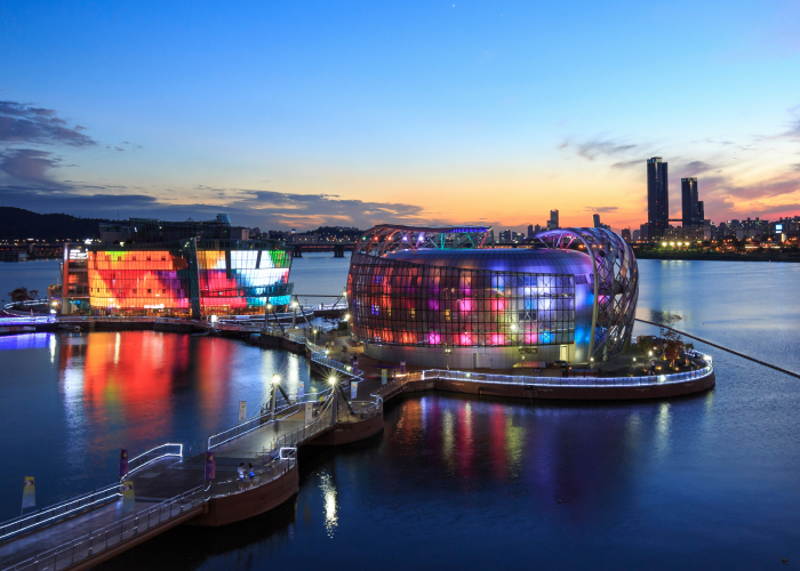
Banpo is especially popular for evening scenery and views around Banpo Bridge.
The area is widely associated with the Moonlight Rainbow Fountain and the lower Jamsu Bridge, although fountain schedules and seasonal programs should always be checked before visiting.
Choose Banpo when night views and a romantic atmosphere matter most.
Ttukseom Hangang Park
Ttukseom is a good choice for active visitors and families.
It has long been associated with riverside recreation and offers seasonal leisure facilities, water activities, cultural spaces, and wide views of the river.
Mangwon Hangang Park
Mangwon offers a calmer neighborhood atmosphere and pairs naturally with Mangwon Market.
It is a good option for visitors who want to buy local food first and then enjoy a less formal riverside picnic.
The River Changes With the Seasons
The Han River does not offer one fixed experience.
It changes with Seoul.
In spring, cherry blossoms and mild weather bring people outdoors.
In summer, the riverside becomes a place for late evenings, water activities, and escaping the heat.
Autumn brings clearer skies, cooler air, festivals, walking, and cycling.
Even winter has its own character, with quieter paths, cold sunsets, and seasonal facilities in selected parks.
Seoul has continued adding trees and ecological areas along the river. From 2015 through 2024, the city reported planting 1.45 million trees along the Hangang, contributing to recreational, ecological, and buffer forests.
The river therefore functions as both a social space and an evolving urban green network.
😲 What Many Visitors Miss
Many tourists visit the Han River at night, take photographs, and leave.
The view is beautiful, but the deeper experience is not the skyline.
It is observing how people use the space.
Look around and you will see different versions of Seoul existing together.
A runner training alone.
A family celebrating a birthday.
A couple on a first date.
Friends sharing convenience-store food.
An elderly person walking at sunset.
A cyclist commuting home.
The river does not represent one type of person or one form of leisure.
It is one of the few spaces where the entire city seems to meet without formally gathering.
That is what makes it Seoul’s living room.
Naru’s Note
When people describe Seoul, they often focus on speed.
Fast internet.
Fast transport.
Fast delivery.
Fast-changing trends.
All of that is real.
But the Han River shows another side of the city.
People stay for hours doing almost nothing.
They eat slowly.
They watch the water.
They wait for the sky to change color.
They talk without a fixed schedule.
The river reminds me that even the fastest cities need a place where time feels less urgent.
Perhaps that is why Seoul residents return again and again.
They are not only visiting the river.
They are recovering a part of the day that belongs to them.
Final Thoughts
Do not visit the Han River only to take a photograph of Seoul’s skyline.
Bring something to sit on.
Buy a simple meal.
Walk beside the water.
Watch the people around you.
Stay until the daylight begins to disappear.
The river may not show you Korea’s oldest palace or most famous artwork.
Instead, it shows you something equally meaningful:
How people live now.
The Han River is not Seoul’s living room because it contains comfortable furniture or walls.
It is Seoul’s living room because people feel free to arrive, rest, eat, talk, exercise, and spend time together.
In a city that is always moving, the river gives everyone permission to pause.
“Some places show you a city’s landmarks. Others show you its life.”
— Naru
Discover Korea. Learn Korea. Experience Korea. Inspire a Journey.

Learn, Experience & Inspire
📚 Learn 5 Korean Words Today
| English | 한국어 | Pronunciation | 中文 | Español |
|---|---|---|---|---|
| Han River | 한강 | han-gang | 汉江 | Río Han |
| Picnic | 소풍 | so-pung | 野餐 | Pícnic |
| Park | 공원 | gong-won | 公园 | Parque |
| Bicycle | 자전거 | ja-jeon-geo | 自行车 | Bicicleta |
| Night View | 야경 | ya-gyeong | 夜景 | Vista nocturna |
🗣 Korean Phrase of the Day
한국어
한강공원은 어떻게 가나요?
Pronunciation
Hangang gongwoneun eotteoke ganayo?
English
How do I get to Hangang Park?
中文
去汉江公园怎么走?
Español
¿Cómo puedo llegar al parque del río Han?
Travel Tip
“Hangang Park” is not one single entrance or destination. Check the specific park name—such as Yeouido, Banpo, Ttukseom, or Mangwon—before starting your journey.
😲 Did You Know?
Seoul’s Hangang Park network contains 11 different parks, each with its own atmosphere and facilities.
The modern park system grew from riverbank development that began in the early 1980s. In 1992, the riverside public spaces officially became known as Hangang Park.
🇰🇷 Hidden Story
Why do Koreans call the Han River a place to “heal”?
The Korean word 힐링 (hilling), borrowed from English, is often used to describe emotional rest rather than medical recovery.
When Koreans say they are going to the river for “healing,” they usually mean:
- Escaping work and study
- Spending time outdoors
- Looking at open space
- Eating with friends
- Clearing the mind
The expression reveals how important the river has become as an emotional refuge in a dense city.
✈️ Before You Go
- Choose a specific Hangang park before leaving.
- Check the weather, seasonal programs, and event schedules.
- Use public transportation when major events are taking place.
- Bring a picnic mat or something light to sit on.
- Keep your area clean and separate rubbish correctly.
- Avoid cycling or standing on designated bicycle paths.
- Fountain, swimming, festival, and seasonal facility schedules may change.
⭐ Naru Recommends
For a first visit:
- Yeouido: Classic picnic atmosphere and easy access
- Banpo: Night views and bridge scenery
- Ttukseom: Activities, families, and a lively atmosphere
- Mangwon: Local food followed by a relaxed picnic
- Ichon: A quieter riverside walk close to central Seoul
❓ Today’s Question
Where is the “living room” of your city—the public place where people naturally gather, relax, and spend time together?
Share the place and the story behind it in the comments.

为什么汉江是首尔的“公共客厅”?
一天的工作结束后,首尔依然高速运转。
地铁里挤满下班的人,街道上的车辆不断前行,办公楼的灯光也还没有完全熄灭。
但来到汉江边,城市的节奏似乎突然变了。
朋友们把野餐垫铺在草地上。
跑步的人沿着河边前进。
情侣坐在桥下看着夜色。
家人围在一起吃饭,孩子们在附近玩耍。
骑自行车的人迎着晚风经过,城市的灯光逐渐倒映在水面上。
没有人需要邀请函。
也没有人必须预订座位。
大家只是来到这里。
因此,汉江不仅仅是首尔的一处地标。
它更像是首尔所有人共同拥有的客厅。
一条穿过城市中心的河
“汉江”这个名字所表达的,是一条宽广而巨大的河流。
它流经首尔中心数千年,见证了这座城市从古老都城发展为世界级大都市的过程。
今天,汉江依然是首尔最重要的地理标志之一。
它将城市分成南北两部分,却也通过桥梁、道路、公园和日常生活把城市重新连接起来。
但汉江的重要性不只是地理上的。
这里也是首尔慢下来的地方。
在一座以快速交通、快速配送、先进科技和不断变化而闻名的城市里,汉江提供了一种越来越珍贵的东西:
空间。
散步的空间。
呼吸的空间。
不需要进入昂贵餐厅或私人建筑,也可以与人相聚的空间。
汉江公园并非一直如此
今天的汉江沿岸并不是自然形成的休闲空间。
现代汉江公园的历史始于20世纪80年代初。当时,河岸在开发过程中逐渐从以防洪为主的基础设施,转变为市民可以使用的绿色公共空间。
1992年,这些河岸空间正式被统称为“汉江公园”。
如今,首尔共有11座汉江公园,每一座都有不同的环境和特色。
有些以大型活动和草地闻名。
有些更适合骑行、跑步、水上运动、家庭活动,或者安静地观察自然。
这一变化也反映了首尔发展的一个重要方向:
城市不再只把河流视为基础设施,而是把它变成公共生活的一部分。
为什么汉江野餐如此重要?
很多外国游客对汉江的第一印象,是草地上的野餐。
一张野餐垫。
中间放着炸鸡。
旁边可能还有啤酒、泡面、水果,或从便利店买来的零食。
人们一边聊天,一边看着天空从白天变成黄昏,再变成夜晚。
看起来很简单。
而它的意义恰恰在于这种简单。
城市中的许多休闲活动都需要消费。
餐厅、咖啡馆、购物中心和电影院,都建立在购买服务的基础上。
但在汉江,每个人都能拥有同一片夕阳和河景。
学生和企业高管可以坐在同一片草地上。
游客可以与多年反复来到这里的本地家庭共享同一个空间。
在这里,世界上规模最大的城市之一,会暂时显得更加平等。
为什么外卖可以送到公园?
许多外国游客第一次看到外卖员带着炸鸡来到汉江边时,都会感到惊讶。
公园这么大,他们如何找到订餐的人?
通常,人们会使用指定的外卖取餐区、桥梁名称、入口、便利店或明显的地标作为见面地点。
这正是韩国便利文化适应公共空间的典型例子。
外卖不仅送到住宅或办公室。
它会跟随人们来到真正生活和休息的地方。
因此,在汉江吃外卖,实际上融合了现代韩国文化的多个方面:
快速配送、共享食物、夜间社交、公共空间,以及暂时逃离城市压力的放松时间。
汉江不只有炸鸡和啤酒
汉江经常与“炸鸡加啤酒”联系在一起,但它承载的生活方式远不止这些。
清晨,有人在河边跑步和骑行。
白天,父母带孩子来到公园和戏水设施。
傍晚,人们散步、拍照、运动、听音乐,或者欣赏城市夜景。
根据地点和季节不同,还可能看到游泳池、雪橇场、喷泉、文化空间、庆典、水上运动和生态区域。
同一条河流,为不同年龄和生活方式的人提供了不同的空间。
Naru’s Note
人们介绍首尔时,总会强调“快”。
快速网络。
快速交通。
快速配送。
快速变化的潮流。
这些都是真实的。
但汉江展现了这座城市的另一面。
人们会在这里待上几个小时,却几乎什么也不做。
慢慢吃饭。
静静看水。
等待天空变色。
没有时间限制地聊天。
即使最快的城市,也需要一个让时间不再紧迫的地方。
也许这正是首尔人不断回到汉江的原因。
他们不只是来访问一条河。
他们是在重新找回一天中真正属于自己的时间。
结语
不要只为了拍摄首尔的夜景而来到汉江。
带上一张可以坐下来的垫子。
买一顿简单的食物。
沿着水边慢慢散步。
观察周围的人。
一直待到天色变暗。
汉江不会向你展示韩国最古老的宫殿或最著名的艺术品。
但它会展示同样重要的东西:
韩国人今天是如何生活的。
“有些地方让你看见一座城市的地标,另一些地方让你看见它的生活。”
— Naru
Discover Korea. Learn Korea. Experience Korea. Inspire a Journey.

Por Qué el Río Han Es la Sala de Estar de Seúl
Imagina que la jornada laboral acaba de terminar en Seúl.
Las oficinas continúan iluminadas, los trenes van llenos y el tráfico sigue atravesando la ciudad.
Sin embargo, junto al río, todo parece diferente.
Grupos de amigos extienden mantas sobre el césped.
Los corredores avanzan junto al agua.
Las parejas se sientan bajo los puentes.
Las familias comparten comida mientras los niños juegan cerca.
Los ciclistas pasan con la brisa de la tarde y las luces de la ciudad empiezan a reflejarse en el río.
Nadie necesita una invitación formal.
Nadie tiene que reservar una mesa.
La gente simplemente llega.
Por eso, el río Han es mucho más que un monumento natural.
Es la sala de estar compartida de Seúl.
Un río en el centro de la ciudad
El nombre coreano Hangang transmite la idea de un río grande y ancho.
Durante miles de años, ha atravesado el corazón de la región y ha observado la transformación de Seúl, desde una antigua capital hasta una metrópolis global.
Actualmente, el río sigue siendo uno de los elementos geográficos más importantes de la ciudad.
Separa el norte y el sur, pero también los conecta a través de puentes, parques, carreteras y experiencias cotidianas.
Su importancia, sin embargo, no es solo geográfica.
El río Han es el lugar donde Seúl reduce la velocidad.
En una ciudad conocida por sus largas jornadas laborales, sus entregas rápidas, su tecnología avanzada y su movimiento constante, el río ofrece algo sencillo pero valioso:
Espacio.
Espacio para caminar.
Espacio para respirar.
Espacio para encontrarse sin tener que pagar por una comida costosa o entrar en un edificio privado.
No siempre fue la sala de estar de Seúl
La ribera no siempre tuvo el aspecto actual.
La historia moderna de los parques del río Han comenzó a principios de la década de 1980, cuando las zonas ribereñas fueron transformadas progresivamente.
Espacios utilizados principalmente para controlar inundaciones pasaron a convertirse en áreas verdes abiertas al público.
En 1992, estos espacios recibieron oficialmente el nombre colectivo de Hangang Park.
Hoy existen 11 parques a lo largo del río, cada uno con un carácter diferente.
Algunos son famosos por sus festivales y grandes zonas de césped.
Otros atraen a ciclistas, corredores, familias, amantes de los deportes acuáticos o personas que buscan una experiencia más tranquila.
Esta transformación refleja una idea importante sobre el desarrollo de Seúl:
La ciudad no trató el río únicamente como infraestructura.
Lo convirtió en un espacio para la vida pública.
Por qué los pícnics son tan importantes
Para muchos visitantes, la imagen más reconocible del río Han es un pícnic.
Una manta sobre el césped.
Pollo frito en el centro.
Quizá cerveza, ramyeon, fruta o aperitivos comprados en una tienda de conveniencia.
Las personas conversan durante horas mientras la luz cambia del día al atardecer y finalmente a la noche.
La experiencia parece sencilla porque realmente lo es.
Y precisamente por eso resulta tan importante.
Gran parte de la vida urbana ocurre en lugares donde es necesario gastar dinero: restaurantes, cafeterías, centros comerciales o cines.
En el río Han, la vista pertenece a todos.
Un estudiante puede disfrutar de la misma puesta de sol que un alto ejecutivo.
Un turista puede sentarse junto a una familia que visita el mismo parque desde hace años.
Durante unas horas, una de las ciudades más grandes del mundo parece un lugar más igualitario.
¿Cómo llega la comida a un parque tan grande?
Muchos visitantes internacionales se sorprenden al ver repartidores llegando al río con bolsas de pollo frito y otros alimentos.
¿Cómo encuentran a una persona en un espacio tan amplio?
La respuesta está en las zonas de recogida, los nombres de los puentes, las entradas, las tiendas de conveniencia y otros puntos de referencia.
Es un ejemplo perfecto de cómo la cultura coreana de la comodidad se adapta al espacio público.
La comida a domicilio no se limita a casas y oficinas.
Sigue a las personas hasta los lugares donde realmente pasan su tiempo.
Comer junto al río reúne varios elementos de la Corea moderna:
entrega rápida, comida compartida, vida nocturna, espacios públicos y una pausa relajada frente al ritmo de la ciudad.
Mucho más que pollo frito y cerveza
El río Han suele relacionarse con el chimaek, la combinación de pollo frito y cerveza.
Sin embargo, el río sostiene muchos estilos de vida diferentes.
Por la mañana, corredores y ciclistas utilizan los caminos de la ribera.
Durante el día, las familias visitan parques y zonas de juegos acuáticos.
Por la noche, la gente pasea, toma fotografías, escucha música, hace ejercicio o contempla el perfil urbano.
Según el lugar y la temporada, también pueden encontrarse piscinas, pistas de trineo, fuentes, actividades culturales, festivales, deportes acuáticos y zonas ecológicas.
El mismo río ofrece una experiencia diferente para cada persona.
Naru’s Note
Cuando la gente describe Seúl, suele hablar de velocidad.
Internet rápido.
Transporte rápido.
Entregas rápidas.
Tendencias que cambian rápidamente.
Todo eso forma parte de la ciudad.
Pero el río Han muestra otra versión de Seúl.
La gente puede permanecer allí durante horas sin hacer casi nada.
Come lentamente.
Observa el agua.
Espera a que cambie el color del cielo.
Habla sin mirar el reloj.
El río me recuerda que incluso las ciudades más rápidas necesitan un lugar donde el tiempo deje de sentirse urgente.
Quizá por eso los habitantes de Seúl regresan una y otra vez.
No visitan solamente un río.
Recuperan una parte del día que vuelve a pertenecerles.
Reflexión final
No visites el río Han únicamente para fotografiar el horizonte de Seúl.
Lleva algo sobre lo que puedas sentarte.
Compra una comida sencilla.
Camina junto al agua.
Observa a las personas.
Quédate hasta que la luz comience a desaparecer.
El río no te mostrará el palacio más antiguo de Corea ni su obra de arte más famosa.
Te mostrará algo igualmente significativo:
cómo vive hoy la gente de Seúl.
“Algunos lugares muestran los monumentos de una ciudad. Otros muestran su vida.”
— Naru