
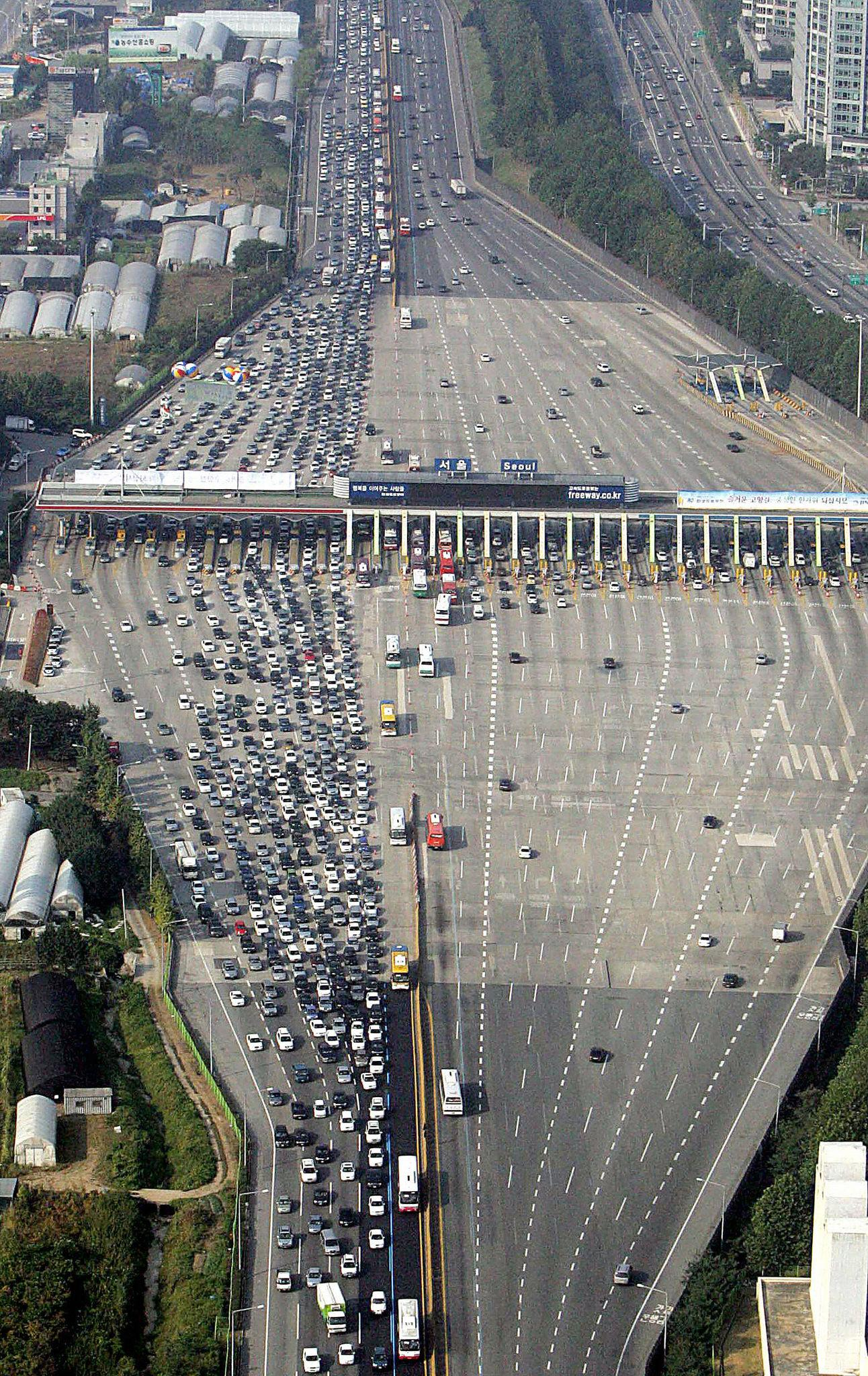
Imagine knowing that a four-hour drive might take seven hours.
Or longer.
You know the highway will be crowded.
You know train tickets will be difficult to get.
You know everyone else has exactly the same idea.
And yet—
you pack the car.
Buy gifts.
Load food into the trunk.
Wake up early.
And start driving.
Why?
Because it is Chuseok.
And for generations of Koreans, Chuseok has meant something more powerful than avoiding traffic:
Going home.
1. Korea Even Has a Special Word for the Journey Home
The Korean word is:
귀성 — gwiseong
It means returning to one’s hometown for a major holiday.
And the journey itself is often called:
귀성길 — gwiseong-gil
literally, “the road home.”
That tells you something important.
In Korea, the journey has become culturally significant enough to have its own vocabulary.
News broadcasts talk about the gwiseong-gil.
Families discuss when to begin their gwiseong.
Traffic forecasts are built around it.
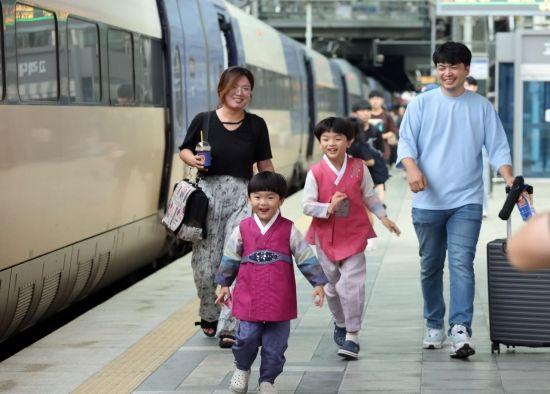
And every Chuseok, millions of people make versions of the same journey.
2. Chuseok Is Not Simply “Korean Thanksgiving”
International guides often call Chuseok Korean Thanksgiving.
That comparison is helpful, but incomplete.
Chuseok falls on the 15th day of the eighth lunar month and traditionally marks gratitude for the autumn harvest. In 2026, Chuseok Day falls on September 25, with the official holiday running September 24–26.
But Chuseok is also about:
family,
hometown,
ancestors,
food,
memory,
and return.
For some families, that may include charye, an ancestral memorial ritual.
Others may visit family graves.
Many simply gather, eat, talk, and spend time together.
And an increasing number of modern Korean families celebrate in much simpler ways.
There is no single Chuseok anymore.
But family reunion remains at the heart of the holiday.
3. Why Does Everyone Have to Travel?
To understand the traffic, you need to understand modern Korean history.
Korea urbanized extraordinarily quickly.
During the decades of industrialization, especially from the 1960s onward, large numbers of young people left rural communities and smaller cities for Seoul and other industrial centers in search of work, education, and opportunity. Korea’s urbanization rate rose from about 24% in 1955 to more than 80% by 2020.
But their parents often remained elsewhere.
So did family graves.
So did memories of childhood.
So did 고향 — gohyang, the hometown.
This created one of modern Korea’s most remarkable recurring movements:
People live in the city.
But on Seollal and Chuseok—
they go back.
Korea.net has described the huge Chuseok migration as a reflection of the country’s rapid urbanization and industrialization.
In that sense, the Chuseok traffic jam is not just a transportation problem.
It is almost a map of Korea’s economic history.
4. “Hometown” Means More Than Your Current Address
The Korean word 고향 (gohyang) is difficult to translate perfectly.
“Hometown” is close.
But emotionally, gohyang can carry ideas of:
where you grew up,
where your parents live,
where your family came from,
where grandparents are buried,
and where you feel your roots began.
For older generations that moved to Seoul during Korea’s rapid industrialization, the distinction was particularly strong.
Their job was in Seoul.
Their apartment was in Seoul.
Their children may have been born in Seoul.
But their gohyang could still be somewhere else.
That is one reason Chuseok traditionally pulls people away from the big cities and back toward regional Korea.
5. Then Comes the Famous Chuseok Traffic
This is where the tradition becomes visible.
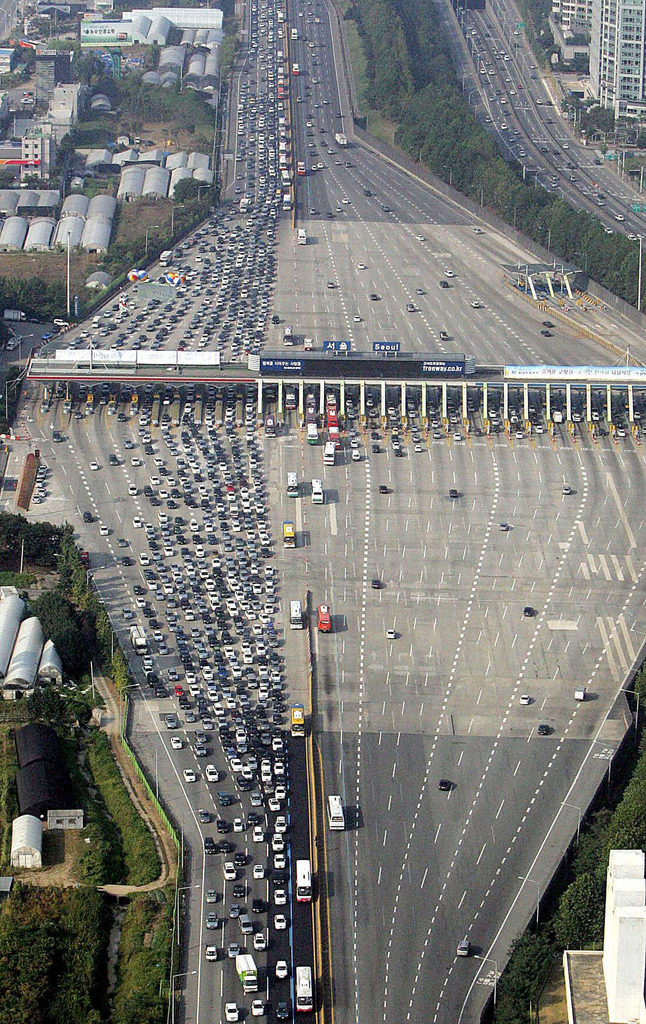
Cars pour out of Seoul.
Expressways fill.
Service areas become crowded.
KTX seats disappear quickly.
Bus terminals fill with luggage and gift boxes.
Exact congestion changes every year, but the scale can be enormous.
For example, during one major travel day of the 2025 Chuseok period, Korea Expressway Corporation forecasts cited 5.75 million vehicles nationwide, with an estimated Seoul-to-Busan drive of about 7½ hours at one point that morning.
A normal Seoul-to-Busan trip by car can already be long.
During Chuseok, travelers know it can become much longer.
And they still leave.
That is the fascinating part.
Hidden Story — The Traffic Jam Became Part of Chuseok
Ask Koreans about childhood Chuseok memories and some may remember the food.
Others remember grandparents.
Some remember cousins.
But many also remember:
the car.
Long hours on the highway.
Sleeping in the back seat.
Stopping at a highway service area.
Listening to holiday traffic reports.
Eating snacks in the car.
As frustrating as the traffic is, it has also become part of the collective memory of the holiday.
Few people would say they like Chuseok traffic.
But the phrase gwiseong-gil carries more emotion than an ordinary traffic jam.
The road is congested because everyone is trying to get somewhere that matters.
6. Train Tickets Can Feel Like Concert Tickets
Not everyone drives.
Many Koreans try to take the KTX or other trains.
That creates another Chuseok tradition:
the holiday ticket battle.
For 2026, Korail designated trains operating September 23–27 for the Chuseok holiday reservation period. Reservations for the general public run September 7–11 after earlier booking days for transportation-vulnerable passengers.
Why organize a special booking process?
Because demand is concentrated into a very short period.
Seoul → Busan.
Seoul → Daegu.
Seoul → Daejeon.
Seoul → Gwangju.
Millions of people want to move in similar directions at similar times.
A train seat therefore becomes more than transportation.
It can become the difference between a comfortable two-hour journey and many hours in traffic.
7. Highway Rest Stops Become Part of the Experience
Here is something foreign visitors might not expect:
Korean highway rest stops can be genuinely fun.
A Chuseok drive may involve stopping for:
hot snacks,
regional specialties,
coffee,
ramyeon,
restrooms,
and sometimes surprisingly elaborate food courts.
The 휴게소 — hyugeso, or highway rest area, is part of Korean road-trip culture.
Families stretch their legs.
Children choose snacks.
Drivers drink coffee.
People check the traffic again.
Then everyone gets back into the car.
It is one reason the gwiseong-gil feels less like a single commute and more like a long annual journey.
8. Why Not Just Celebrate in Seoul?
Increasingly, some families do.
This is important.
Korean family life is changing.
Parents may now live in Seoul too.
Children may live overseas.
Some families meet at restaurants instead of preparing large meals.
Some skip formal ancestral rites.
Some travel during Chuseok.
Others divide the holiday between two sides of the family.
And younger generations sometimes question the cost, labor, and stress associated with traditional holiday gatherings.
So the image of every Korean driving to a rural hometown is outdated.
But the tradition remains culturally powerful.
Even when people choose not to make the journey, everyone understands what gwiseong means.
9. There Is Another Journey: 귀경
Eventually, everyone has to go back.
That journey has its own word too:
귀경 — gwigyeong
Traditionally, it means returning to Seoul or the city after visiting one’s hometown.
So Chuseok traffic has two great movements:
귀성 — leaving the city for home
and
귀경 — returning to the city afterward.
For several days, Korea’s traffic reports effectively become a nationwide story about families moving outward—
and then back inward.
The words themselves reveal Korea’s modern geography:
the city became where people work;
the hometown remained where many families felt they belonged.
10. So Why Endure the Traffic?
Because people do irrational things for relationships.
You might drive seven hours for a meal that lasts two.
Carry an expensive fruit box hundreds of kilometers.
Wait weeks for a train ticket.
Sit in traffic with everyone asking:
“Are we there yet?”
From a purely efficiency-based perspective, it makes little sense.
From a family perspective, it can make perfect sense.
Chuseok is one of the moments when Korea’s highly modern, highly urbanized society reconnects with something older:
family roots.
Harvest.
ancestors.
home.
The traffic is what happens when millions of private emotional decisions happen at the same time.
Did You Know?
For 2026, the Korean government announced toll-free expressway travel from September 24 through September 27 as part of its Chuseok livelihood-support measures.
That policy itself says something about the scale of Chuseok mobility.
When a national holiday requires special railway reservations, toll measures, public-transport planning, and traffic management, it is no longer simply a family celebration.
It becomes a nationwide movement.
What Foreign Travelers Should Know During Chuseok
If you are traveling around Korea during Chuseok, do not assume transportation will operate like an ordinary week.
Intercity trains and buses can become heavily booked, road travel may take considerably longer, and some independently operated restaurants and shops may close. Major attractions often remain open, but schedules should still be checked individually. VISITKOREA specifically notes that some businesses may close for several consecutive days during Chuseok.
For 2026, the key period to pay attention to is roughly September 23–27, when Korail’s special holiday-ticket program covers train services.
If you are staying in Seoul, however, Chuseok can also be a fascinating time to experience the city.
Some normally crowded business districts may feel unusually calm while cultural sites offer special holiday programming.
A Small Business Insight — Korea Moves as an Economy Too
Chuseok homecoming creates an enormous temporary economy.
People buy:
premium fruit,
Spam gift sets,
beef,
traditional foods,
fuel,
train tickets,
bus tickets,
highway meals,
and gifts for relatives.
Restaurants and tourist destinations prepare for holiday traffic.
Logistics companies deal with huge gift-delivery volumes.
Railways create special reservation systems.
Governments introduce transportation and price-stabilization measures.
For 2026, the government is even increasing supplies of major holiday foods and operating nationwide discount programs ahead of Chuseok.
A family tradition therefore becomes a major seasonal economic event.
That is something Chuseok has in common with Christmas, Lunar New Year, Thanksgiving, and other major holidays around the world.
Emotion creates movement.
Movement creates spending.
And spending creates an entire holiday economy.
5 Korean Words to Know
| English | Korean | Pronunciation | 中文 | Español |
|---|---|---|---|---|
| Chuseok | 추석 | chu-seok | 秋夕 | Chuseok |
| Homecoming | 귀성 | gwi-seong | 返乡 | Regreso al hogar |
| Hometown | 고향 | go-hyang | 故乡 | Lugar de origen |
| Traffic jam | 교통체증 | gyo-tong-che-jeung | 堵车 | Atasco |
| Return to the city | 귀경 | gwi-gyeong | 返城 | Regreso a la ciudad |
Korean Phrase of the Day
고향에 내려가요.
Gohyange naeryeogayo.
English: I’m going back to my hometown.
Chinese: 我要回老家。
Spanish: Voy a volver a mi ciudad natal.
You will hear variations of this sentence constantly before major Korean holidays.
Today’s Question
How many hours would you be willing to travel just to spend one holiday meal with your family?
Two hours?
Five?
Ten?
And if your entire country tried to go home on the same day—
would you still go?
Naru’s Tips
If you visit Korea during Chuseok, book intercity transportation as early as possible and avoid planning a tight road itinerary on the busiest travel days. At the same time, don’t see the holiday only as an inconvenience. Watch Seoul Station, highway rest areas, gift sections in department stores, and families carrying food and luggage. Chuseok is one of the rare moments when an invisible idea—“home”—becomes physically visible across an entire country.
Hidden Story — Korea’s Traffic Jam Is Also a History Lesson
There is a strange way to look at the Chuseok highway.
Every car is modern.
The expressway is modern.
The KTX is modern.
The navigation app is modern.
But the reason many people are moving is ancient.
Family.
Harvest.
Ancestors.
Home.
And the enormous scale of the movement reflects something else:
Korea’s transformation from a largely rural society into one of the world’s most urbanized economies.
The Chuseok traffic jam exists where old family traditions meet modern economic geography.
That is why it is more interesting than it first appears.
Final Thoughts
From above, Chuseok traffic looks absurd.
Thousands of cars.
Endless red brake lights.
Packed railway stations.
Overloaded service areas.
But from inside each vehicle, the story is smaller.
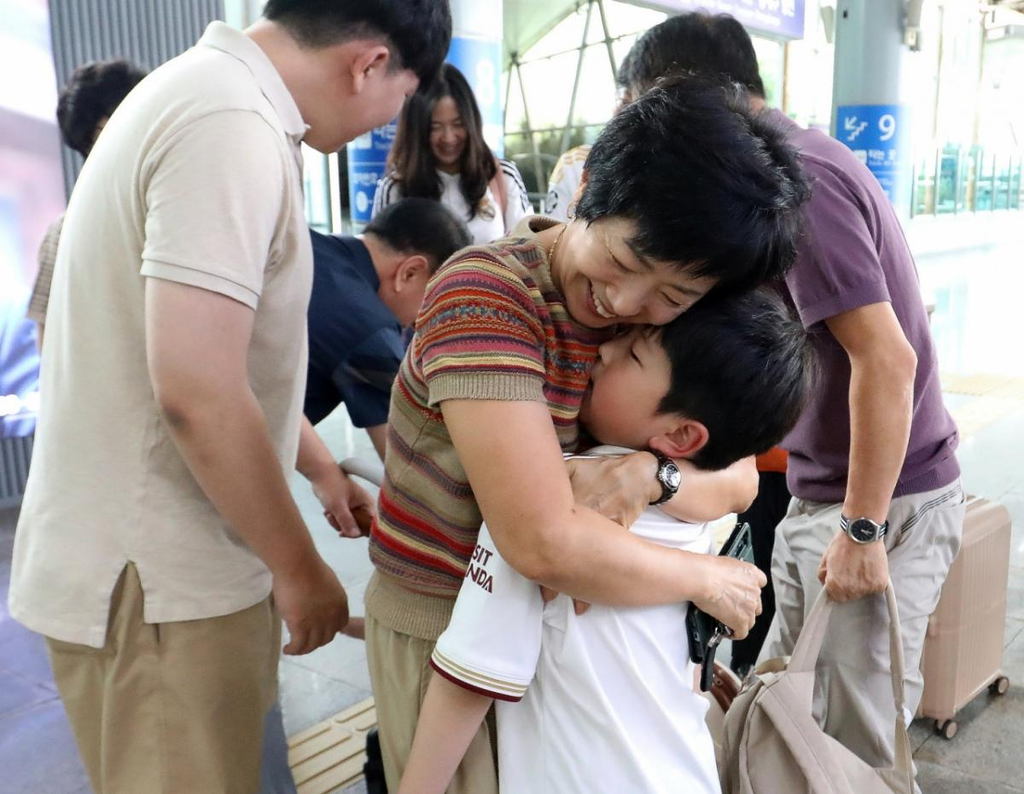
A grandmother waiting.
Cousins who have not seen each other for months.
A table being prepared.
A family grave to visit.
A hometown that still feels like home.
That is why Koreans keep going.
Not because they enjoy the traffic.
Not because tradition forces every family to behave the same way.
But because for many people, once or twice a year, the destination matters enough to make the journey worthwhile.
Sometimes understanding Korea means looking beyond the traffic jam—
and asking where everyone is trying so hard to go.
Naru’s Quote
“Chuseok traffic looks like congestion from above. From inside each car, it looks more like someone trying to get home.” — Naru
SEO FAQ
When is Chuseok in Korea in 2026?
Chuseok Day is September 25, 2026, and the official three-day holiday runs from September 24 to September 26.
Why is traffic so bad during Chuseok?
Large numbers of people travel from metropolitan areas to hometowns and then return within a very short period. The pattern is strongly connected to family reunions and Korea’s history of rapid urbanization.
What does 귀성 mean?
귀성 (gwiseong) means returning to one’s hometown, especially for a major holiday such as Chuseok or Seollal.
What is 귀경?
귀경 (gwigyeong) refers to returning to Seoul or another city after the hometown visit.
Should tourists travel between Korean cities during Chuseok?
You can, but advance planning is highly recommended. Train and bus demand can be intense, while road travel can take much longer than usual.
🇰🇷 한국어 버전
한국인은 왜 그렇게 막히는데도 추석이면 고향에 갈까?
추석 귀성길을 생각하면 떠오르는 장면이 있습니다.
고속도로를 가득 채운 자동차.
서울역의 사람들.
기차표를 구하려는 경쟁.
차 안에 쌓아놓은 선물세트.
그리고 끝없이 이어지는 빨간 브레이크등.
그런데 모두 알고 있습니다.
막힐 것을요.
그래도 갑니다.
왜일까요?
그 답은 단순히 “명절이니까”보다 조금 깊습니다.
한국에는 명절에 고향으로 돌아가는 행동을 뜻하는 **귀성(歸省)**이라는 단어가 있습니다.
고향으로 가는 길은 귀성길, 명절을 보내고 다시 도시로 돌아오는 것은 귀경길이라고 합니다.
이 단어들이 따로 존재한다는 것 자체가 한국에서 명절 이동이 얼마나 큰 문화현상인지 보여줍니다.
한국은 산업화 과정에서 빠르게 도시화됐습니다. 특히 1960년대 이후 많은 젊은 사람들이 일자리와 교육을 찾아 지방과 농촌에서 서울 등 대도시로 이동했습니다. 하지만 부모님과 친척, 조상의 묘, 어린 시절의 기억은 고향에 남아 있었습니다.
그래서 추석과 설이 되면 도시에서 다시 고향으로 대규모 이동이 시작됐습니다.
그것이 오늘날의 귀성길입니다.
2026년 추석 당일은 9월 25일, 공식 연휴는 9월 24~26일입니다. 정부는 24~27일 고속도로 통행료를 면제하기로 했고, Korail도 9월 23~27일 운행 열차에 대해 별도의 추석 승차권 예매를 진행하고 있습니다.
하지만 오늘날 모든 한국인이 전통적인 방식으로 추석을 보내는 것은 아닙니다.
차례를 간소화하는 가족도 있고, 외식을 하거나 여행을 가기도 합니다. 부모와 자녀가 모두 서울에 사는 경우도 늘었습니다.
그럼에도 **“추석에는 가족에게 간다”**는 감정은 여전히 강하게 남아 있습니다.
그래서 추석 교통체증을 단순히 교통 문제로만 보면 조금 아쉽습니다.
그 길 위에는 한국의 산업화와 도시화, 가족관계, 고향에 대한 감정이 모두 담겨 있기 때문입니다.
Today’s Question
여러분이라면 가족과 명절 한 끼를 먹기 위해 몇 시간까지 이동할 수 있나요?
Naru’s Quote
“위에서 보면 추석 귀성길은 교통체증이다. 하지만 자동차 한 대 한 대 안을 들여다보면, 누군가 집으로 돌아가는 길이다.” — Naru
为什么韩国人明知道会大堵车,秋夕还是要回家?
每到秋夕,韩国都会出现非常特别的景象。
高速公路上排满汽车。
首尔站挤满旅客。
火车票很难买到。
人们提着礼盒、行李和食物准备回家。
大家都知道路上会堵。
但还是出发。
为什么?
韩国甚至有一个专门的词:
귀성(gwiseong)
意思是在重大节日期间返回故乡。
回家的路则被称为 귀성길(gwiseong-gil)。
这说明“回家”本身已经成为韩国节日文化的重要组成部分。
韩国从20世纪60年代以后经历了快速的工业化和城市化,大量年轻人从农村和地方城市前往首尔等大城市寻找工作和教育机会。可是父母、亲戚、祖先的墓地以及童年的记忆仍然留在故乡。
因此,每到秋夕和春节,大量城市人口就会再次向故乡移动。
2026年秋夕当天是9月25日,官方假期为9月24日至26日。韩国政府还宣布9月24日至27日期间免收高速公路通行费。
今天,并不是每一个韩国家庭都会举行传统祭祀。
有些家庭选择在餐厅聚餐。
有些人旅行。
有些家庭已经全部生活在大城市。
但是“节日要和家人在一起”的感觉依然很强。
所以秋夕堵车不仅仅是交通问题。
它也是韩国工业化、城市化、家庭关系和“故乡”情感共同形成的一种社会现象。
Today’s Question
如果只是为了和家人一起吃一顿节日晚餐,你愿意旅行几个小时?
Naru’s Quote
“从空中看,秋夕返乡路只是堵车;但从每辆车里面看,那是一个人正在努力回家。” — Naru
🇪🇸 Versión en Español
¿Por qué los coreanos vuelven a casa por Chuseok incluso sabiendo que habrá enormes atascos?
Cada Chuseok ocurre algo extraordinario en Corea.
Las autopistas se llenan.
Las estaciones están abarrotadas.
Los billetes de tren se vuelven difíciles de conseguir.
Las familias cargan coches con regalos, comida y equipaje.
Y todos saben una cosa:
Habrá tráfico.
Aun así, salen de viaje.
¿Por qué?
En coreano existe incluso una palabra específica:
귀성 — gwiseong
Significa regresar al lugar de origen durante una festividad importante.
El camino de regreso se llama gwiseong-gil, literalmente algo parecido a “el camino a casa”.
El fenómeno está estrechamente relacionado con la rápida transformación económica de Corea.
Desde la década de 1960, millones de personas dejaron regiones rurales y pequeñas ciudades para estudiar y trabajar en grandes centros urbanos, especialmente Seúl. Pero padres, familiares, recuerdos y raíces permanecieron en otros lugares.
Por eso, durante Chuseok, gran parte de ese movimiento histórico parece invertirse durante unos días.
La gente sale de las ciudades—
y vuelve a casa.
En 2026, Chuseok cae el 25 de septiembre, con un periodo festivo oficial del 24 al 26. El gobierno también anunció la exención de peajes en autopistas entre el 24 y el 27 de septiembre.
Hoy, por supuesto, no todas las familias celebran Chuseok de la misma manera.
Algunas simplifican los rituales tradicionales.
Otras viajan.
Algunas se reúnen en restaurantes.
Y muchas familias ya viven enteramente en grandes ciudades.
Pero la idea de que Chuseok es un momento para reunirse sigue siendo muy poderosa.
Por eso, el famoso atasco de Chuseok cuenta una historia que va mucho más allá del tráfico.
Habla de familia.
De industrialización.
De ciudades.
De raíces.
Y del significado coreano de gohyang — el lugar que todavía sentimos como hogar.
Today’s Question
¿Cuántas horas viajarías para compartir una sola comida festiva con tu familia?
Naru’s Quote
“Desde arriba, el tráfico de Chuseok parece simplemente congestión. Desde dentro de cada coche, parece alguien intentando volver a casa.” — Naru