When the Han River Becomes a Canvas of Light
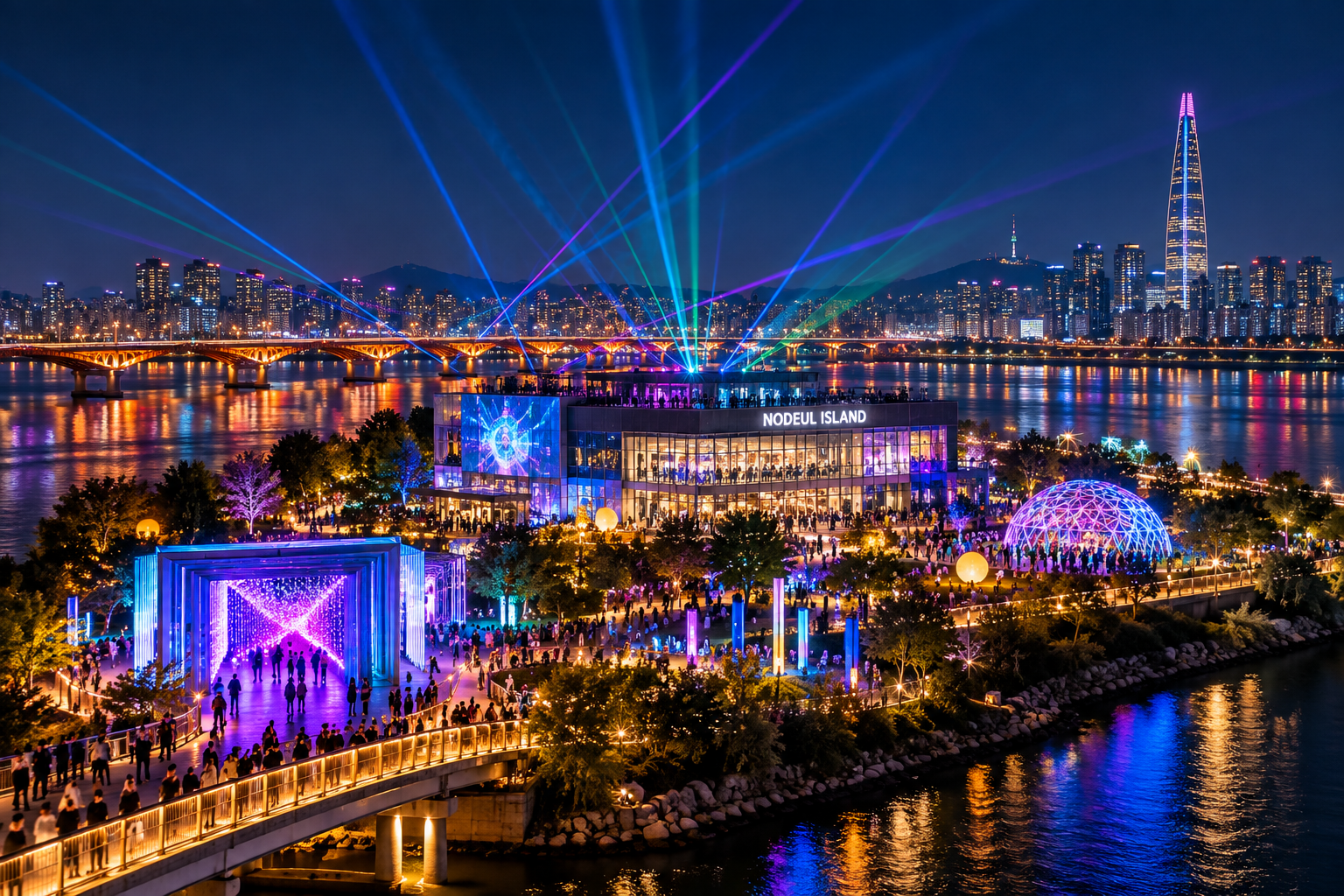
Imagine standing on an island in the middle of Seoul.
Behind you, cars cross a busy bridge. In front of you, the Han River reflects thousands of city lights.
The sun disappears.
Then something extraordinary happens.
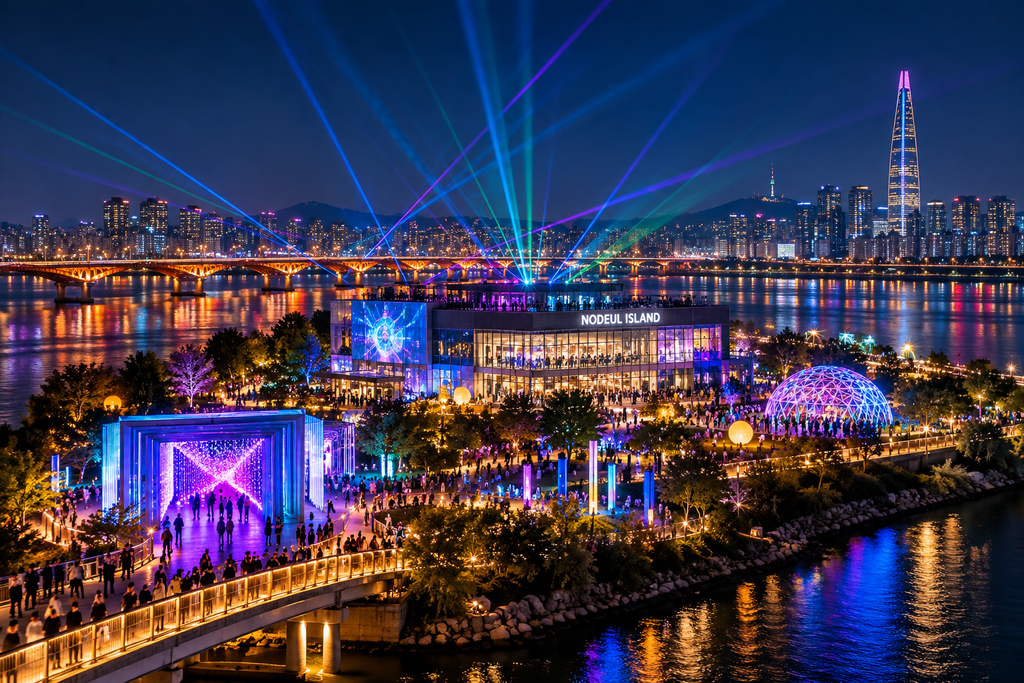
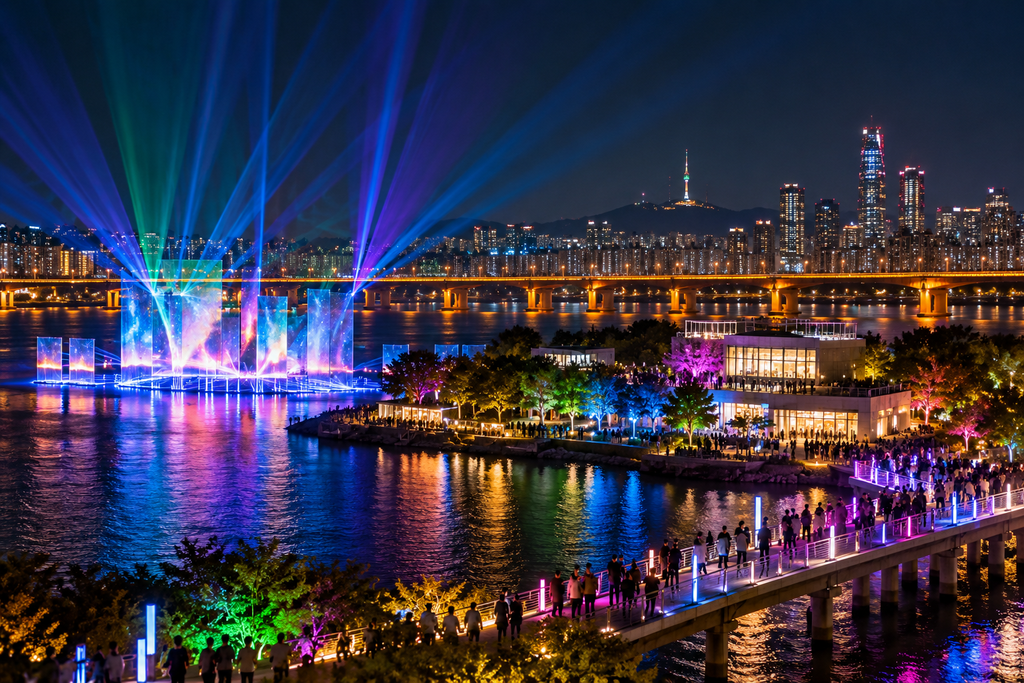
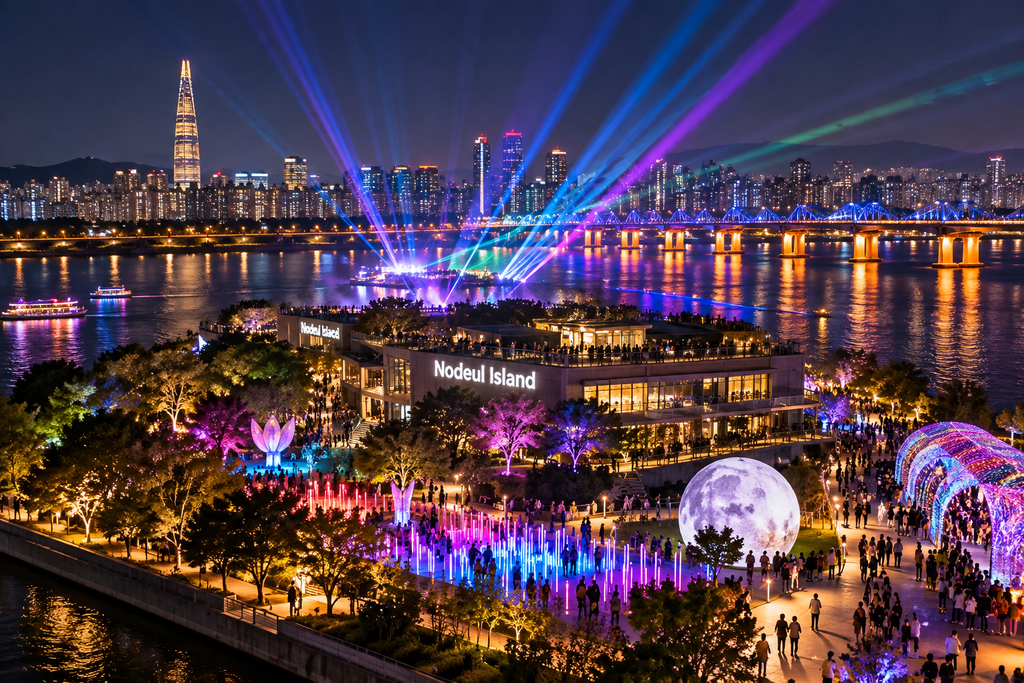
Laser beams illuminate the darkness. Music and digital imagery transform familiar spaces into immersive artworks. Colors dance across the water while visitors explore installations that seem to have appeared from another world.
Welcome to the 2026 Seoul Light Hangang Bitseom Festival.
From October 2 to October 11, Seoul’s Nodeul Island becomes an open-air digital art destination where nature, technology and artistic imagination meet.
But this isn’t simply another illuminated tourist attraction.
The festival is part of Seoul’s effort to transform its famous river into a cultural destination—and Nodeul Island has a fascinating history of its own.
Here’s everything you need to know before visiting.
1. What Is the Seoul Light Hangang Festival?
The Seoul Light Hangang Bitseom Festival is a large-scale waterfront media art festival organized by the Seoul Metropolitan Government.
Its Korean name is 서울라이트 한강 빛섬축제.
The word bit (빛) means light, while seom (섬) means island.
Together, 빛섬 evokes the idea of an island of light.
Instead of displaying artwork only inside a museum, the festival uses the Han River and its surrounding spaces as part of the exhibition.
Lasers, sound, digital imagery, lighting installations and live performances transform familiar urban landscapes into artistic experiences.
The festival changes its location each year, allowing visitors to rediscover different parts of Seoul’s riverfront.
In 2026, the chosen destination is Nodeul Island.
2. Seoul Light Hangang 2026: Essential Festival Information
| Information | Details |
|---|---|
| Festival | 2026 Seoul Light Hangang Bitseom Festival |
| Dates | October 2–11, 2026 |
| Hours | 6:30 PM–10:30 PM |
| Location | Nodeul Island, Seoul |
| Address | 445 Yangnyeong-ro, Yongsan-gu |
| Admission | Free general festival admission |
| Theme | Rhapsody of Light |
| Nearest subway | Nodeul Station, Line 9 |
| Recommended visit | Approximately 1.5–2.5 hours |
Important: Some indoor multimedia performances require advance reservations. The festival’s general admission is free, but the optional special river cruise has separate booking arrangements.
Individual programs and operating schedules may change.
Check the official festival website or Seoul Metropolitan Government’s English announcement before visiting.
3. Why Nodeul Island?
Most international visitors associate Seoul’s Han River with famous parks, bridges and impressive skyline views.
But Nodeul Island offers something different.
Located beneath Hangang Bridge, the island occupies a distinctive position almost in the middle of the river.
It is surrounded by water yet connected to the movement of the city.
You can watch the traffic crossing the bridge, enjoy views of the river and experience a cultural space dedicated to art and music.
That makes Nodeul Island a natural setting for a festival exploring the relationship between technology and nature.
The location becomes even more interesting when you understand its history.
4. The Hidden History of Nodeul Island
Here’s something many visitors don’t know.
Nodeul Island wasn’t always an arts destination.
Its name is believed to come from the Korean word Nodul, referring to a stone where egrets once gathered.
Between the 1930s and 1950s, the area was known as Jungjido.
With sandy riverbanks and seasonal recreational activities, it was once a popular place for Seoul residents to enjoy the river.
However, later development projects changed the landscape.
Several ambitious plans failed to materialize, and the island spent years without a clearly defined public purpose.
Although it occupied an excellent central location, it was not especially accessible or attractive to ordinary visitors.
That began to change when Seoul reconsidered the island’s future.
In September 2019, Nodeul Island reopened as a cultural complex centered on music, art, nature and relaxation.
Today, it contains performance and exhibition spaces, places to relax, and riverside areas for public enjoyment.
The 2026 light festival adds another chapter to that transformation.
An island once overlooked by the city is becoming a destination that helps people rediscover the city.
5. Why the 2026 Festival Is Different
The theme for 2026 is Rhapsody of Light.
The concept brings together five elements associated with the Han River:
Water. Fire. Soil. Air. Life.
Rather than treating the island as an ordinary exhibition venue, participating artists use its natural and architectural surroundings to shape their work.
Outdoor laser installations interact with the night sky and the river.
Indoor spaces feature kinetic art, digital media, audiovisual performances and experimental installations.
This year’s festival also includes international artists, university collaborations and special cultural programs.
The result is designed to feel less like visiting a conventional exhibition and more like exploring an environment transformed by art.
6. Three Experiences Worth Looking For
Experience 1: Laser Art and the River
Imagine watching light reflect off constantly moving water.
The surface of a river is never completely still.
Wind, passing boats and natural currents subtly change its movement.
This makes water a fascinating material for artists.
Taiwanese artist Aka Chang’s work Multimmersion uses laser light, sound and the Han River to create a changing audiovisual experience.
Because the river is constantly moving, the reflections also change.
In another work, Ripple, visitors encounter an immersive environment of light, sound and haze.
These installations illustrate an important idea.
The surrounding environment isn’t merely the background.
It becomes part of the artwork.
Experience 2: Walking Through Light
Not every artwork needs to be experienced from a distance.
Some installations encourage visitors to move through illuminated spaces.
At the 2026 festival, the approach to Nodeul Island is incorporated into the artistic experience.
A special illuminated walkway extends along approximately 300 meters of the approach near Hangang Bridge.
Rather than arriving at a single illuminated structure, visitors begin experiencing the festival while walking toward the island.
Once inside the main event area, look for large-scale installations that combine changing light, sound and spatial design.
Allow enough time to explore.
The experience can change depending on where you stand and how you move.
Experience 3: Music Meets Digital Art
The festival also brings together visual art and live performance.
Selected indoor concerts combine electronic music, laser effects and audiovisual installations.
The announced artists include VAKKI, CIFIKA and MUTO.
MUTO’s performances are especially relevant for readers interested in Korean culture because they combine contemporary electronic music with traditional Korean musical elements, including the geomungo.
It is an interesting example of how Korean cultural traditions can be incorporated into experimental contemporary art.
Remember that indoor performances may require reservations.
The free outdoor installations are the most straightforward option for spontaneous visitors.
7. What Are the Festival’s Three Main Themes?
The festival’s programming is organized around three categories, sometimes described as its three Ls.
Laser Art brings together large-scale digital installations, light and sound.
Light of Companionship connects cultural performances with charitable giving and community engagement.
Lectures provide opportunities to explore relationships among art, technology, data and contemporary culture.
This combination is what distinguishes the festival from a conventional light show.
It is designed to be visually entertaining while also creating opportunities for conversation and participation.
During selected evenings, the program includes a lighting-themed fashion show, musical performances and talks.
Check the official schedule for specific dates.
8. How Seoul’s Light Festival Moves Around the Han River
One of the festival’s most interesting characteristics is that it doesn’t remain in the same place every year.
Previous editions have taken place in different riverfront settings:
| Year | Location |
|---|---|
| 2023 | Seorae Island |
| 2024 | Yeouido |
| 2025 | Ttukseom Hangang Park |
| 2026 | Nodeul Island |
Each location has a different landscape and relationship with the city.
A display designed for one location may not create the same experience somewhere else.
An artwork in an open riverside park interacts with its surroundings differently from an installation on an island beneath a major bridge.
This rotating approach also introduces visitors to areas they might otherwise overlook.
Instead of making people travel to one permanent cultural landmark, the festival brings art to different parts of the city.
9. How to Get to Nodeul Island
Fortunately, Nodeul Island is relatively straightforward to reach using Seoul’s public transportation system.
Option 1: Subway and Walking
Take Seoul Subway Line 9 to Nodeul Station.
Use Exit 2 and walk approximately 700 meters toward Hangang Bridge.
Allow around 12 minutes for the walk, depending on your pace.
This is a simple option for visitors who enjoy walking.
Option 2: Subway and Festival Shuttle
During the festival, a shuttle service is scheduled to operate between several nearby subway stations and Nodeul Island.
The route connects:
- Sinyongsan Station, Exit 4
- Nodeul Island
- Nodeul Station, Exit 2
- Noryangjin Station, Exit 3
The announced operating period is 6 PM–10 PM, with departures approximately every 15 minutes.
Check the latest schedule before traveling.
Option 3: Public Bus
Several Seoul buses stop directly at Nodeul Island.
The official event information identifies Nodeul Island bus stop 03-340 as the relevant stop.
Use Naver Map or KakaoMap to check the most convenient connection from your accommodation.
Option 4: A Special River Cruise
A particularly interesting alternative is the special E-Cruise service connecting Yeouido and Nodeul Island during the festival.
This can turn transportation into part of the experience.
However, it is a separate cruise service with its own reservations and timetable. Check availability and prices before making plans.
10. When Is the Best Time to Visit?
For first-time visitors, I recommend arriving shortly before the outdoor installations begin.
That gives you time to explore the island and appreciate its surroundings before they are transformed by light.
An example itinerary:
| Time | Suggested activity |
|---|---|
| 5:45 PM | Arrive near Nodeul Island |
| 6:00 PM | Explore the riverside and enjoy the evening atmosphere |
| 6:30 PM | Begin exploring the illuminated installations |
| 7:15 PM | Visit major laser artworks |
| 8:00 PM | Explore additional installations or attend a reserved performance |
| 8:30 PM | Enjoy the river views and take photographs |
This is a suggested itinerary rather than a guaranteed performance schedule.
Specific concerts and activities operate on selected dates, so check availability before planning your evening around them.
11. Practical Tips for International Visitors
Wear comfortable shoes.
The festival covers indoor and outdoor spaces, and part of the experience involves walking around the island.
Bring a light jacket.
October evenings beside the Han River can feel cooler than daytime temperatures suggest.
Check indoor reservations.
General admission is free, but some special indoor performances require booking.
Don’t confuse this with the drone show.
Seoul operates separate drone light show events. The Seoul Light Hangang Bitseom Festival primarily focuses on laser installations, media art and accompanying performances.
Check for accessibility requirements.
If walking distances are a concern, check current accessibility information and shuttle arrangements.
Be aware of flashing lights.
Some multimedia performances contain bright or rapidly changing lighting effects.
Use public transportation.
Parking at Nodeul Island is extremely limited during the festival, making the subway and shuttle more convenient options.
12. Why the Han River Has Become Such an Important Cultural Space
The Han River is one of Seoul’s defining geographical features.
It divides much of the city into northern and southern areas, connects numerous neighborhoods and provides valuable public space.
For a long time, major urban rivers were treated primarily as transportation corridors or infrastructure.
Modern Seoul increasingly presents the Han River as something more.
A place to exercise.
A place to picnic.
A place to enjoy performances.
A place where public art can transform familiar scenery.
The Seoul Light Hangang Festival is an especially visible expression of this approach.
It temporarily transforms an everyday public space into a shared cultural experience.
And because general admission is free, the festival is accessible to a broad audience, including international visitors.
For travelers, it provides a different perspective on Seoul.
Instead of discovering the city through palaces, shopping streets or famous restaurants, visitors can experience it through its relationship with the river.
Did You Know?
Nodeul Island’s Name May Come From Birds
Nodeul Island’s name is believed to originate from Nodul, meaning a stone where egrets gathered.
The name reflects the island’s connection with the natural environment of the Han River.
Interestingly, the place has transformed from a riverside recreational area into an overlooked urban site and eventually a contemporary arts destination.
Its identity continues to evolve.
Hidden Story: Why This Festival Doesn’t Stay in One Place
Many cities build a landmark and ask people to visit it.
The Seoul Light Hangang Festival takes a different approach.
By changing its riverfront location, it encourages people to explore different public spaces.
The river remains the central theme, but each year’s surroundings create a new artistic experience.
This is more than an event-management decision.
It is a way of helping residents and travelers experience familiar parts of the city differently.
Naru’s Business Insight: When Public Space Becomes a Cultural Platform
Nodeul Island offers an interesting lesson in cultural destination development.
Its central location existed long before it became an arts destination.
However, geographical convenience alone did not create a successful cultural space.
The island needed a reason for people to visit.
Its transformation into a music- and arts-centered complex provided that identity.
The Seoul Light Hangang Festival adds another layer.
A temporary event brings attention to a permanent public destination.
Visitors may initially come for the laser installations.
But during their visit, they also discover the island, its views, its performance spaces and its wider cultural potential.
The development approach can be summarized as:
Public space → Cultural identity → Signature event → New visitor experiences → Stronger destination recognition
The broader business principle is that a physical destination becomes more valuable to its visitors when it offers experiences that cannot simply be replicated elsewhere.
Naru’s Tips: Before You Go
For visitors who want a relaxed evening, arrive before dark, spend time exploring the island and focus on the outdoor installations.
If you are especially interested in electronic music or experimental art, check the indoor performance calendar and make reservations before your visit.
Photography enthusiasts should consider taking pictures both before and after sunset.
For anyone planning a longer evening, check nearby restaurants and transportation options in advance.
Most importantly, remember that the installations are only part of the experience.
The Han River, the bridge and the city surrounding the island are all part of the atmosphere.
Korean Phrase of the Day
빛 축제는 어디에서 열려요?
Bit chukjeneun eodieseo yeollyeoyo?
English: Where is the light festival held?
中文: 灯光节在哪里举行?
Español: ¿Dónde se celebra el festival de luces?
Another useful expression:
입장료가 얼마예요?
Ipjangnyoga eolmayeyo?
How much is the admission fee?
Learn 5 Korean Words
| English | Korean | Pronunciation | Chinese | Spanish |
|---|---|---|---|---|
| Light | 빛 | bit | 光 | luz |
| Island | 섬 | seom | 岛 | isla |
| Han River | 한강 | Hangang | 汉江 | río Han |
| Festival | 축제 | chukje | 节日 | festival |
| Night view | 야경 | yagyeong | 夜景 | vista nocturna |
Bonus words
- 레이저 (reijeo) — laser
- 미디어아트 (midieo ateu) — media art
- 입장료 (ipjangnyo) — admission fee
- 무료 (muryo) — free of charge
- 노들섬 (Nodeulseom) — Nodeul Island
Today’s Question
Would you rather experience digital art inside a traditional museum or outdoors, surrounded by a river and a city’s skyline?
And if you could transform one public space in your city with light and art, which location would you choose?
Share your answer in the comments.
Naru’s Quote
“A beautiful city isn’t defined only by its buildings. Sometimes, it is defined by the unexpected experiences it creates between them.” — Naru
SEO FAQ
When is Seoul Light Hangang 2026?
The festival takes place from October 2 to October 11, 2026, between 6:30 PM and 10:30 PM.
Is the Seoul Light Hangang Festival free?
General festival admission is free. Some indoor performances require reservations, while optional services such as special river cruises have separate booking arrangements.
Where is the festival held in 2026?
The 2026 festival takes place at Nodeul Island, located at 445 Yangnyeong-ro, Yongsan-gu, Seoul.
How do I get to Nodeul Island?
Take Subway Line 9 to Nodeul Station. Use Exit 2 and walk approximately 700 meters toward Hangang Bridge. A special festival shuttle is also scheduled to operate during the event.
Is the festival suitable for international visitors?
Yes. The outdoor installations are largely visual experiences, making them accessible without extensive Korean-language knowledge. However, talks and some performances may be conducted primarily in Korean.
Is the festival a drone show?
No. The Seoul Light Hangang Bitseom Festival primarily features laser art and media installations. Seoul’s drone light shows are organized separately.
서울라이트 한강 빛섬축제 2026: 노들섬이 거대한 빛의 예술섬으로 변하는 순간
서울의 한가운데를 흐르는 한강.
낮에는 시민들이 산책하고 운동하며 휴식을 즐기는 공간이지만, 2026년 10월에는 특별한 변신이 펼쳐집니다.
바로 2026 서울라이트 한강 빛섬축제입니다.
10월 2일부터 11일까지 노들섬 일대에서 매일 오후 6시 30분부터 10시 30분까지 진행됩니다.
올해의 주제는 **’빛의 서사시(Rhapsody of Light)’**입니다.
물, 불, 흙, 공기, 생명이라는 다섯 가지 요소를 바탕으로 레이저아트와 미디어아트가 한강의 밤을 화려하게 장식합니다.
노들섬은 어떤 곳일까?
노들섬은 한강대교 아래에 위치한 타원형 섬입니다.
이름은 백로가 놀던 돌이라는 의미의 ‘노돌’에서 유래한 것으로 알려져 있습니다.
1930~1950년대에는 백사장과 스케이트장으로 시민들에게 사랑받았지만, 이후 여러 개발계획이 무산되면서 오랫동안 활용도가 낮은 공간으로 남아 있었습니다.
2019년 9월에는 음악과 예술, 자연이 공존하는 복합문화공간으로 재탄생했습니다.
그리고 2026년, 서울라이트 한강 빛섬축제의 무대가 되었습니다.
올해 가장 흥미로운 세 가지
첫 번째는 한강 수면을 활용한 레이저아트입니다.
빛이 강물에 반사되면서 바람과 물결에 따라 끊임없이 변화하는 특별한 작품을 만나볼 수 있습니다.
두 번째는 관람객이 직접 걸어 다니며 체험하는 몰입형 미디어아트입니다.
노들섬으로 이어지는 약 300m 보행로에도 빛을 활용한 연출이 계획되어 있습니다.
세 번째는 전자음악과 전통문화의 만남입니다.
특별 공연에서는 현대적인 전자음악뿐 아니라 거문고 등 한국 전통악기를 활용한 실험적인 무대도 예정되어 있습니다.
여행자를 위한 방문 정보
| 항목 | 내용 |
|---|---|
| 일정 | 2026년 10월 2~11일 |
| 시간 | 18:30~22:30 |
| 장소 | 노들섬 |
| 입장료 | 일반 관람 무료 |
| 가까운 지하철 | 9호선 노들역 |
노들역 2번 출구에서 한강대교 방향으로 약 12분 걸으면 노들섬에 도착합니다.
축제 기간에는 신용산역, 노들섬, 노들역, 노량진역을 연결하는 셔틀버스도 운영할 예정입니다.
일부 실내 공연은 사전예약이 필요하므로 방문 전에 공식 홈페이지를 확인하는 것이 좋습니다.
서울이 한강에서 축제를 개최하는 이유
빛섬축제의 중요한 특징은 개최 장소가 매년 달라진다는 점입니다.
2023년 서래섬, 2024년 여의도, 2025년 뚝섬에 이어 올해는 노들섬에서 열립니다.
이러한 방식은 관광객과 시민들이 평소 방문하지 않던 한강의 다양한 공간을 새롭게 발견하도록 돕습니다.
특히 노들섬처럼 문화예술 공간으로 변신하고 있는 장소에서 개최되는 축제는 그 지역의 매력을 알리는 중요한 계기가 될 수 있습니다.
서울은 단순히 화려한 빌딩이 많은 도시가 아닙니다.
공공공간과 자연환경을 활용해 새로운 문화적 경험을 만드는 도시이기도 합니다.
2026 서울라이트 한강 빛섬축제는 이러한 서울의 모습을 경험할 수 있는 특별한 기회입니다.
2026首尔汉江光岛节:鷺得岛如何变成一座光之艺术岛
每当夜幕降临,首尔的汉江就会呈现另一种魅力。
灯火通明的桥梁、城市天际线以及倒映在江面上的灯光,构成了首尔最受欢迎的夜景之一。
2026年10月,这片熟悉的城市景观将迎来特别的艺术活动。
**2026 Seoul Light Hangang Bitseom Festival(首尔汉江光岛节)**将于10月2日至11日在鷺得岛举行。
每天的活动时间为下午6点30分至晚上10点30分,普通入场免费。
今年的主题是 “光之狂想曲”(Rhapsody of Light)。
艺术家将以水、火、土壤、空气与生命为创作灵感,把激光、音乐和数字媒体艺术结合起来。
为什么选择鷺得岛?
鷺得岛位于汉江大桥下方,是一座被汉江环绕的小岛。
它的名字据说源于过去白鹭聚集的石头。
在20世纪上半叶,这里曾拥有沙滩和溜冰场,是市民享受河畔休闲生活的场所。
后来,由于多个开发计划未能实现,这座岛屿曾经长期缺乏明确的公共用途。
直到2019年9月,鷺得岛重新开放,成为融合音乐、艺术、自然与休闲的复合文化空间。
如今,光岛节为这座岛屿增添了新的文化体验。
有哪些值得期待的活动?
首先是大型激光艺术装置。
艺术家利用汉江水面作为创作的一部分,让灯光随着水波和风的变化呈现不同的视觉效果。
其次是沉浸式互动空间。
观众可以走进由激光、灯光与声音组成的装置,从不同角度欣赏艺术作品。
此外,部分特别演出将现代电子音乐与韩国传统音乐元素相结合。
这些演出展示了韩国当代艺术如何在传统与创新之间建立联系。
2026年参观信息
| 项目 | 信息 |
|---|---|
| 日期 | 2026年10月2日至11日 |
| 时间 | 18:30–22:30 |
| 地点 | 首尔鷺得岛 |
| 普通入场 | 免费 |
| 交通 | 地铁9号线鷺得站 |
游客可以从地铁9号线鷺得站2号出口步行约12分钟到达会场。
活动期间还安排了连接附近地铁站与岛屿的接驳巴士。
部分室内演出需要提前预约,请在出发前确认最新信息。
这场艺术节有什么特别之处?
光岛节每年都会选择不同的汉江沿岸地点举办。
这种方式让艺术作品与不同的自然及城市环境相结合,也鼓励人们重新发现首尔的公共空间。
对国际游客来说,这不仅是一场灯光表演,也是体验首尔当代艺术、城市生活和汉江文化的一种方式。
当光与水相遇,一座熟悉的城市也能展现全新的面貌。
Spanish Version
Seoul Light Hangang 2026: Cuando la isla Nodeul se convierte en una obra de arte
El río Han es uno de los símbolos más reconocibles de Seúl.
Durante el día, sus parques reciben a familias, deportistas y visitantes.
Por la noche, los puentes iluminados y los reflejos de los edificios crean un paisaje urbano espectacular.
Pero durante diez días de octubre de 2026, el río tendrá una apariencia diferente.
El Seoul Light Hangang Bitseom Festival transformará la isla Nodeul en un escenario de arte digital, instalaciones de luz y música.
El festival se celebra del 2 al 11 de octubre de 2026, de 18:30 a 22:30.
La entrada general es gratuita.
El tema de este año es Rhapsody of Light, una propuesta artística inspirada en cinco elementos: agua, fuego, tierra, aire y vida.
¿Por qué se celebra en la isla Nodeul?
Nodeul es una pequeña isla situada bajo el puente Hangang, prácticamente en el centro del río.
Su nombre se relaciona tradicionalmente con una piedra donde se reunían las garcetas.
Durante las décadas de 1930 a 1950, el lugar fue conocido por sus playas de arena y sus actividades recreativas.
Sin embargo, varios proyectos de desarrollo no llegaron a realizarse y la isla permaneció durante años sin una función pública claramente definida.
En septiembre de 2019, Nodeul renació como un espacio cultural dedicado a la música, el arte y el descanso.
El festival de luces representa una nueva etapa de su transformación.
Tres experiencias que merece la pena conocer
La primera es el arte láser sobre el río Han.
Algunas instalaciones utilizan los reflejos de la luz sobre el agua para crear imágenes que cambian con las olas y el viento.
La segunda es el arte inmersivo.
Los visitantes pueden caminar entre instalaciones de luz, sonido y elementos digitales.
La tercera es la música experimental.
Determinadas actuaciones combinan música electrónica contemporánea con elementos de la tradición musical coreana, incluidos instrumentos como el geomungo.
Estas experiencias muestran cómo el arte contemporáneo puede reinterpretar tanto el entorno natural como la cultura tradicional.
Información práctica
| Información | Detalles |
|---|---|
| Fechas | Del 2 al 11 de octubre de 2026 |
| Horario | 18:30–22:30 |
| Lugar | Isla Nodeul, Seúl |
| Entrada general | Gratuita |
| Metro | Estación Nodeul, línea 9 |
Desde la salida 2 de la estación Nodeul, se puede caminar aproximadamente 12 minutos hasta la isla.
Durante el festival también hay un servicio especial de autobús que conecta varias estaciones cercanas.
Algunas actuaciones interiores requieren reserva anticipada.
Un festival que ayuda a redescubrir Seúl
Una característica especial del Seoul Light Hangang Festival es que cambia de ubicación cada año.
Ediciones anteriores se han celebrado en Seorae Island, Yeouido y Ttukseom.
En 2026, la protagonista es Nodeul Island.
Este enfoque permite que el festival se adapte a diferentes paisajes y que los visitantes descubran nuevas zonas del río Han.
También demuestra cómo una ciudad puede utilizar sus espacios públicos para crear experiencias culturales.
Para los viajeros internacionales, el festival ofrece una oportunidad diferente de conocer Seúl.
No se trata solamente de visitar monumentos o centros comerciales.
Se trata de experimentar cómo el arte, la tecnología y la naturaleza pueden transformar temporalmente un paisaje urbano.
Cuando la luz se encuentra con el río, Seúl demuestra que incluso los lugares más familiares pueden ofrecer experiencias inesperadas.