Imagine walking through Seoul in the middle of summer.
The air is hot and humid. Your clothes stick to your skin, the pavement seems to radiate heat, and all you want is an iced drink or a bowl of cold noodles.
Then you notice a long line outside a restaurant.
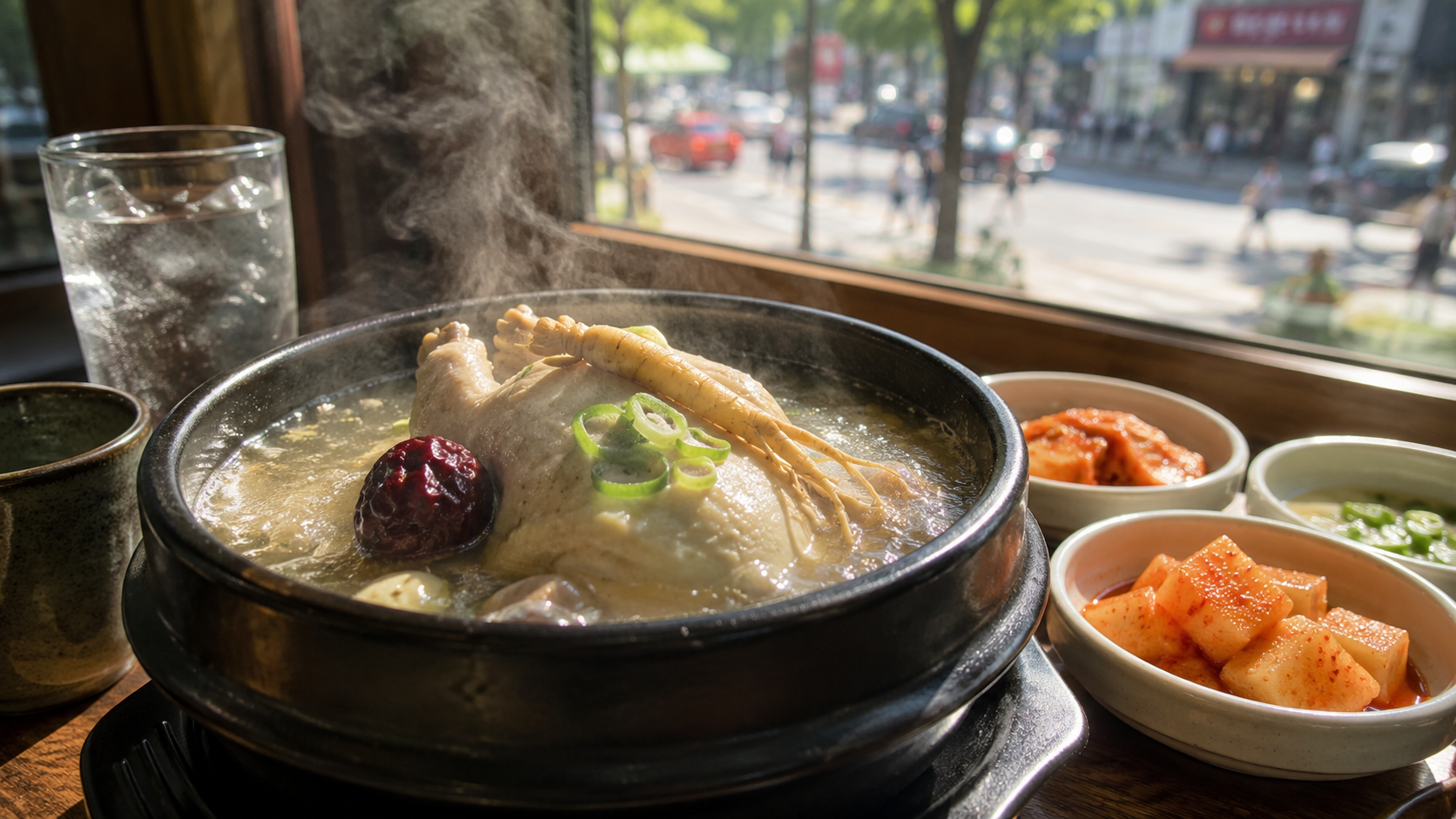
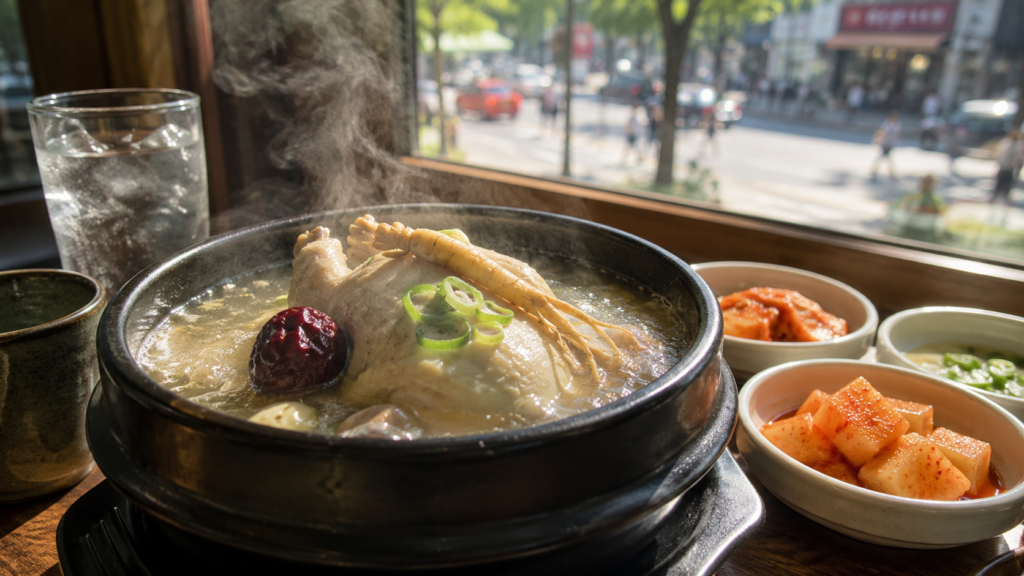
The customers are not waiting for ice cream or chilled soup. They are waiting for samgyetang (삼계탕)—a steaming bowl of chicken and ginseng soup served bubbling hot.
For many international visitors, this seems completely backward.
Why would anyone eat hot soup on one of the hottest days of the year?
The answer lies in a Korean seasonal tradition known as Sambok (삼복), the cultural idea of iyeolchiyeol (이열치열), and a long-standing belief that summer is a time to restore the energy lost through heat and sweating.
What Is Samgyetang?
Samgyetang is one of Korea’s best-known summer dishes.
It is usually made by simmering a small whole chicken stuffed with glutinous rice, fresh ginseng, garlic, and jujube. Depending on the restaurant, the soup may also contain chestnuts, medicinal herbs, abalone, mung beans, or other ingredients.
The dish arrives in a hot stone or earthenware bowl, often still boiling.
The chicken becomes tender enough to pull apart with chopsticks. Inside it is soft rice that has absorbed the chicken broth and the fragrance of ginseng.
Diners usually season the relatively mild broth with salt and pepper according to their taste.
Samgyetang is available throughout the year, but it becomes especially popular during the hottest part of summer.
What Are Sambok and Boknal?
Sambok means the three traditional days associated with the peak of the Korean summer heat:
- Chobok (초복): The beginning of the hottest period
- Jungbok (중복): The middle of the hottest period
- Malbok (말복): The final stage of the hottest period
The individual days are often called Boknal (복날).
Their dates change every year rather than remaining fixed on the modern calendar.
In 2026:
- Chobok fell on Wednesday, July 15
- Jungbok fell on Saturday, July 25
- Malbok falls on Friday, August 14
These days stretch across the period Koreans traditionally associate with the most intense summer heat. Restaurants serving samgyetang and other nourishing foods frequently become especially busy around these dates.
The Meaning of Iyeolchiyeol
The expression most commonly connected to this custom is:
이열치열 — iyeolchiyeol
It is usually translated as:
“Fight heat with heat.”
The basic idea is that instead of escaping the heat with only cold foods, people can respond to it by eating something hot, sweating, and feeling refreshed afterward.
A bowl of boiling soup warms the body and encourages perspiration. When sweat evaporates from the skin, it can help remove heat from the body.
However, the scientific effect depends on the environment. Research has found that hot drinks can reduce stored body heat when the additional sweat can fully evaporate. In very humid conditions, where sweat does not evaporate efficiently, the same cooling effect may not occur.
So iyeolchiyeol should be understood mainly as a cultural approach to summer wellness—not as a universal medical rule.
Why Did Summer Become a Season for Nourishing Food?
Korean summers are not only hot. They can also be extremely humid.
Historically, much of the population worked in agriculture. Physical labor under the summer sun could lead to heavy sweating, fatigue, reduced appetite, and a feeling of depleted energy.
Sambok became a symbolic time to eat substantial dishes that could help people feel restored during the most difficult part of summer. Modern Korean tourism materials continue to describe Sambok foods as meals intended to replenish energy and nutrients lost during hot weather.
This category of restorative food is often called:
보양식 — boyangsik
Boyangsik can be translated as nourishing food, restorative food, or food eaten to support strength and well-being.
Samgyetang is the most famous example, but it is not the only one.
Other summer foods may include:
- Baeksuk: Chicken slowly boiled without the strong ginseng emphasis
- Jangeo: Grilled or cooked eel
- Chueotang: Loach soup
- Mineotang: Croaker fish soup
- Jeonbokjuk: Abalone porridge
- Ori-tang: Duck soup
The preferred dish can vary by family, region, generation, and personal taste.
Hot Soup Is Only Half of the Korean Summer Story
It would be misleading to suggest that Koreans eat only hot food during summer.
Cold dishes are equally important.
Korean summer menus also include:
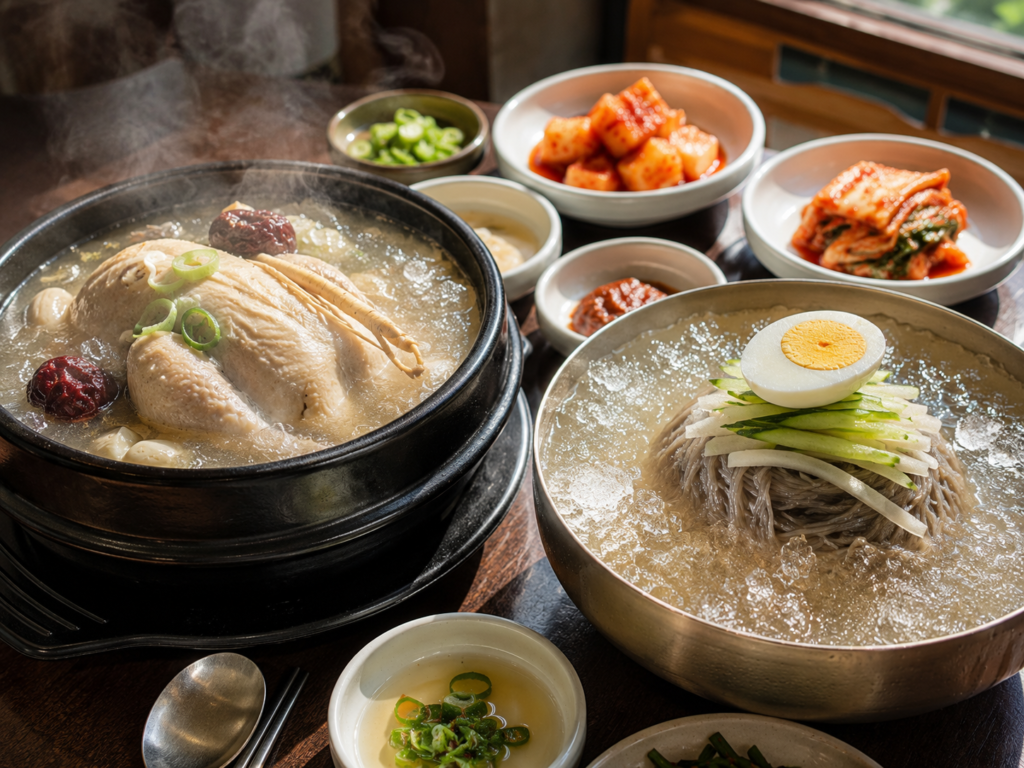
- Naengmyeon: Buckwheat noodles in chilled broth or spicy sauce
- Kongguksu: Noodles in cold soybean soup
- Bibim-guksu: Spicy mixed noodles
- Naengguk: Chilled vegetable or seaweed soup
- Patbingsu: Shaved ice with sweet toppings
Current Korean tourism guidance presents both approaches: iyeolchiyeol, fighting heat with heat, and refreshing the body with chilled dishes.
This apparent contradiction is part of what makes Korean summer food culture interesting.
On one day, someone may eat boiling samgyetang. On the next, the same person may choose an icy bowl of naengmyeon.
Korean seasonal dining does not follow one strict theory. It offers different ways to cope with the same weather.
Is Samgyetang an Ancient Korean Dish?
Samgyetang is often presented as an ancient dish passed down unchanged from the royal courts of Korea.
The historical evidence tells a more complicated story.
Chicken soups and boiled chicken dishes certainly existed earlier, but the exact modern form of samgyetang appears to be relatively recent.
According to the Encyclopedia of Korean Folk Culture, a 1917 cookbook included a chicken soup made with glutinous rice and powdered white ginseng. The name samgyetang became more widely used later, especially after fresh ginseng became easier to distribute and refrigerate during the 1960s. Poultry production was also expanding during this period.
Before that, fresh ginseng spoiled quickly and was difficult to transport nationwide.
As refrigeration, ginseng production, and commercial poultry farming developed, restaurants could serve fresh-ginseng chicken soup more consistently. Samgyetang restaurants then became increasingly common, particularly in Seoul.
This means samgyetang is authentically Korean, but its position as the dominant Boknal food was shaped partly by modern agriculture, refrigeration, distribution, and restaurant culture.
Why Do Samgyetang Restaurants Become So Busy?
On Boknal, eating samgyetang can feel like participating in a national seasonal ritual.
Coworkers may eat it together for lunch. Families may visit a restaurant in the evening. Supermarkets promote ready-to-cook chickens, ginseng, and packaged soup. Convenience stores and food companies release seasonal samgyetang products.
The experience resembles other calendar-based food traditions:
- Tteokguk on Lunar New Year
- Songpyeon during Chuseok
- Seaweed soup on birthdays
- Samgyetang on Boknal
People do not necessarily eat the food because they believe it has a measurable medical effect.
Sometimes they eat it because the date has arrived, because their family has always done so, or because seasonal food makes the passing of the year feel visible.
Does Every Korean Eat Samgyetang on Boknal?
No.
Some Koreans faithfully eat samgyetang on at least one Sambok day. Others choose eel, duck, beef, seafood, or another nourishing dish.
Some prefer cold noodles or a light salad because the weather has reduced their appetite. Others do not observe Boknal at all.
Modern air conditioning, indoor work, changing diets, health concerns, and greater access to food have changed the original circumstances behind the custom.
Still, the tradition remains highly visible.
Even people who do not follow it closely usually recognize Boknal and understand why samgyetang restaurants are crowded.
Is Hot Soup Actually Good for You in Summer?
Samgyetang contains chicken, rice, garlic, and other substantial ingredients, so it can provide protein, carbohydrates, and a filling meal.
But “nourishing” does not mean that everyone needs a large, rich bowl of soup.
Personal health conditions, sodium intake, portion size, hydration, and total diet still matter. During extreme heat, drinking enough water, resting, and avoiding excessive heat exposure are more important than relying on one traditional food.
Visitors should enjoy samgyetang as a cultural and culinary experience, not as a guaranteed treatment for heat exhaustion.
A Bowl That Marks the Season
The popularity of hot soup during Korea’s hottest days reveals something important about Korean food culture.
Food is often connected to the calendar.
A dish can mark a holiday, a birthday, a harvest, a change in weather, or the beginning of a new season.
Samgyetang is not simply chicken soup.
It represents the idea of preparing the body for a demanding season. It brings families and coworkers together around a shared tradition. It also shows how an older seasonal custom can evolve through modern farming, refrigeration, restaurants, and commercial food culture.
The next time you see people lining up for boiling soup under the summer sun, the scene may no longer seem so strange.
They are not ignoring the heat.
They are responding to it in a distinctly Korean way.
Learn 5 Korean Words
| English | Korean | Pronunciation | Chinese | Spanish |
|---|---|---|---|---|
| Ginseng chicken soup | 삼계탕 | sam-gye-tang | 参鸡汤 | Sopa de pollo con ginseng |
| The three hottest days | 삼복 | sam-bok | 三伏 | Los tres días más calurosos |
| Bok day | 복날 | bong-nal | 伏日 | Día de Bok |
| Nourishing food | 보양식 | bo-yang-sik | 滋补食品 | Comida nutritiva |
| Heat wave / intense heat | 무더위 | mu-deo-wi | 酷暑 | Calor intenso |
Korean Phrase of the Day
삼계탕 한 그릇 주세요.
Pronunciation: Sam-gye-tang han geu-reut ju-se-yo.
English: One bowl of samgyetang, please.
Chinese: 请给我一份参鸡汤。
Spanish: Una porción de samgyetang, por favor.
Useful variation
소금은 어디에 넣어요?
So-geu-meun eo-di-e neo-eo-yo?
“Where should I add the salt?”
Samgyetang is often served mildly seasoned, allowing each diner to add salt and pepper according to personal preference.
Did You Know?
In 2026, Korea’s three Sambok dates are:
- Chobok: July 15
- Jungbok: July 25
- Malbok: August 14
Today, July 29, 2026, Chobok and Jungbok have already passed, but Malbok is still ahead.
Malbok literally marks the final Bok day of the summer season. It does not guarantee that the weather immediately becomes cool, but culturally it suggests that the most intense phase of summer is approaching its end.
Hidden Story: Samgyetang Is More Modern Than Many People Think
Samgyetang is often described as an ancient royal dish, but the familiar version served today became widely established much more recently.
A Korean cookbook published in 1917 described chicken cooked with glutinous rice and powdered white ginseng. Fresh ginseng, however, was difficult to store and distribute before modern refrigeration.
During the 1960s, several changes came together:
- Refrigerators became more common
- Fresh ginseng distribution expanded
- Ginseng cultivation increased
- Commercial poultry production grew
- Restaurants began specializing in ginseng chicken soup
The name samgyetang, which emphasizes ginseng, also became more widely used during this period. Earlier versions were sometimes called gyesamtang, placing the chicken first in the name.
The tradition therefore combines older chicken-soup customs with modern food distribution and restaurant development.
It is a useful reminder that cultural traditions do not have to remain unchanged for centuries to be meaningful.
Some traditions become powerful precisely because they adapt successfully to modern life.
Naru’s Travel Tips
1. Expect queues on Boknal
Popular restaurants can become crowded around Chobok, Jungbok, and Malbok. Visit before the main lunch period or consider making a reservation.
2. One chicken is normally one serving
A standard bowl often contains one small whole chicken. It may be more filling than it first appears because the chicken is stuffed with rice.
3. Check the price before ordering premium versions
Restaurants may offer regular, black chicken, abalone, wild-ginseng, or medicinal-herb versions at different prices.
4. Season the soup yourself
The broth may taste mild when it first arrives. Add small amounts of salt and pepper rather than seasoning the entire bowl immediately.
5. Eat the rice inside the chicken
Open the chicken carefully and mix the softened glutinous rice into the broth. It creates a porridge-like texture.
6. Be careful with the bowl
The stone or earthenware container can remain extremely hot. Avoid touching it directly.
7. Do not rely on soup alone during extreme heat
Drink water regularly, rest in a cool place, and follow local heat advisories. A traditional meal does not prevent dehydration or heat-related illness.
8. Try the opposite Korean summer tradition too
After eating samgyetang, try naengmyeon or kongguksu on another day. Together, the hot and cold dishes present a fuller picture of Korean summer food culture.
Today’s Question
On the hottest day of summer, would you choose steaming samgyetang or ice-cold naengmyeon?
Tell us which one you would order—and what people in your country eat to survive the summer heat.
Naru Quote
“Sometimes a culture does not escape the season. It meets the season at the table.”
— Naru
SEO FAQ
Why do Koreans eat hot soup in summer?
Koreans traditionally eat hot, nourishing dishes during Sambok, the period associated with peak summer heat. The custom reflects the idea of restoring energy lost through heat and sweating.
What does iyeolchiyeol mean?
Iyeolchiyeol (이열치열) means “fight heat with heat.” It refers to responding to hot weather with hot food that encourages sweating and may leave the diner feeling refreshed afterward.
What is samgyetang?
Samgyetang is Korean chicken soup made with a small whole chicken commonly stuffed with glutinous rice, ginseng, garlic, and jujube.
What are the Sambok days?
Sambok consists of Chobok, Jungbok, and Malbok, three traditional dates associated with the hottest period of the Korean summer.
When are the Sambok days in 2026?
In 2026, Chobok was July 15, Jungbok was July 25, and Malbok is August 14.
Is samgyetang an ancient royal Korean dish?
Chicken and ginseng preparations have historical roots, but the modern form and name of samgyetang became widely established during the twentieth century, particularly after fresh ginseng distribution expanded in the 1960s.
Is samgyetang eaten only on Boknal?
No. Samgyetang restaurants serve it throughout the year, but demand becomes especially high during the summer and around the three Sambok dates.
Does every Korean eat samgyetang in summer?
No. Some people prefer eel, duck, seafood, cold noodles, or other dishes. Others do not observe Boknal traditions.
Can hot soup cool the body?
Hot food or drinks may increase sweating. When that sweat can evaporate effectively, evaporation can remove body heat. In humid conditions, however, sweat evaporates less efficiently, so the effect is limited.
What other Korean foods are popular in summer?
Popular summer foods include naengmyeon, kongguksu, bibim-guksu, grilled eel, abalone porridge, chueotang, and patbingsu.
한국어 번역
한국인은 왜 가장 더운 날 뜨거운 국물을 먹을까?
한여름 서울을 걷는 모습을 상상해 보세요.
공기는 덥고 습하며, 옷은 피부에 달라붙고 뜨거워진 아스팔트에서는 열기가 올라옵니다. 이런 날에는 차가운 음료나 냉면을 찾는 것이 자연스럽게 느껴집니다.
그런데 식당 앞에 길게 줄을 선 사람들이 있습니다.
이들이 기다리는 음식은 아이스크림이나 냉국이 아닙니다. 뜨거운 뚝배기에서 펄펄 끓는 삼계탕입니다.
외국인에게는 이해하기 어려운 장면일 수 있습니다.
한국인은 왜 가장 더운 날에 뜨거운 국물을 먹을까요?
그 이유는 한국의 계절 풍습인 삼복, 이열치열이라는 생각, 그리고 더위로 소모된 기력을 음식으로 보충하려는 문화에서 찾을 수 있습니다.
삼계탕이란?
삼계탕은 어린 닭 한 마리 안에 찹쌀, 인삼, 마늘과 대추 등을 넣고 오랫동안 끓인 음식입니다.
식당에 따라 밤, 황기, 녹두, 전복과 여러 약재를 추가하기도 합니다. 뚝배기에 담긴 삼계탕은 식탁에 도착할 때까지도 끓고 있는 경우가 많습니다.
닭고기는 젓가락으로 쉽게 분리될 정도로 부드럽고, 닭 안의 찹쌀은 국물과 인삼의 향을 흡수합니다.
국물은 비교적 담백하게 제공되며, 손님이 소금과 후추를 추가해 간을 맞춥니다.
삼복과 복날
삼복은 한여름의 더위와 관련된 세 날을 의미합니다.
- 초복
- 중복
- 말복
각각의 날을 복날이라고 부르며, 날짜는 매년 달라집니다.
2026년에는 초복이 7월 15일, 중복이 7월 25일이었으며, 말복은 8월 14일입니다. 이 시기에는 삼계탕과 보양식 전문점이 평소보다 매우 붐빌 수 있습니다.
이열치열의 의미
이열치열은 문자 그대로 “열은 열로 다스린다”는 의미입니다.
차가운 음식으로 더위를 피하기만 하는 것이 아니라, 뜨거운 음식을 먹고 땀을 낸 뒤 개운함을 느낀다는 생각입니다.
뜨거운 음식은 땀을 유발할 수 있고, 땀이 피부에서 증발하면 체열을 내보내는 데 도움이 될 수 있습니다.
하지만 이는 땀이 충분히 증발할 수 있을 때에 해당합니다. 습도가 매우 높아 땀이 잘 증발하지 않으면 같은 냉각 효과를 기대하기 어렵습니다. 따라서 이열치열은 보편적인 의학 법칙이라기보다 전통적인 여름나기 방식으로 이해하는 것이 적절합니다.
여름에 보양식을 먹는 이유
과거 한국 사회는 농업 중심이었습니다.
무더운 날씨에 야외에서 육체노동을 하면 땀을 많이 흘리고 식욕과 기력이 떨어질 수 있었습니다. 사람들은 가장 더운 시기에 영양이 풍부한 음식을 먹으며 체력을 보충하려 했습니다.
이런 음식을 보양식이라고 부릅니다.
대표적인 여름 보양식에는 삼계탕 외에도 백숙, 장어, 추어탕, 민어탕, 전복죽과 오리탕 등이 있습니다.
한국인은 여름에 뜨거운 음식만 먹을까?
그렇지 않습니다.
냉면, 콩국수, 비빔국수, 냉국과 팥빙수 같은 차가운 음식도 한국의 대표적인 여름 음식입니다.
한국의 여름 식문화에는 뜨거운 음식으로 땀을 내는 방식과 차가운 음식으로 더위를 식히는 방식이 함께 존재합니다.
어느 날에는 뜨거운 삼계탕을 먹고, 다음 날에는 얼음이 떠 있는 냉면을 먹을 수도 있습니다.
한국의 계절 음식 문화는 하나의 원칙만을 따르지 않습니다.
삼계탕은 정말 오래된 전통 음식일까?
삼계탕은 흔히 오래된 궁중 보양식처럼 소개되지만, 현재와 같은 삼계탕은 비교적 현대에 널리 정착한 음식입니다.
1917년에 출간된 조리서에는 닭 안에 찹쌀과 백삼가루를 넣고 끓이는 음식이 기록되어 있습니다.
그러나 냉장 기술이 보편화되기 전에는 수삼을 장기간 보관하고 전국으로 유통하기 어려웠습니다.
1960년대 이후 냉장고 보급, 인삼 재배와 유통 확대, 양계 산업 성장 등이 동시에 이루어지면서 수삼을 넣은 닭요리가 대중화되었습니다. 이때부터 삼계탕이라는 이름과 전문 음식점도 널리 확산됐습니다.
따라서 삼계탕은 전통적인 닭요리에서 발전했지만, 오늘날의 대표적인 복날 음식이 된 과정에는 현대 농업과 냉장 유통, 외식 산업이 중요한 역할을 했습니다.
모든 한국인이 복날에 삼계탕을 먹을까?
모든 사람이 삼계탕을 먹는 것은 아닙니다.
어떤 사람은 매년 삼계탕을 챙겨 먹지만, 다른 사람은 장어, 오리, 소고기나 해산물을 선택합니다. 더위 때문에 식욕이 없으면 냉면이나 가벼운 음식을 먹기도 합니다.
그럼에도 복날이 되면 삼계탕 식당이 붐비고 관련 상품이 많이 판매되는 모습을 쉽게 볼 수 있습니다.
삼계탕은 단순한 닭국물이 아닙니다.
한 해의 특정 시기를 음식으로 기억하고, 가족이나 동료와 계절의 변화를 함께 경험하는 문화입니다.
한국인이 무더운 날 뜨거운 국물을 먹는 것은 더위를 무시해서가 아닙니다.
한국만의 방식으로 더위와 마주하는 것입니다.
为什么韩国人在最热的日子喝滚烫的汤?
想象一下在盛夏的首尔街头行走。
空气炎热而潮湿,衣服贴在皮肤上,地面不断散发热气。这样的天气里,人们自然会想喝冰饮料或吃一碗冷面。
然而,你可能会看到一家餐厅门前排着长队。
顾客等待的不是冰淇淋,也不是冷汤,而是一碗仍在沸腾的参鸡汤。
对许多外国游客来说,这似乎完全不合常理。
为什么韩国人会在一年中最热的时候喝热汤?
答案与韩国的三伏传统、以热治热的观念,以及通过食物恢复夏季消耗的体力有关。
什么是参鸡汤?
参鸡汤通常用一只小整鸡制作,鸡腹中装入糯米、人参、大蒜和红枣,再经过长时间炖煮。
不同餐厅还可能加入栗子、药材、绿豆或鲍鱼。参鸡汤通常装在石锅或砂锅中,上桌时仍然滚烫。
鸡肉非常柔软,鸡腹中的糯米吸收了汤汁和人参的香气。
汤的调味通常比较清淡,客人可以根据自己的口味加入盐和胡椒。
什么是三伏和伏日?
三伏包括与盛夏高温有关的三个日子:
- 初伏
- 中伏
- 末伏
这些日子也被称为伏日,每年的具体日期会发生变化。
2026年的初伏是7月15日,中伏是7月25日,末伏是8月14日。三伏期间,参鸡汤和其他滋补餐厅通常会非常繁忙。
“以热治热”是什么意思?
韩语中的 이열치열 可以理解为“以热治热”。
它表达的不是只用冰冷食物逃避炎热,而是吃热食、出汗,然后感到身体更加轻松。
热食可能促进出汗。当汗液能够从皮肤表面蒸发时,蒸发过程可以带走一部分身体热量。
不过,这种效果取决于环境。如果湿度很高,汗液难以有效蒸发,热食就不一定会产生相同的降温效果。
因此,以热治热更适合被理解为一种传统夏季生活观念,而不是适用于所有人的医学规律。
为什么夏季要吃滋补食物?
过去的韩国社会以农业为主。
人们在炎热天气中从事户外劳动,容易大量出汗、感到疲劳并失去食欲。因此,三伏成为补充体力和营养的重要时间。
这种食物被称为 보양식,也就是滋补食品。
除了参鸡汤,常见的夏季滋补食物还包括白切炖鸡、鳗鱼、泥鳅汤、石首鱼汤、鲍鱼粥和鸭汤。
韩国人夏天只吃热食吗?
并不是。
冷面、豆浆面、拌面、冷汤和刨冰同样是韩国人喜爱的夏季食品。
韩国夏季饮食文化同时存在两种方式:一种是通过热食出汗,另一种是用冷食获得清凉。
同一个人今天可能吃滚烫的参鸡汤,第二天又选择冰凉的冷面。
参鸡汤真的是古代宫廷料理吗?
现代参鸡汤的历史比许多人想象的更短。
1917年的韩国食谱中已经出现了在鸡腹中加入糯米和白参粉的做法。
但在现代冷藏技术普及之前,新鲜人参很难长时间保存和进行全国性运输。
到了20世纪60年代,冰箱逐渐普及,人参种植和流通扩大,家禽产业也迅速发展。新鲜人参鸡汤由此变得更容易供应,专业参鸡汤餐厅也逐渐增多。
所以,参鸡汤结合了较早的炖鸡传统,但其成为现代韩国代表性伏日食品的过程,也与农业、冷链和餐饮业发展密切相关。
韩国人在最热的日子喝热汤,并不是因为他们感觉不到炎热。
而是因为他们选择用一种独特的季节饮食传统来面对炎热。
Traducción al español
¿Por qué los coreanos comen sopa caliente en los días más calurosos?
Imagina caminar por Seúl en pleno verano.
El aire es caluroso y húmedo, la ropa se pega a la piel y el pavimento parece irradiar calor. Lo más natural sería buscar una bebida helada o un plato de fideos fríos.
Sin embargo, puede haber una larga fila frente a un restaurante.
Los clientes no esperan helado ni sopa fría. Esperan samgyetang, una sopa de pollo con ginseng que llega hirviendo a la mesa.
Para muchos visitantes internacionales, esto parece totalmente contradictorio.
¿Por qué comer sopa caliente durante los días más calurosos del año?
La respuesta se encuentra en la tradición coreana de Sambok, la idea de iyeolchiyeol y la costumbre de recuperar mediante la comida la energía que se pierde durante el verano.
¿Qué es el samgyetang?
El samgyetang se prepara normalmente con un pollo joven entero relleno de arroz glutinoso, ginseng fresco, ajo y azufaifo.
Algunos restaurantes también añaden castañas, hierbas medicinales, frijol mungo o abulón. La sopa suele servirse en un recipiente de piedra o barro y todavía está hirviendo cuando llega a la mesa.
La carne queda muy tierna y el arroz del interior absorbe el caldo y el aroma del ginseng.
El caldo suele tener un sabor suave, por lo que cada persona añade sal y pimienta a su gusto.
¿Qué son Sambok y Boknal?
Sambok está formado por tres fechas tradicionalmente relacionadas con el periodo más caluroso del verano coreano:
- Chobok
- Jungbok
- Malbok
Cada una de estas fechas también recibe el nombre de Boknal.
En 2026, Chobok fue el 15 de julio, Jungbok el 25 de julio y Malbok será el 14 de agosto. Los restaurantes de samgyetang suelen llenarse especialmente durante estas fechas.
¿Qué significa iyeolchiyeol?
Iyeolchiyeol suele traducirse como “combatir el calor con calor”.
La idea consiste en comer algo caliente, sudar y sentirse más ligero o renovado después.
La comida caliente puede aumentar la sudoración. Cuando el sudor se evapora correctamente, la evaporación ayuda a eliminar calor del cuerpo.
Sin embargo, el efecto depende de las condiciones ambientales. En lugares muy húmedos, el sudor no se evapora con facilidad, por lo que la misma sensación de enfriamiento puede no producirse.
Iyeolchiyeol debe entenderse principalmente como una tradición cultural y no como una regla médica universal.
¿Por qué el verano es una temporada de alimentos nutritivos?
Históricamente, gran parte de la población coreana trabajaba en la agricultura.
El trabajo físico bajo el sol podía provocar sudoración intensa, cansancio y pérdida de apetito. Los días de Sambok se convirtieron en una ocasión para consumir comidas sustanciosas y recuperar fuerzas.
Estas comidas se conocen como boyangsik, es decir, alimentos nutritivos o restauradores.
Además del samgyetang, existen platos de pollo hervido, anguila, sopa de locha, pescado, gachas de abulón y sopa de pato.
¿Los coreanos comen solamente comida caliente en verano?
No.
Los fideos fríos naengmyeon, los fideos en sopa fría de soja, las sopas frías y el hielo raspado también forman parte esencial del verano coreano.
La gastronomía de verano incluye tanto la idea de combatir el calor con comida caliente como la búsqueda de alivio mediante platos fríos.
Una persona puede comer samgyetang un día y naengmyeon helado al día siguiente.
¿Es el samgyetang un antiguo plato de la corte real?
La versión moderna del samgyetang es más reciente de lo que muchas personas imaginan.
Un libro de cocina de 1917 ya describía pollo preparado con arroz glutinoso y polvo de ginseng blanco.
Sin embargo, el ginseng fresco era difícil de conservar y transportar antes de la refrigeración moderna.
Durante la década de 1960 se extendieron los refrigeradores, aumentó la producción y distribución de ginseng y creció la industria avícola. Esto permitió que los restaurantes ofrecieran sopa de pollo con ginseng fresco de forma más regular.
El samgyetang combina, por tanto, antiguas costumbres de cocinar pollo con cambios modernos en la agricultura, el transporte y la restauración.
Los coreanos no comen sopa caliente porque ignoren el calor.
La comen porque es una manera culturalmente significativa de encontrarse con la estación en la mesa.