
For years, K-beauty tourism followed a familiar pattern.
Travelers visited Myeongdong, entered a cosmetics store, filled a basket with sheet masks, cleansers, lip tints, and sunscreen, and returned home with products they hoped would work for them.
That experience is changing.
Today, many visitors are not only asking:
“Which Korean beauty products should I buy?”
They are asking:
“Which colors suit me?”
“What does my skin actually need?”
“Can I try K-pop-style makeup?”
“Can someone analyze my scalp?”
“Which Korean skincare routine fits my lifestyle?”
K-beauty is moving from a shopping category into a bookable travel experience.
Personal color consultations, customized makeup, scalp analysis, professional skincare, hair styling, nail design, wellness programs, and beauty classes are increasingly appearing beside palace tours, cooking classes, and temple stays in Korea travel itineraries.
The shift reveals something important about modern tourism: visitors no longer want only to purchase Korean culture. They want to participate in it.
From Buying Products to Experiencing K-Beauty
A cosmetics store allows visitors to observe Korean beauty trends.
A beauty experience allows them to become part of those trends.
During the 2026 Korea Beauty Festival, international visitors could participate in K-pop-style makeovers, hair and fashion consultations, personal color analysis, skincare, scalp therapy, nail design, massage, and other beauty and wellness programs. The festival’s booking promotion offers more than 800 K-beauty travel experiences through global travel platforms until September 30, 2026.
This is more than a temporary festival trend.
It shows how Korea is packaging beauty services in a form that international travelers can understand and reserve before or during a trip.
Instead of entering a salon without knowing the language, visitors can increasingly compare:
- Program descriptions
- Session lengths
- Languages available
- Reservation times
- Included services
- Expected results
- Prices and optional additions
Beauty is becoming an organized tourism product rather than an unplanned shopping stop.
What Counts as a Korean Beauty Experience?
K-beauty travel includes a broad range of activities.
Some are simple, non-medical lifestyle experiences. Others involve professional cosmetic or medical services and require greater care.
Personal color analysis
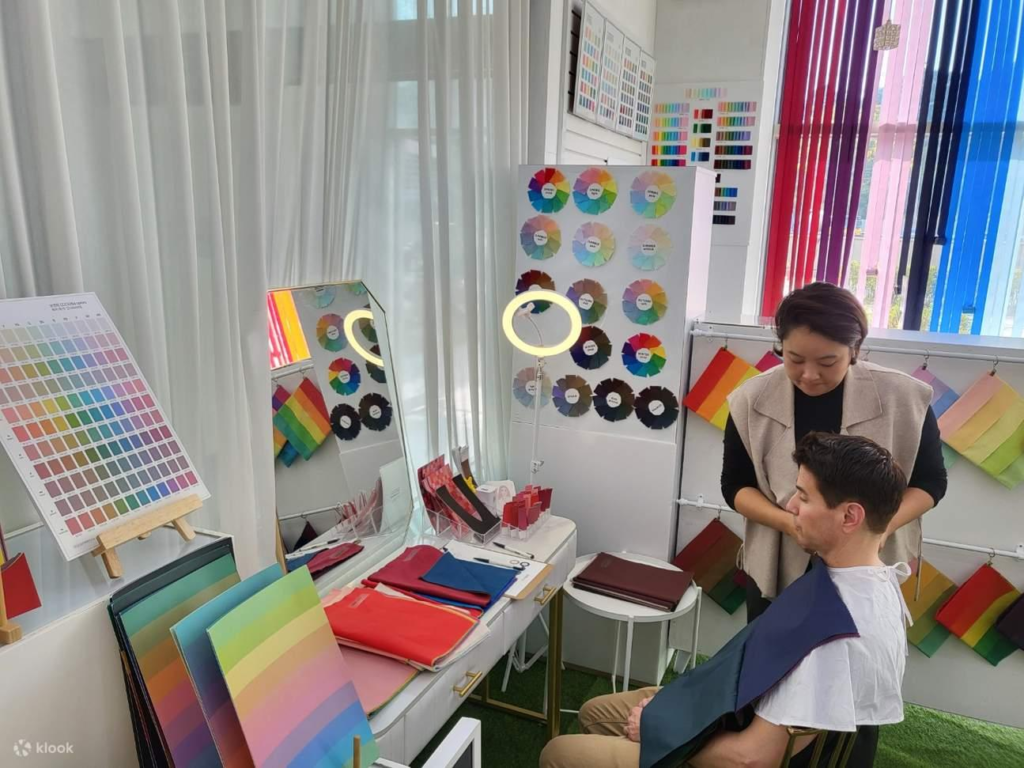
A consultant places different colored fabrics near the client’s face to observe how each shade interacts with the skin tone, features, and overall impression.
The session may include recommendations for:
- Clothing colors
- Lip colors
- Foundation shades
- Hair colors
- Jewelry tones
- Makeup combinations
Official Seoul tourism listings now actively promote one-on-one personal color programs for international tourists. Some providers offer English, Chinese, or Japanese assistance and combine the analysis with makeup, hairstyle, or fashion recommendations.
K-beauty makeup and hairstyling
Travelers can book makeup inspired by Korean celebrities, drama characters, wedding styles, or current Korean trends.
The objective is not necessarily to copy one celebrity exactly. A professional may adapt Korean makeup techniques to the traveler’s own face shape, skin tone, and preferred image.
Some visitors book the experience before:
- Taking profile photographs
- Renting hanbok
- Attending a K-pop concert
- Visiting a special restaurant
- Celebrating a birthday
- Creating travel content
The beauty service becomes part of the day’s itinerary rather than a separate shopping activity.
Skincare experiences
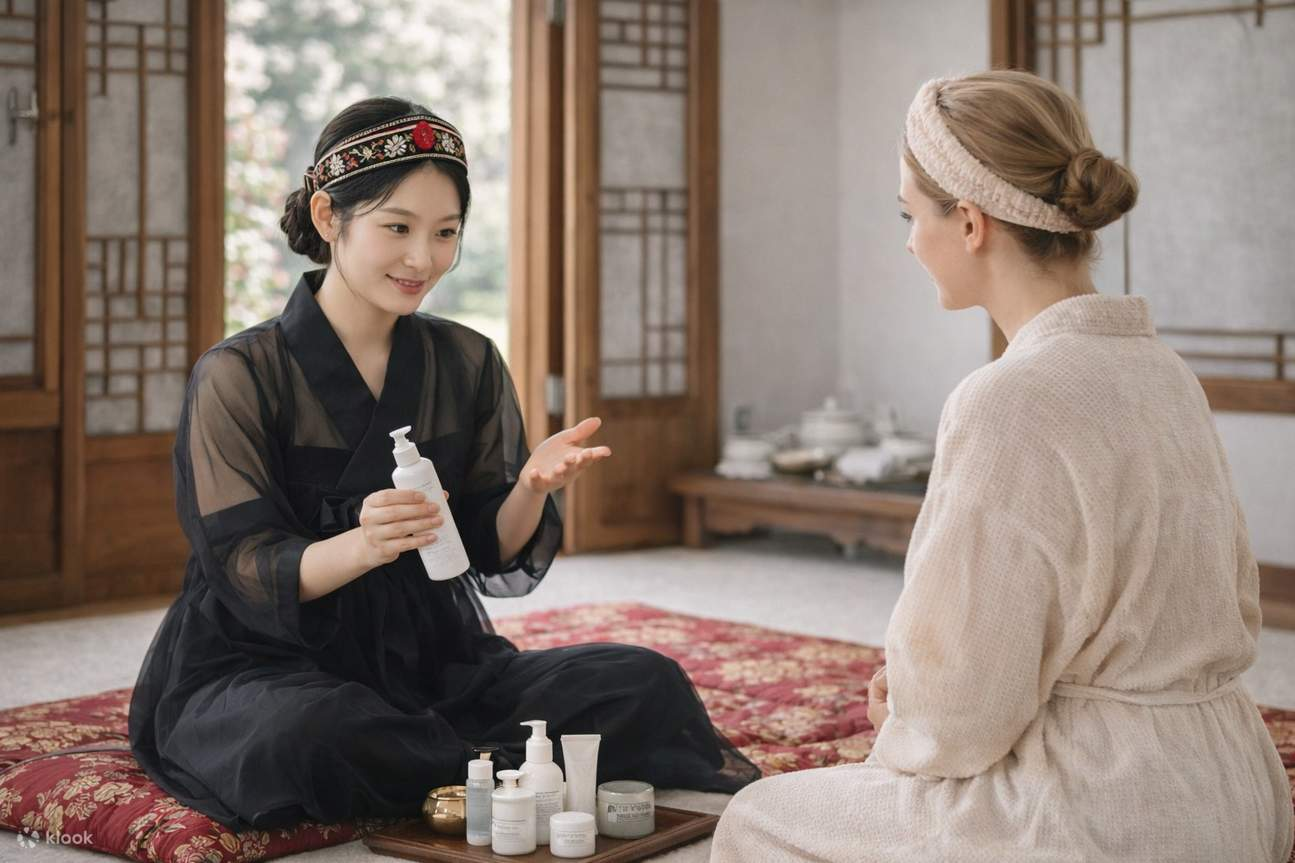
Non-medical skincare programs may include cleansing, hydration, facial massage, product consultation, masks, and a recommended home-care routine.
The appeal comes partly from personalization.
Instead of buying a popular product because it appeared online, travelers can experience how products are selected and applied for their own skin.
Scalp and head-care programs
Scalp analysis and Korean-style head-care services have also become visible tourism activities.
Programs can include camera-based scalp inspection, cleansing, massage, customized product recommendations, and private relaxation rooms. An official Seoul tourism listing notes that some specialist scalp programs take approximately 60 to 80 minutes and are available to foreign guests.
Beauty and wellness classes
Some programs focus on learning rather than receiving a treatment.
Visitors may make customized cosmetics, learn a skincare sequence, attend a makeup class, create natural beauty products, or participate in wellness activities.
This allows travelers to take home knowledge rather than only products.
Why Personal Color Analysis Became a Travel Activity
Personal color analysis is one of the clearest examples of beauty becoming tourism.
The experience is easy to understand visually. A traveler sits in front of a mirror while a consultant compares different fabrics and explains why certain colors brighten or dull the face.
The result feels personal and immediately useful.
A visitor can apply the recommendation while shopping for:
- Cosmetics
- Clothing
- Accessories
- Hair color
- Eyeglass frames
- Souvenirs
The experience also produces a portable result. Travelers often receive a digital report, color card, or list of recommended shades that they can use after returning home.
Some Seoul programs now combine professional color analysis with body-type, makeup, hair, and fashion consulting. Multilingual support and locations near major visitor districts such as Myeongdong, Cheongdam, and Apgujeong make these sessions easier to add to a sightseeing schedule.
K-Beauty Offers a Visible Transformation
Many travel experiences are meaningful but difficult to show in one photograph.
Beauty experiences are different.
There is often a visible before-and-after moment:
- A new makeup style
- A professionally styled hairstyle
- A color palette selected for the traveler
- Healthier-looking hydrated skin
- A clean and refreshed scalp
- A personalized beauty plan
This makes the activity especially compatible with social media and travel content.
But the attraction is not limited to taking photographs.
The traveler receives something that feels individually designed. Even when two people reserve the same program, their recommendations and final results may be different.
That personalization can make the experience feel more memorable than buying the same popular product as everyone else.
Why Korea Is Well Positioned for Beauty Tourism
Korea already has a dense ecosystem connecting:
- Cosmetics manufacturers
- Beauty retailers
- Salons
- Makeup artists
- Dermatology clinics
- Hair and scalp specialists
- Fashion consultants
- Digital reservation platforms
- K-pop and entertainment culture
A traveler can receive a consultation, try a service, and purchase recommended products within the same neighborhood.
Major beauty districts are also connected to other tourism activities.
A visitor might combine:
- Myeongdong shopping with a personal color session
- Hongdae cafés with a skincare experience
- Apgujeong or Cheongdam shopping with premium styling
- Gangnam sightseeing with scalp care
- A hanbok experience with Korean makeup
The beauty activity does not need to replace traditional sightseeing. It can be inserted into the itinerary between meals, museums, shopping, and cultural attractions.
Convenience Is Changing the Market
Beauty appointments were once difficult for short-term travelers to arrange.
Language barriers, unclear prices, unfamiliar booking systems, and uncertainty about the service made spontaneous visits risky.
The tourism industry is reducing these barriers.
The 2026 Korea Beauty Festival connected international visitors with more than 800 reservable makeup, hair, skincare, wellness, and related programs through global online travel agencies.
The business model resembles other travel experiences:
- Choose a program.
- Select a date and language.
- Pay through a familiar platform.
- Receive location and preparation instructions.
- Attend a time-limited session.
- Leave with a visible result or personalized recommendation.
Beauty has therefore become easier to purchase before the traveler even arrives in Korea.
The Business Insight: Experience Can Lead to Retail
Beauty tourism also represents an important change in how Korean beauty businesses attract customers.
A traditional cosmetics store begins with a product.
An experience begins with the customer.
The consultant first discusses the traveler’s skin, colors, preferences, or goals. Products may be recommended only after that analysis.
This can create a stronger relationship because the traveler understands why a particular product or shade was selected.
The experience may then lead to:
- Product purchases
- Future online orders
- Repeat visits
- Social-media recommendations
- Reviews
- Referrals to friends
- Interest in related services
For brands, the experience is not only a service. It can become an education, marketing, and customer-retention channel.
However, the relationship works only when recommendations feel trustworthy. Excessive pressure to purchase products can quickly damage the experience.
The most successful beauty tourism services are likely to be those that make visitors feel informed rather than sold to.
Beauty Experience and Medical Tourism Are Not the Same
It is important to separate a non-medical beauty experience from a medical procedure.
Personal color analysis, regular makeup, hairstyling, nail design, and many basic spa services are generally lifestyle activities.
Injections, laser procedures, prescription treatments, surgery, and medical dermatology are healthcare services. They involve different risks, professional qualifications, consent requirements, and aftercare.
Korea recorded approximately 1.17 million foreign patients in 2024. Dermatology represented 56.6% of the reported treatments, while plastic surgery accounted for 11.4%, demonstrating the scale of international interest in Korean skin and aesthetic medicine.
That growth should not encourage travelers to treat a medical procedure like an ordinary souvenir purchase.
Medical Korea operates a registration and accreditation framework for institutions serving foreign patients. Its evaluation system considers specialist availability, patient rights, dispute prevention, medication management, infection control, facilities, and patient safety.
Travelers considering a medical procedure should confirm the provider’s credentials, understand the risks and recovery period, and avoid making decisions based only on social-media promotions.

What Travelers Should Expect
A typical non-medical K-beauty experience may follow this sequence:
1. Reservation
The traveler selects the program, date, language, and number of participants.
2. Consultation
The provider asks about preferences, skin concerns, allergies, routine, or desired style.
3. Analysis or service
This may involve color draping, skin observation, scalp imaging, makeup, cleansing, massage, or styling.
4. Explanation
The provider explains the results and recommends suitable colors, products, or routines.
5. Final record
The visitor may receive photographs, a color card, a digital report, product list, or home-care instructions.
6. Optional shopping
Products may be available for purchase, but visitors should confirm whether buying anything is required. It usually should not be assumed.
More Than a Beauty Appointment
K-beauty experiences are becoming part of travel because they combine several things modern travelers value:
- Cultural participation
- Personalization
- Visible results
- Practical knowledge
- Relaxation
- Social-media appeal
- Convenient reservations
- Shopping guidance
They also allow travelers to understand Korean beauty culture from the inside.
A shelf full of products shows what Korea sells.
A personal consultation reveals how people select, combine, and use those products.
The shift from shopping to experience does not mean retail is disappearing. It means the product is becoming part of a larger story.
Travelers are no longer returning home with only sheet masks and lip tints.
They may also return with a personal color palette, a new skincare routine, styling knowledge, photographs, and a better understanding of why K-beauty became globally influential.
K-beauty is no longer only something to buy in Korea.
It is becoming something to do in Korea.
Learn 5 Korean Words
| English | Korean | Pronunciation | Chinese | Spanish |
|---|---|---|---|---|
| Beauty experience | 뷰티 체험 | byu-ti che-heom | 美容体验 | Experiencia de belleza |
| Personal color | 퍼스널 컬러 | peo-seu-neol keol-leo | 个人色彩 | Colorimetría personal |
| Skincare | 피부 관리 | pi-bu gwan-ri | 皮肤护理 | Cuidado de la piel |
| Scalp care | 두피 관리 | du-pi gwan-ri | 头皮护理 | Cuidado del cuero cabelludo |
| Reservation | 예약 | ye-yak | 预约 | Reserva |
Korean Phrase of the Day
외국인도 예약할 수 있어요?
Pronunciation: Oe-gu-gin-do ye-yak-hal su i-sseo-yo?
English: Can foreigners make a reservation too?
Chinese: 外国人也可以预约吗?
Spanish: ¿Los extranjeros también pueden hacer una reserva?
Useful follow-up
영어로 상담할 수 있어요?
Yeong-eo-ro sang-dam-hal su i-sseo-yo?
English: Is consultation available in English?
Did You Know?
The 2026 Korea Beauty Festival is not limited to cosmetics shopping.
Its programs include makeup, hair, personal color analysis, fashion styling, skincare, scalp therapy, nail design, massage, wellness, and other lifestyle experiences.
More than 800 K-beauty travel programs are being promoted through international online travel platforms during the festival period, which runs through September 30, 2026.
This shows how K-beauty is being transformed into the same kind of reservable tourism category as food tours, photography sessions, cooking classes, and cultural workshops.
Hidden Story: The Real Product May Be the Consultation
Korean beauty tourism may appear to be mainly about selling cosmetics.
But in many experiences, the most valuable product is not something placed in a shopping bag.
It is the consultation.
Personal color analysis tells visitors which shades may suit them. A scalp session explains their scalp condition. A skincare consultation helps them understand texture, hydration, sensitivity, and routine order.
Once travelers understand themselves better, buying decisions become easier.
This changes the customer journey:
Old model
Trend → product discovery → purchase → hope it works
Experience model
Consultation → personal understanding → recommendation → informed purchase
The second model may create greater trust because the traveler receives a reason behind the recommendation.
That is why beauty experiences can be valuable even when the visitor buys nothing afterward.
The knowledge itself becomes the souvenir.
Naru’s Travel Tips
1. Reserve popular sessions before your trip
Personal color, makeup, and premium skincare appointments can fill quickly, especially on weekends and during peak travel periods.
2. Confirm the consultation language
Do not assume every location offers English. Check whether interpretation is included, automated, or provided only on selected days.
3. Ask exactly what the price includes
Confirm whether the fee covers consultation, treatment, makeup, photographs, a written report, product samples, or styling.
4. Arrive with minimal makeup when requested
Personal color and skin consultations may be easier when the provider can observe your natural skin tone. Follow the preparation instructions sent by the studio.
5. Disclose allergies and sensitive skin
Tell the provider before products are applied.
A useful phrase is:
피부가 민감해요.
Pi-bu-ga min-gam-hae-yo.
“My skin is sensitive.”
6. Leave enough time between appointments
A session may run longer than expected. Avoid scheduling it immediately before a flight, train departure, concert, or timed attraction.
7. Understand whether the service is medical
A facial, scalp spa, and personal color session are different from laser treatment, injections, or medical dermatology.
For medical services, check the provider through official Medical Korea resources and confirm risks, aftercare, medication, and recovery time.
8. Do not feel obligated to buy products
A good consultation should still be useful without an additional purchase. Ask beforehand whether a product purchase is expected.
9. Photograph the recommendations
Keep a clear record of recommended shades, products, routine order, and usage instructions.
10. Protect time for the experience itself
Do not treat the appointment only as preparation for social-media photographs. Ask questions and learn how the recommendations can be used after the trip.
Today’s Question
Which K-beauty experience would you book first: personal color analysis, Korean makeup, skincare, or scalp care?
Tell us what you would choose—and whether beauty or wellness experiences are already part of travel in your country.
Naru Quote
“The best travel souvenirs do not always fit inside a suitcase. Sometimes they change how you see yourself.”
— Naru
SEO FAQ
What is K-beauty tourism?
K-beauty tourism refers to travel activities connected to Korean cosmetics, skincare, makeup, hair, styling, wellness, dermatology, and related beauty services.
What K-beauty experiences can tourists book in Korea?
Visitors can book personal color analysis, professional makeup, hairstyling, skincare, scalp care, nail design, cosmetic-making classes, wellness programs, and other services.
Why is personal color analysis popular in Korea?
It provides individualized recommendations for clothing, makeup, hair, and accessories. The results are visual, practical, and easy to use while shopping.
How long does a personal color analysis take?
The duration varies by provider. Some official Seoul tourism listings describe programs of approximately 60 to 90 minutes, while more detailed packages may take longer.
Are K-beauty experiences available in English?
Some programs provide English, Chinese, or Japanese assistance, but language support varies. Travelers should confirm it before booking.
Where can tourists experience K-beauty in Seoul?
Popular areas include Myeongdong, Hongdae, Gangnam, Apgujeong, Cheongdam, and neighborhoods near major shopping and tourism districts.
Do visitors have to buy products after a consultation?
Usually not, but policies differ. Confirm whether products are included, recommended, or required before attending.
Is a Korean facial the same as dermatology treatment?
No. A regular facial is generally a non-medical beauty or spa service. Laser procedures, injections, prescription care, and medical skin treatments should be performed by qualified healthcare providers.
How can foreign visitors check a Korean medical clinic?
Medical Korea provides information about registered institutions and a government-supported accreditation system for providers serving foreign patients.
What is the Korea Beauty Festival?
It is a tourism-focused festival connecting international visitors with Korean beauty, wellness, styling, and medical-tourism experiences. The 2026 promotion runs from June 24 through September 30.
한국의 뷰티 체험은 왜 여행의 일부가 되고 있을까?
과거 외국인 여행객에게 K-뷰티 여행은 비교적 단순했습니다.
명동의 화장품 매장을 방문해 마스크팩, 클렌저, 립 제품과 선크림을 구입하고 귀국하는 방식이었습니다.
하지만 최근에는 여행객이 제품을 사는 데서 그치지 않고 직접 체험하기 시작했습니다.
이들은 다음과 같은 질문을 합니다.
“나에게 어울리는 색은 무엇일까?”
“내 피부에는 어떤 관리가 필요할까?”
“한국 아이돌 스타일의 메이크업을 받을 수 있을까?”
“두피 상태를 분석받을 수 있을까?”
퍼스널 컬러 진단, 맞춤 메이크업, 피부 관리, 두피 관리, 헤어 스타일링과 뷰티 클래스가 궁궐 투어, 요리 수업이나 템플스테이처럼 예약 가능한 여행 상품으로 변화하고 있습니다.
제품 구매에서 직접 체험으로
화장품 매장에서는 한국의 뷰티 트렌드를 볼 수 있습니다.
하지만 뷰티 체험에서는 여행자가 그 트렌드에 직접 참여합니다.
2026 코리아뷰티페스티벌에서는 K-pop 스타일 메이크업, 헤어·패션 상담, 퍼스널 컬러, 피부 관리, 두피 관리, 네일과 웰니스 프로그램 등이 소개됐습니다. 글로벌 여행 플랫폼을 통해 예약할 수 있는 K-뷰티 관련 프로그램도 800개 이상이며, 관련 프로모션은 2026년 9월 30일까지 이어집니다.
이는 K-뷰티가 단순한 쇼핑 항목에서 국제 여행객이 미리 비교하고 예약할 수 있는 관광 상품으로 변화하고 있음을 보여줍니다.
어떤 뷰티 체험이 있을까?
대표적인 프로그램은 다음과 같습니다.
- 퍼스널 컬러 진단
- 한국식 메이크업
- 헤어 스타일링
- 피부 관리
- 두피 및 헤드스파
- 네일 디자인
- 맞춤 화장품 만들기
- 웰니스와 마사지
퍼스널 컬러 진단에서는 여러 색상의 천을 얼굴 가까이에 대어 피부톤과 얼굴 인상이 어떻게 달라지는지 확인합니다.
이후 의상, 립, 파운데이션, 헤어와 액세서리에 어울리는 색상을 추천받을 수 있습니다.
서울시 공식 관광 정보에도 외국인을 위한 일대일 퍼스널 컬러 프로그램이 소개되고 있습니다. 일부 업체는 영어·중국어·일본어 상담을 제공하며 메이크업, 헤어와 패션 추천을 결합합니다.
퍼스널 컬러가 여행 콘텐츠가 된 이유
퍼스널 컬러는 결과를 바로 눈으로 확인할 수 있습니다.
같은 사람도 얼굴 가까이에 어떤 색을 대느냐에 따라 피부가 밝아 보이거나 피곤해 보일 수 있습니다.
여행자는 진단 결과를 받은 뒤 한국에서 화장품, 의류와 액세서리를 구입할 때 바로 활용할 수 있습니다.
귀국한 뒤에도 컬러 카드나 디지털 보고서를 참고할 수 있기 때문에, 체험 결과가 여행 이후까지 이어진다는 장점이 있습니다.
눈에 보이는 변화
뷰티 체험은 여행 전후의 변화를 사진으로 남기기 쉽습니다.
- 새로운 메이크업
- 정돈된 헤어스타일
- 자신에게 맞는 색상
- 수분감이 살아난 피부
- 깨끗하게 관리된 두피
- 개인별 뷰티 루틴
그러나 매력은 사진에만 있지 않습니다.
같은 프로그램을 예약하더라도 사람마다 다른 결과와 추천을 받습니다. 이런 개인화는 모두가 같은 인기 제품을 사는 것보다 특별한 경험으로 느껴질 수 있습니다.
한국이 뷰티 관광에 유리한 이유
한국에는 화장품 브랜드와 매장뿐만 아니라 메이크업 아티스트, 헤어숍, 피부 관리실, 두피 관리 업체, 패션 컨설턴트와 예약 플랫폼이 밀집해 있습니다.
한 지역에서 진단, 관리와 쇼핑을 연결할 수 있습니다.
예를 들어 여행자는 다음과 같이 일정을 구성할 수 있습니다.
- 명동 쇼핑과 퍼스널 컬러
- 홍대 카페와 피부 관리
- 압구정·청담 쇼핑과 스타일링
- 강남 관광과 두피 관리
- 한복 체험과 한국식 메이크업
뷰티 체험은 기존 관광을 대신하기보다 식사와 쇼핑, 박물관과 공연 사이에 추가할 수 있습니다.
예약의 편리함
과거에는 외국인이 현지 뷰티 서비스를 이용하기 어려웠습니다.
언어, 가격, 예약 방식과 서비스 내용이 명확하지 않았기 때문입니다.
현재는 글로벌 온라인 여행 플랫폼에서 프로그램 설명, 이용 시간, 언어, 가격과 포함 서비스를 비교할 수 있습니다.
2026년 코리아뷰티페스티벌은 800개가 넘는 메이크업, 헤어, 피부 관리와 웰니스 프로그램을 국제 여행 플랫폼과 연결했습니다.
이를 통해 여행자는 한국에 도착하기 전부터 뷰티 일정을 예약할 수 있습니다.
비즈니스 관점: 제품보다 고객에서 시작한다
전통적인 화장품 매장은 제품에서 시작합니다.
하지만 뷰티 체험은 고객의 피부, 색상, 취향과 목표에서 시작합니다.
상담 후 제품을 추천하면 여행객은 단순히 인기 있다는 이유가 아니라, 자신에게 왜 적합한지를 이해할 수 있습니다.
이 체험은 이후 제품 구매, 온라인 재구매, 리뷰, 친구 추천과 재방문으로 이어질 수 있습니다.
다만 신뢰가 중요합니다.
지나치게 제품 구매를 강요하면 여행 경험 전체가 나빠질 수 있습니다. 좋은 뷰티 관광은 고객이 판매당한다고 느끼게 하는 것이 아니라, 더 잘 이해하게 해야 합니다.
뷰티 체험과 의료관광은 다르다
퍼스널 컬러, 일반 메이크업, 헤어와 네일은 생활형 뷰티 체험에 가깝습니다.
하지만 레이저, 주사, 처방 치료와 수술은 의료서비스입니다. 위험, 자격, 동의와 사후 관리가 다릅니다.
2024년 한국을 찾은 외국인 환자는 약 117만 명이었으며, 피부과가 전체의 56.6%, 성형외과가 11.4%를 차지했습니다. 이는 한국의 피부·미용 의료에 대한 높은 국제적 관심을 보여줍니다.
그러나 의료 시술을 일반 관광 상품처럼 충동적으로 결정해서는 안 됩니다.
Medical Korea는 외국인 환자를 유치하는 의료기관에 대한 등록·평가 제도를 운영하며, 전문의 보유, 환자 권리, 의료분쟁 예방, 감염관리와 환자 안전 등을 평가합니다.
단순한 뷰티 예약 그 이상
K-뷰티 체험은 다음과 같은 요소를 결합합니다.
- 문화 참여
- 개인화
- 눈에 보이는 결과
- 실용적인 지식
- 휴식
- 사진과 콘텐츠
- 편리한 예약
- 쇼핑 가이드
화장품 매장의 진열대는 한국이 무엇을 판매하는지 보여줍니다.
개인 상담은 한국 사람들이 제품을 어떻게 고르고 조합하며 사용하는지 보여줍니다.
외국인 여행객은 이제 한국에서 마스크팩과 립 제품만 가져가는 것이 아닙니다.
자신만의 컬러 팔레트, 새로운 스킨케어 루틴, 스타일링 지식과 여행의 추억을 함께 가져갑니다.
K-뷰티는 더 이상 한국에서 사는 것에만 머물지 않습니다.
한국에서 직접 해보는 경험이 되고 있습니다.
简体中文翻译
为什么韩国美容体验正在成为旅行的一部分?
过去,许多游客体验K-Beauty的方式主要是购物。
他们前往明洞的化妆品店,购买面膜、洁面产品、唇釉和防晒霜,然后把这些商品带回家。
现在,这种旅行方式正在改变。
游客不再只问:
“我应该买哪一种韩国化妆品?”
他们开始问:
“什么颜色最适合我?”
“我的皮肤真正需要什么?”
“我可以体验韩国偶像风格的妆容吗?”
“我可以做头皮检测吗?”
个人色彩分析、韩国妆容、皮肤护理、头皮护理、美发造型和美容课程,正逐渐成为可以提前预约的韩国旅游项目。
从购买商品到参与体验
在化妆品店里,游客可以看到韩国美容潮流。
在美容体验中,游客可以亲自参与这种潮流。
2026年韩国美容节推出了K-pop风格妆容、发型与时尚咨询、个人色彩分析、皮肤护理、头皮护理、美甲、按摩和健康体验。
活动期间,通过国际旅游平台推广的K-Beauty体验项目超过800项,相关线上推广将持续至2026年9月30日。
这意味着韩国美容正在从临时购物活动转变为可以比较、预约和安排进旅行日程的旅游产品。
常见的韩国美容体验
游客可以体验:
- 个人色彩分析
- 韩国妆容
- 发型设计
- 皮肤护理
- 头皮护理
- 美甲
- 定制化妆品课程
- 按摩与健康项目
个人色彩分析会把不同颜色的布料放在顾客脸部附近,观察颜色对肤色和整体形象的影响。
顾客可能会收到适合自己的服装、唇色、粉底、发色和饰品颜色建议。
首尔官方旅游信息也在推广面向外国游客的一对一个人色彩服务。部分机构提供英语、中文或日语服务,并把色彩分析与化妆、发型和服装咨询结合起来。
为什么个人色彩分析成为旅游项目?
这种体验具有直观而实用的结果。
游客可以在咨询结束后立即使用建议,选择韩国的化妆品、服装、眼镜、发色和饰品。
很多机构还会提供数字报告或色卡,因此游客回国后仍然可以继续使用。
这让一次短暂的旅行体验拥有了更长久的价值。
可以看见的变化
美容体验通常拥有清晰的前后对比。
游客可能得到:
- 新的妆容
- 专业发型
- 适合自己的颜色
- 更有水分感的皮肤
- 清爽的头皮
- 个性化护理建议
这种变化非常适合拍照和社交媒体。
但真正的吸引力是个性化。
即使两个人预约相同项目,他们得到的建议也可能完全不同。
为什么韩国适合发展美容旅游?
韩国拥有完整而密集的美容产业生态。
其中包括:
- 化妆品公司与零售店
- 化妆师与美容院
- 皮肤护理机构
- 头皮护理中心
- 时尚顾问
- 皮肤科与医疗机构
- 国际预约平台
游客可以在同一个街区完成咨询、护理和购物。
例如,可以把明洞购物与个人色彩分析结合,把弘大咖啡店与皮肤护理结合,或把江南行程与头皮护理结合。
美容体验不需要取代传统景点,而可以被安排在购物、用餐和参观之间。
从商品开始,还是从顾客开始?
传统化妆品商店从商品开始。
美容体验则从顾客的肤色、皮肤状态、偏好和目标开始。
在咨询之后推荐产品,可以让游客理解某种产品为什么适合自己。
这种体验可能进一步带来商品购买、网上复购、评价、朋友推荐和再次访问。
但前提是顾客信任咨询结果。
如果工作人员不断要求购买商品,体验很容易变成令人不舒服的销售活动。
美容体验不等于医疗服务
个人色彩、普通化妆、美发和美甲一般属于生活美容体验。
激光、注射、处方治疗和手术则属于医疗服务,需要不同的专业资质、风险说明和术后管理。
2024年,韩国接待了约117万名外国患者。其中皮肤科占56.6%,整形外科占11.4%。
游客不应像购买普通旅游纪念品一样冲动决定医疗项目。
韩国官方Medical Korea系统对接待外国患者的医疗机构实施注册和认证管理,并评估专业人员、患者权利、感染管理和安全体系。
不只是一次美容预约
K-Beauty体验把文化参与、个性化、实用知识、放松、拍照、购物和方便预约结合在一起。
化妆品货架告诉游客韩国销售什么。
个人咨询则告诉游客韩国人如何选择、搭配和使用这些产品。
如今,游客从韩国带回家的不只是面膜和唇釉。
他们还会带回个人色彩方案、护肤知识、造型建议和对韩国美容文化更深入的理解。
K-Beauty不再只是到韩国购买的商品。
它正在成为到韩国亲自参加的体验。
Traducción al español
¿Por qué las experiencias de belleza coreanas forman parte del viaje?
Durante años, el turismo de K-beauty consistía principalmente en comprar cosméticos.
Los visitantes recorrían las tiendas de Myeongdong, llenaban sus bolsas de mascarillas, limpiadores, labiales y protectores solares, y regresaban a casa esperando que los productos funcionaran.
Ese comportamiento está cambiando.
Ahora los viajeros preguntan:
“¿Qué colores me favorecen?”
“¿Qué necesita realmente mi piel?”
“¿Puedo probar un maquillaje de estilo K-pop?”
“¿Puedo analizar mi cuero cabelludo?”
El análisis de color personal, el maquillaje coreano, los tratamientos faciales, el cuidado del cuero cabelludo y las clases de belleza se están convirtiendo en actividades reservables dentro de un itinerario turístico.
De comprar productos a vivir una experiencia
Una tienda permite observar las tendencias coreanas.
Una experiencia permite participar en ellas.
El Korea Beauty Festival de 2026 ha incluido maquillaje de estilo K-pop, asesoría de cabello y moda, análisis de color, cuidado de la piel, tratamientos del cuero cabelludo, uñas, masajes y programas de bienestar.
Durante el periodo promocional se ofrecen más de 800 experiencias relacionadas con la belleza mediante plataformas internacionales de viajes. La promoción continúa hasta el 30 de septiembre de 2026.
Esto demuestra que la belleza coreana está dejando de ser solamente una parada de compras para convertirse en una categoría turística organizada.
¿Qué experiencias pueden reservarse?
Entre las principales opciones están:
- Análisis de color personal
- Maquillaje coreano
- Peinado profesional
- Cuidado facial
- Cuidado del cuero cabelludo
- Diseño de uñas
- Elaboración de cosméticos
- Masajes y bienestar
Durante un análisis de color, el profesional coloca telas de diferentes tonos cerca del rostro para observar cómo cambian la apariencia de la piel y las facciones.
Después puede recomendar colores para ropa, maquillaje, cabello, joyería y accesorios.
La guía turística oficial de Seúl promociona servicios individuales para visitantes internacionales. Algunos centros ofrecen atención en inglés, chino o japonés y combinan colorimetría con recomendaciones de maquillaje y moda.
¿Por qué la colorimetría se convirtió en turismo?
El resultado es visual, personal y práctico.
El viajero puede utilizar las recomendaciones inmediatamente para comprar cosméticos, ropa, gafas o accesorios durante su visita.
También puede conservar una tarjeta de colores o un informe digital para utilizarlo después de regresar a su país.
Por eso, el valor de la experiencia continúa más allá del viaje.
Una transformación visible
Las experiencias de belleza pueden producir un cambio fácil de observar:
- Un nuevo maquillaje
- Un peinado profesional
- Colores personalizados
- Una piel más hidratada
- Un cuero cabelludo limpio
- Una rutina adaptada
Esto las hace atractivas para fotografías y redes sociales.
Sin embargo, su principal ventaja es la personalización. Dos viajeros que reservan el mismo programa pueden recibir recomendaciones distintas.
¿Por qué Corea está bien posicionada?
Corea cuenta con un ecosistema que conecta marcas de cosméticos, tiendas, salones, maquilladores, especialistas en cuero cabelludo, consultores de moda, clínicas y plataformas digitales.
Un viajero puede recibir una consulta, probar un servicio y comprar productos recomendados en el mismo barrio.
La actividad también puede combinarse fácilmente con otras partes del viaje:
- Compras en Myeongdong y análisis de color
- Cafés en Hongdae y tratamiento facial
- Compras en Cheongdam y asesoría de estilo
- Visita a Gangnam y cuidado del cuero cabelludo
- Alquiler de hanbok y maquillaje coreano
La experiencia como estrategia comercial
Una tienda tradicional comienza con el producto.
Una consulta comienza con la persona.
El profesional estudia la piel, los colores, las preferencias o los objetivos antes de recomendar algo.
Esto ayuda al cliente a entender por qué un producto podría ser adecuado.
La experiencia puede generar compras, pedidos posteriores, recomendaciones, reseñas y visitas futuras.
Pero la confianza es fundamental. Una presión excesiva para comprar productos puede arruinar la experiencia.
La belleza y la medicina no son lo mismo
El maquillaje, la peluquería, las uñas y la colorimetría suelen ser servicios no médicos.
Los láseres, las inyecciones, las recetas y la cirugía son servicios médicos con riesgos y requisitos diferentes.
Corea recibió aproximadamente 1,17 millones de pacientes extranjeros en 2024. La dermatología representó el 56,6% y la cirugía plástica el 11,4% de los tratamientos registrados.
Los viajeros no deberían tomar decisiones médicas impulsivamente basándose solamente en promociones de redes sociales.
Medical Korea mantiene sistemas de registro y acreditación para instituciones que atienden a pacientes extranjeros. Estos sistemas evalúan la seguridad, los especialistas, los derechos del paciente y el control de infecciones.
Más que una cita de belleza
Las experiencias K-beauty combinan participación cultural, personalización, conocimiento, relajación, resultados visibles y reservas convenientes.
Una tienda muestra lo que Corea vende.
Una consulta muestra cómo las personas seleccionan y utilizan los productos.
Los viajeros ya no regresan solamente con mascarillas y labiales.
También regresan con una paleta de colores, conocimientos sobre su piel, nuevas ideas de estilo y una comprensión más profunda de la cultura de belleza coreana.
K-beauty ya no es únicamente algo que se compra en Corea.
Se está convirtiendo en algo que se vive en Corea.